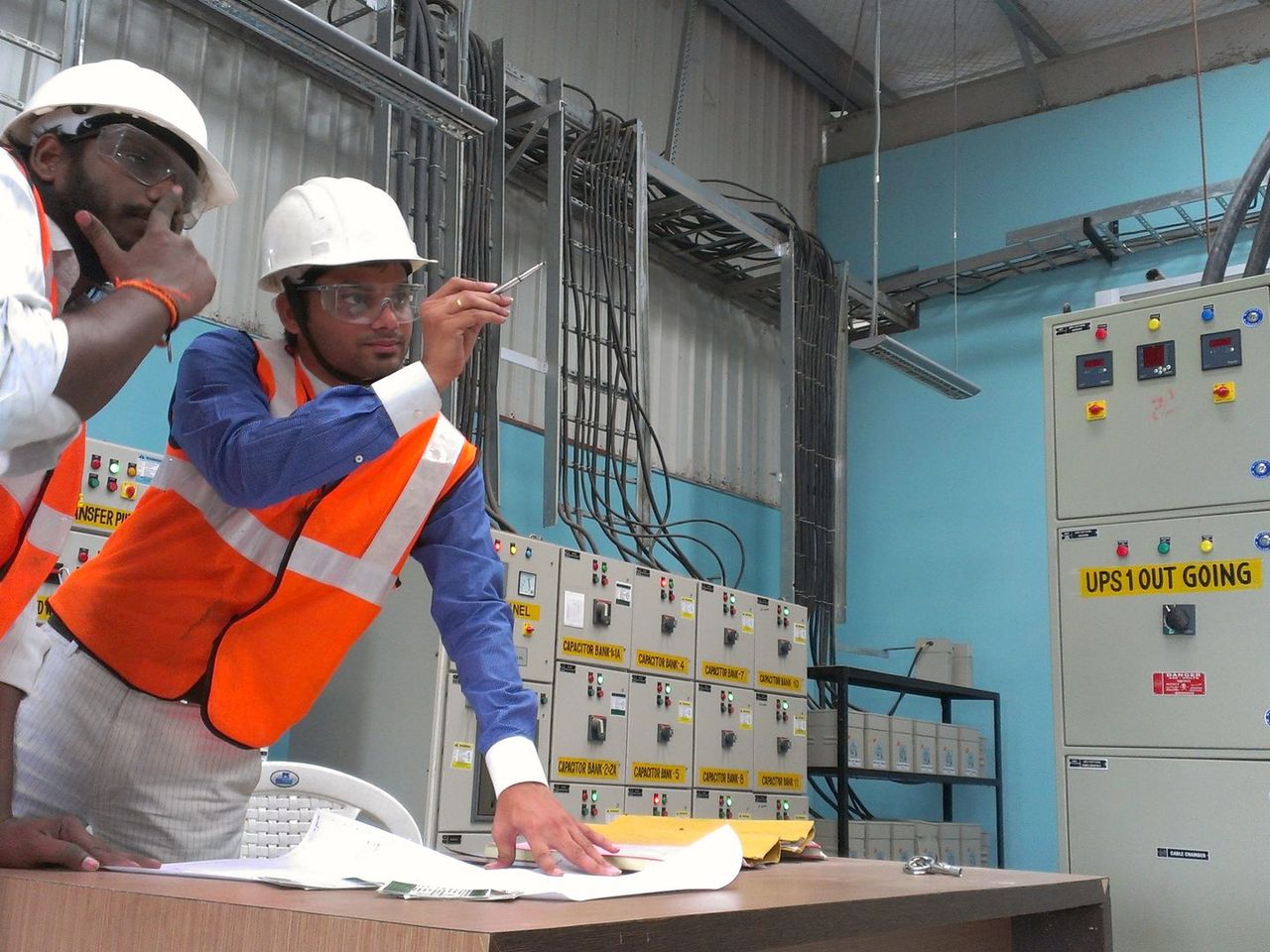
Arc flash risk assessment · South Korea · KOSHA E-162 · NFPA 70E · IEEE 1584-2018 · 380 V to 22.9 kV
Arc flash risk assessment in South Korea, from the 22.9 kV intake to the last panel, for fabs, data centres and process plants.
VB Engineering runs arc flash studies for semiconductor fabs, battery plants, data centres, refineries and biologics plants across South Korea, from Pyeongtaek, Icheon and Yongin to Seoul, Songdo, Cheongju, Ulsan and Yeosu. Every bus is calculated, every label is dated, and the 22.9 kV backbone is covered. Run the study-readiness check and get a price estimate in two business days.
22.9 kV backbone in scopeKorean-English labelsSigned by a named engineerStudies in 21 countries
Free study-readiness check · 2 minutes
| Reviewer asks for | |
|---|---|
| Labels | |
| Study age | |
| Voltage | |
| Scope | |
| Duration |
This panel compares your six answers with NFPA 70E 130.5, KOSHA GUIDE E-162 and the voltage range IEEE 1584-2018 was tested on. Treat it as a screening result, not engineering advice. Week counts come from VB's project register, grouped by bus count. Press the button and the short form opens; the scope and estimate arrive by email within two business days, with no call.
Trusted on plants that cannot stop


- 22.9 kVKEPCO's standard distribution voltage, above the 15 kV top of the IEEE 1584-2018 model
- E-162KOSHA's technical guideline on arc flash hazards and worker safety, issued 2017
- 5+workers: the Serious Accidents Punishment Act threshold since 27 January 2024
- 0arc flash studies completed by VB since 2014
- 0countries with VB-labelled switchgear
Model range: IEEE 1584-2018, 208 V to 15 kV. Korean distribution: Korea University, 22.9 kV Korean power distribution system. Guideline: KOSHA GUIDE E-162-2017. Act scope: Kim & Chang, January 2024. Study counts: VB Engineering project register.
From six answers to a written scope
- 1
Tell us the site in two minutes
Pick the reviewer behind the request, the top voltage, today's labels and the age of the last study, then type an approximate bus count and say whether battery DC belongs in it.
- 2
A study engineer scopes it
A VB engineer who runs arc flash models checks the answers, flags anything at 22.9 kV, and breaks the job into walkdown, model, report and label stages.
- 3
Scope and estimate by email
Within two business days you receive the scope, a week-by-week plan and a won or dollar estimate built bus by bus, written so your plant head can approve it.
The requirement
Is an arc flash study required in South Korea?
Yes. Korea's Occupational Safety and Health Act requires every employer to assess workplace hazards (Article 36) and to prevent danger from electrical energy (Article 38). KOSHA GUIDE E-162-2017 sets out how arc flash hazards are assessed and workers protected. An arc flash study is that assessment: it calculates the heat a fault would release at each panel and puts the value on the gear.
| Law, guideline or standard | Clause | Duty on the plant | Checked by |
|---|---|---|---|
| Occupational Safety and Health Act | Art. 36 · Art. 38 | A risk assessment of workplace hazards, and safety measures against danger from electricity and other energy | Ministry of Employment and Labor inspectors |
| KOSHA GUIDE E-162-2017, technical guideline on arc flash hazards and worker safety | Whole guideline | Work procedures that protect people exposed to arc flash energy, from hazard assessment to protective equipment | KOSHA; your safety and health manager |
| Serious Accidents Punishment Act, in force 27 January 2022 | Safety and health management system | The top decision-maker resources, runs and checks the system; from 27 January 2024 every workplace with 5 or more workers is covered | Your board and representative director; prosecutors after a serious accident |
| Electrical Safety Management Act · Korea Electro-technical Code (KEC) | Installation and electrical safety management | A safe installation kept under an appointed electrical safety manager, with periodic inspection | KESCO; your electrical safety manager |
| NFPA 70E | 130.5 · 130.5(H) | Assess arc flash risk before any energised task, refresh the assessment within five years, and mark the equipment | Group EHS auditors; insurance risk engineers |
Korean plants are designed to KEC and IEC standards and audited in NFPA 70E terms by foreign parents and insurers. VB writes one study that serves both: every result follows IEEE 1584-2018, and page one of the report maps it clause by clause to the OSH Act, KOSHA GUIDE E-162 and NFPA 70E, so the safety and health manager, the electrical safety manager and the corporate auditor all read the same document.
Audit finding, insurer letter, SAPA review or incident
Who is asking your Korean plant for an arc flash study?
Four reviewers ask Korean plants for an arc flash study: a foreign parent's NFPA 70E audit, an insurer's property survey, the twice-yearly check of the safety and health management system under the Serious Accidents Punishment Act, and an incident investigation. All four close on one document: a dated study, matching labels and closed actions. VB delivers it in about 8 to 11 weeks for a 200-bus site.
The HQ audit finding
American, European and Japanese groups run their Korean fabs, data halls and chemical plants to a corporate electrical safety standard written around NFPA 70E. The finding reads "no current arc flash study". VB's report closes it on one document.
The underwriter's survey
A property risk survey at a fab or refinery often ends with "quantify arc flash hazard" on the recommendation list. VB answers it bus by bus and adds a short close-out letter written for the underwriter's file.
The SAPA system review
The safety and health management system is checked at least twice a year, and electrical hazards are a line in it. A dated study with an action register gives the review a quantified answer instead of a generic one.
After an arc event
Once a flash or near miss is reported, the labour inspector and head office both want the assessment for that panel and its date. VB studies the affected substation first so work can restart, then extends to the site.
Reading a VB label at a Korean plant
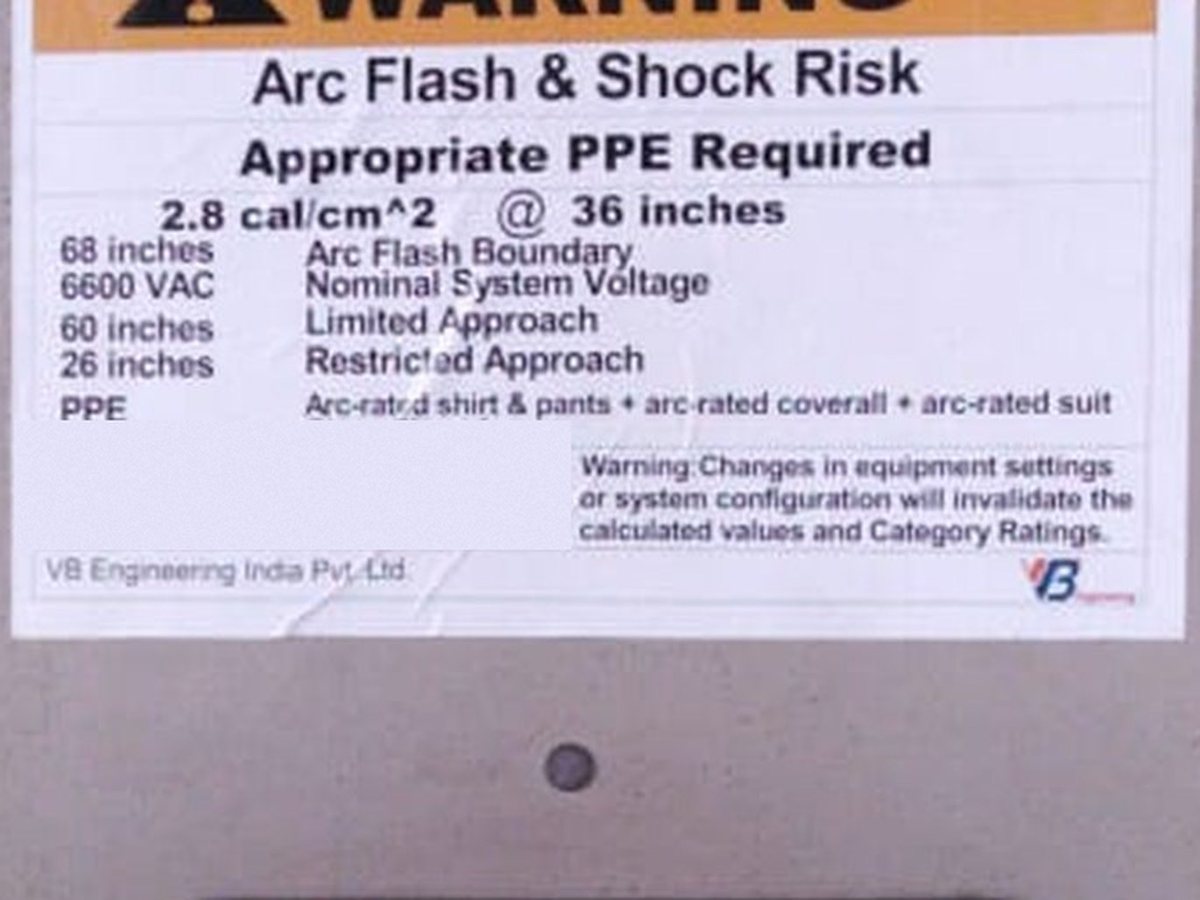
The label on each panel is printed straight from the signed study. It states the calculated incident energy at the stated working distance, how far the arc flash boundary reaches, the system voltage, the shock approach limits, the clothing and gloves required, the equipment tag and the study date. On request the same label carries Korean and English side by side. When a transformer, cable or relay setting changes, VB reruns that part of the model and reissues the label.
Where VB works in South Korea
Where in South Korea does VB run arc flash studies?
VB runs arc flash studies across South Korea wherever plants work on live switchgear: the semiconductor belt of Pyeongtaek, Icheon, Yongin and Hwaseong, the battery plants of Cheongju and Ochang, the data centres of Seoul and the capital area, the biologics plants of Songdo, and the refineries and petrochemical complexes of Ulsan, Yeosu and Daesan. VB's walkdown crew mobilises to each site.
| Region | Cities and clusters | Facilities VB studies |
|---|---|---|
| Gyeonggi south | Pyeongtaek, Icheon, Yongin, Hwaseong, Giheung, Suwon | Memory and foundry fabs, fab utility buildings, semiconductor materials and equipment plants |
| Seoul capital area | Seoul, Anyang, Siheung, Goyang, Gimpo, Pangyo | Hyperscale and colocation data centres, telecom buildings, commercial towers |
| Chungcheong | Cheongju, Ochang, Cheonan, Asan, Osong | Battery cell and module plants, BESS, display and semiconductor packaging, bio plants |
| Incheon | Songdo, Namdong | Biologics and pharmaceutical plants, data centres, logistics hubs |
| Southeast coast | Ulsan, Onsan, Busan | Refineries, petrochemical and specialty chemical plants, battery plants, data centres |
| South and west coast | Yeosu, Gwangyang, Daesan, Seosan | Refining and petrochemical complexes, power and BESS sites |
VB quotes in won or US dollars and plans every walkdown inside your preventive maintenance or turnaround window, because a fab or a cracker never stops for a study. Multi-site groups, for example a fab in Pyeongtaek and a data hall in Seoul, get one scope, one model standard and one report format across every site. A Korean-language overview is on VB's 아크 플래시 위험성 평가 page, and VB runs the same programme in Malaysia and the Philippines.
The 22.9 kV question
Does IEEE 1584 cover 22.9 kV switchgear?
No. IEEE 1584-2018 is validated from 208 V to 15 kV, and KEPCO's standard distribution voltage is 22.9 kV, so the medium-voltage backbone of almost every Korean plant sits outside the model. Those buses need a recognised alternative method. VB names the method beside each result, so no auditor mistakes it for an IEEE 1584 value.
| What the site says | What it means for arc flash | How the report treats it |
|---|---|---|
| "Our MV is 22.9 kV" | Beyond the 15 kV ceiling of the IEEE 1584-2018 test data | Each 22.9 kV bus gets a result from a named alternative method and a visible flag |
| "We take supply at 154 kV" | Plant staff rarely work live at the GIS; it shapes fault level and clearing time | Entered as the source, with the utility relay settings driving downstream results |
| "The panels are internal-arc tested" | An IEC 62271-200 IAC rating assumes closed, latched doors | Racking, door-open and low-voltage compartment work is still given a value and a label |
| "Our suits are IEC 61482 Class 2" | A box-test class at 7 kA, not a cal/cm² rating | The garment's ATPV or ELIM from IEC 61482-1-1 is set against the label value |
| "We are designed to KEC" | KEC governs how the installation is built, not the arc energy at a panel | Results are cross-referenced to NFPA 70E so a corporate auditor can follow them |
What VB delivers
What does VB deliver in a South Korean arc flash study?
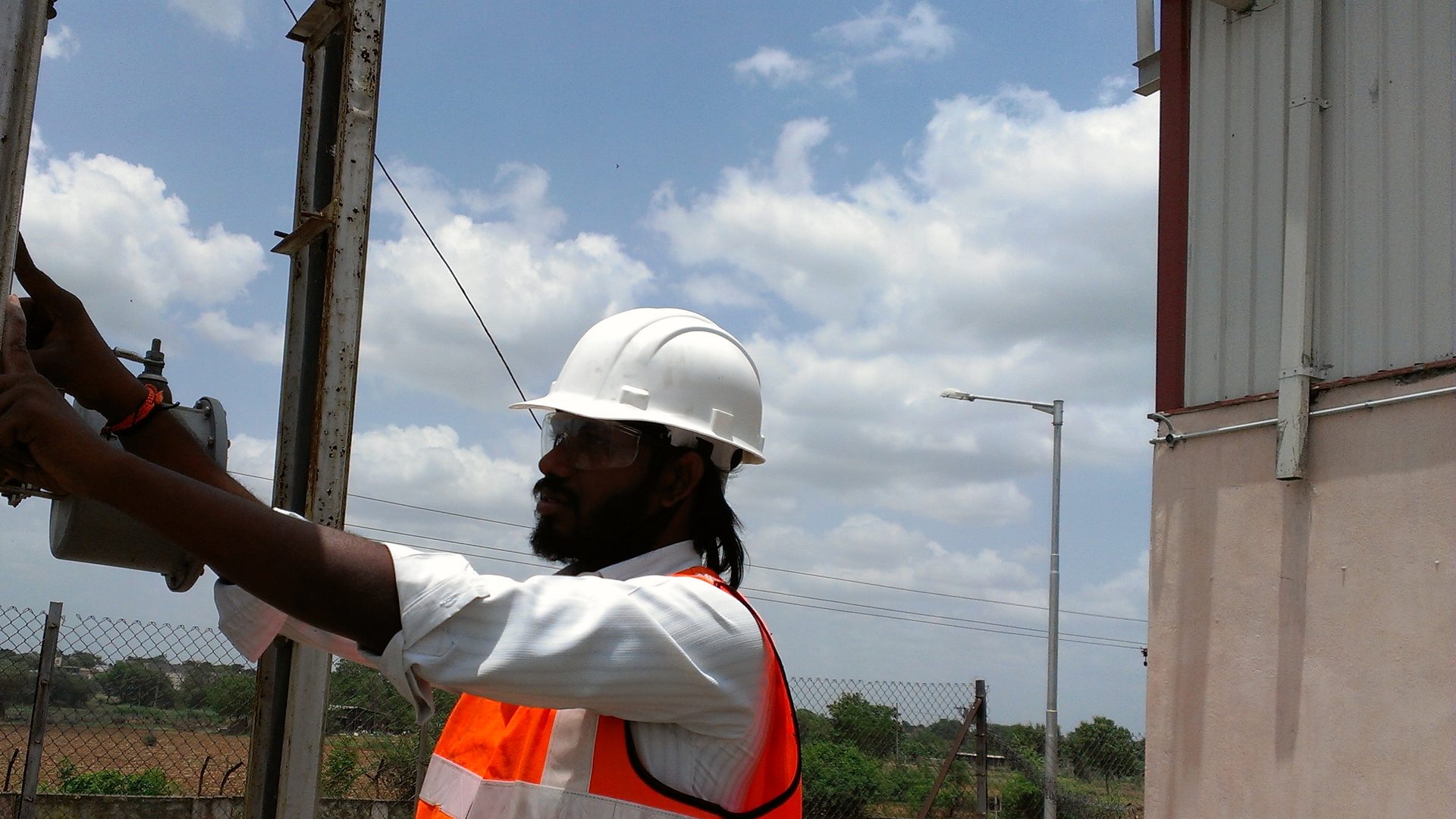
VB's Korean arc flash study starts at the KEPCO supply point and ends at the smallest distribution board, with AC and DC results in a single incident energy table. Engineers confirm the single-line diagram against the switchgear before modelling, label every panel with dated values, and the modelling engineer puts their name to the report.
| Standard scope | Optional extras |
|---|---|
| Panel-by-panel survey with doors open, recording ratings, CT ratios and protection settings in ElecTwin, VB's field data app | Infrared and partial-discharge inspection of the same gear |
| The existing single-line marked up against what is installed, with a deviation list | A fresh single-line drawing for areas with none |
| Fault levels, device coordination and incident energy in each operating configuration, including emergency generation and UPS bypass | On-site support while your contractor applies new settings |
| 22.9 kV results on a named alternative method, and UPS, battery and BESS results on a named DC method | Battery sizing and autonomy checks |
| Label printing, fixing and a photo record of every installed label | Korean-English bilingual label design |
| A mitigation register with owners and target dates, plus a cross-reference to the OSH Act, KOSHA GUIDE E-162 and NFPA 70E | Arc flash awareness sessions for electrical safety managers and crews |
How a Korean study runs, week by week
- Week 1 · a pre-visit data request goes out, so survey days at the fab or refinery are used at the panels
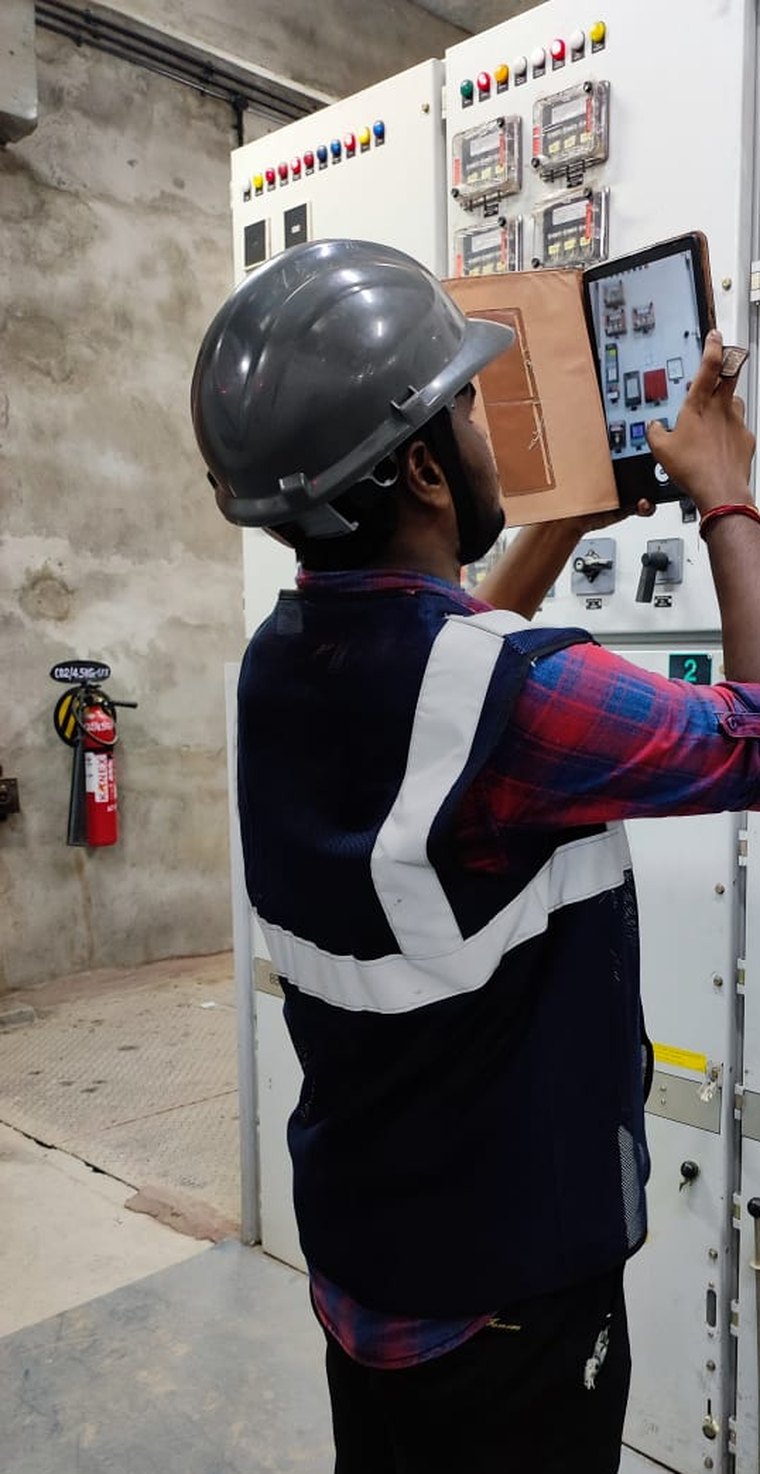
- Survey · booked into your PM or turnaround window; each panel is opened, read and photographed
- Modelling · two to three weeks in ETAP or SKM PowerTools, covering every switching configuration
- Report · laid out to IEEE 1584.1-2022, signed by the engineer who modelled it, then checked by a VB reviewer who did not
- Labelling · one crew installs roughly 150 labels per day, photographing each one
- Typical span · 4 weeks for small sites, 5 to 7 weeks near 100 buses, 8 to 11 weeks near 300, counted from first site access
Tool expertise
Which software do VB's arc flash teams work in?
VB runs arc flash models in ETAP, SKM PowerTools, CYME, EasyPower, PSS®E and NEPLAN, with dedicated teams for each. A Korean site can keep the platform its group engineering office already licenses, so the model file opens at head office without conversion.
Price
How much does an arc flash study cost in South Korea?
Korean arc flash studies are quoted bus by bus, with a separate rate for each voltage level, in won or US dollars. Site survey days, drawing correction and label fixing appear as their own lines. Each switchboard, MCC or UPS output the model calculates is one bus, which is why 22.9 kV gear and battery rooms move the price and building size does not.
| Input | Effect on effort | Line on the estimate |
|---|---|---|
| Bus count | Every bus is surveyed, entered, solved and labelled | Rate per bus, set by voltage level |
| 6.6 kV and 22.9 kV equipment | Extra switching cases, utility protection data and, at 22.9 kV, a second calculation method | MV rows priced apart from 380 V rows |
| Condition of drawings | Wrong single-lines are corrected during the survey; absent ones are drawn new | A drawing line kept outside the study rate |
| Battery, UPS and BESS DC | IEEE 1584 does not cover DC, so a separate method is applied | DC buses listed and rated individually |
| Access windows | Fabs and refineries open switchrooms only in planned PM or turnaround windows | Survey visits counted and priced per window |
The study-readiness check at the top of this page is the quickest route to a number: answer six questions and the scope and estimate follow by email within two business days, at no cost. The method behind VB's pricing is explained on the arc flash study cost page.
A semiconductor fab campus
How does VB close a parent company's arc flash audit finding at a Korean semiconductor fab?
At a large semiconductor fab campus in South Korea, modelled with a 154 kV intake, a 22.9 kV backbone and 375 buses, VB runs one study across three preventive maintenance windows and closes the parent company's audit finding in 13 weeks. Modelled result: 17 buses above 40 cal/cm² brought to 0, peak incident energy cut from 74 to 7.8 cal/cm², and 375 dated labels installed.
The trigger
The foreign parent's EHS audit raised "arc flash hazard not quantified" as a major finding with a 120-day close-out. The campus had a short-circuit study from construction, no incident energy values, and generic warning stickers on the 380 V main switchboards.
What the study found
| What the model showed | Location and consequence |
|---|---|
| 17 buses above 40 cal/cm² | 380 V main switchboards fed by large unit-substation transformers, where no arc-rated PPE allows live work |
| 42 buses above 15 kV | The 22.9 kV switchgear and ring mains, outside IEEE 1584-2018 and missing from every earlier study |
| 9 miscoordinations | Main breakers clearing ahead of the faulted feeder, so a single fault could black out a complete utility block |
| 46 DC buses missing | Process-tool UPS, facility UPS and substation chargers, none of them in any earlier model |
| 31 single-line deviations | Circuits added during later tool-install phases that no drawing showed |
What VB changed
VB recommended energy-reducing maintenance switching on the 380 V incomers, zone-selective interlocking on two lineups and nine re-graded settings within the existing protection, then calculated the 22.9 kV buses on a named method. The site's contractor applied the settings in the third maintenance window, VB re-ran the model and printed every label from the final run.
| Indicator | At start | At close |
|---|---|---|
| Peak incident energy at any bus, cal/cm² | 74 | 7.8 |
| Buses where no PPE permits live work (>40 cal/cm²) | 17 | 0 |
| 22.9 kV buses in the study | 0 | 42 |
| Breaker and relay miscoordinations | 9 | 0 |
| Battery and UPS DC buses modelled | 0 | 46 |
| Panels carrying a dated VB label | 0 | 375 |
| Elapsed weeks, first access to signed report | 13, spread over three PM windows | |
The audit finding closes on one pack: a signed study covering every bus up to 22.9 kV, a label schedule, and an action register with owners and dates. A fresh set of generic stickers would have left the finding open and the 22.9 kV gear unassessed.
Why plants choose VB
Why do Korean plants bring VB the study?
More than 1,000 studies across fabs, data halls, refineries and battery plants in 21 countries mean the questions a Korean auditor asks have been answered before.
Low voltage, 6.6 kV, 22.9 kV and battery DC sit in one table, and any row calculated outside IEEE 1584 names its method.
Models are built in commercial power system software and reported to IEEE 1584.1-2022, with obligations traced to the OSH Act, KOSHA GUIDE E-162 and NFPA 70E.
Your model's author signs the report; a separate VB engineer checks it. The auditor gets a name, not a department.
Survey days are fitted into PM and turnaround windows, so a fab, data hall or refinery keeps running while the study happens.
Every site in a Korean group is modelled to the same rules and reported in the same format, so group EHS can rank sites against each other.
What the check returns
What do you get back from the free study-readiness check?
Within two business days of the free check you receive four items by email: the site scope, an estimate in won or US dollars priced bus by bus, a week-by-week plan set against your next PM window, and a one-page booking note your auditor, insurer or safety and health manager can file. The check costs nothing and triggers no sales call.
Scope with an estimate
Voltage levels, DC buses and label quantity set out line by line, giving your plant head a single figure to approve.
A plan around your PM window
Survey, modelling, report and labelling placed on a calendar that respects your next maintenance or turnaround dates.
A booking note for reviewers
A single page stating scope and dates, so an audit finding, insurer recommendation or SAPA review line shows action already scheduled.
Related reading: the arc flash study scope of work · arc flash study pricing explained · DC arc flash in UPS rooms and BESS · 아크 플래시 위험성 평가 (Korean).
Before you ask
Questions Korean plants ask VB
Is an arc flash study required in South Korea?
Yes. Article 36 of the Occupational Safety and Health Act obliges employers to carry out risk assessment, and Article 38 obliges them to guard against danger from electricity and other energy. KOSHA GUIDE E-162-2017 explains how the arc flash part of that duty is assessed and how workers are protected. A panel-by-panel arc flash study is the record that the duty has been met, and it is also what foreign parents and insurers request under NFPA 70E.
What is KOSHA GUIDE E-162?
It is the technical guideline on arc flash hazards and worker safety published by the Korea Occupational Safety and Health Agency on 31 October 2017. The guideline covers work in which people are exposed to arc flash energy and describes the procedures that keep them safe. VB's study supplies the figures the guideline relies on: incident energy, boundary distance and required PPE at every panel.
How does the Serious Accidents Punishment Act relate to arc flash?
Since 27 January 2022 the Act has placed the duty to resource, operate and review a safety and health management system on the company's top decision-maker, and from 27 January 2024 it reaches every workplace with five or more workers. Electrical hazards sit inside that system. A signed, dated arc flash study and a mitigation register with closed actions give the system measurable evidence on the electrical side.
Is Korea's Occupational Safety and Health Act the same as US OSHA?
No. Answers that appear for "does OSHA require an arc flash study" nearly always refer to the US federal agency. Korea's Occupational Safety and Health Act is a separate statute, enforced by the Ministry of Employment and Labor with technical support from KOSHA. A VB study is written to satisfy the Korean Act and the NFPA 70E standard that global groups audit against, in one report.
Does IEEE 1584 cover 22.9 kV switchgear?
No. IEEE 1584-2018 was built on test data from 208 V to 15 kV. Korean plants distribute at KEPCO's 22.9 kV, so their medium-voltage switchgear and ring main units fall outside that range. VB calculates those buses with a recognised alternative method, prints the method name next to each result and flags the rows, so nobody reads them as IEEE 1584 values.
Does internal-arc-classified switchgear remove the need for an arc flash study?
No. IEC 62271-200 internal arc classification tests the enclosure with doors shut and latched, for people at the accessible sides. Racking a breaker, opening a door, testing in a low-voltage compartment and working on downstream panels are outside that test. Each of those tasks still needs a calculated incident energy, a boundary and matching PPE, which the study provides.
Can arc flash labels be in Korean and English?
Yes. VB can print each label with Korean and English text together, carrying identical values: incident energy, arc flash boundary, voltage, shock approach limits, PPE and study date. Electricians on the floor read Korean, a visiting group auditor reads English, and both are looking at numbers from the same signed study.
How much does an arc flash study cost in South Korea?
VB prices Korean studies per bus and per voltage level, in won or US dollars, with survey days, single-line drawing work and label fixing shown separately. Site area and megawatt rating say little about cost, because the work scales with the number of buses. The free check on this page returns a written scope and estimate within two business days.
How long does an arc flash study take?
Plan on roughly 4 weeks up to 25 buses, 5 to 7 weeks for 26 to 100, 8 to 11 weeks for 101 to 300, and 12 weeks or more beyond that, measured from first site access to installed labels. 22.9 kV equipment, missing drawings and surveys split across several PM windows each extend the timeline. The bands come from VB's project register.
Which companies do arc flash studies in South Korea?
VB Engineering carries out arc flash studies nationwide: fabs in Pyeongtaek, Icheon and Yongin, battery plants in Cheongju and Ochang, data centres in Seoul and the surrounding capital area, biologics plants in Songdo, and refineries and petrochemical plants in Ulsan, Yeosu and Daesan. Models are built in ETAP or SKM PowerTools and signed by the engineer who built them.
How often should an arc flash study be updated?
NFPA 70E 130.5 calls for review at least every five years, and any change to a transformer, feeder, generator, UPS or protection setting should trigger an update sooner. Fabs change fastest because each tool-install phase adds circuits. VB ties every label to its study date so the next review can be scheduled rather than discovered at audit.
What happens after I submit the form?
Within two business days a VB engineer emails the site scope, the duration of each stage, the list of deliverables and an estimate priced bus by bus. There is no follow-up call unless you request one. If your group, insurer or safety and health manager needs a particular report layout or a Korean-language summary, note it on the form and it goes into the scope.
Send six answers today. Have a Korean arc flash scope by the end of the week.
Fab, data centre, battery plant, biologics plant or refinery, anywhere from Gyeonggi to Yeosu: a VB study engineer replies with the scope, the schedule and a won or dollar estimate. Free, by email.
Get price estimateRather write? Email connect@groupvb.com with your approximate bus count and "Korea arc flash" in the subject.