NEC 2026 · NFPA 70E 2027 · United States
Your arc flash labels now carry an expiry date.
Upload photos of five labels. A VB engineer verifies them against NEC 2026 and NFPA 70E 2027 and emails a signed verdict in two business days. Free.
1,000+ assessments21 countriesSince 2014Signed by an engineer
Get my label verdict
Free. Reviewed by an engineer, not a bot. No phone number asked, none given.
Written verdict within two business days from connect@groupvb.com.
Trusted on plants that cannot stop











- 0elements every label must now show
- 0maximum age of the study behind it
- 0arc flash assessments delivered
- 0assets twinned and labelled
- 0countries, one signed report
How it works
- 1
Photograph five labels
On your phone: switchgear, a panelboard, a PDU or MCC, a UPS or battery cabinet, a transfer switch.
- 2
Upload with two details
Your work email and the state the site is in. Three fields, nothing else, no phone number.
- 3
Get one page back
Compliant, due or overdue for each label, the clause that decides it, and what it takes to fix.
The 2026 change
What are the new arc flash label requirements in the 2026 NEC?
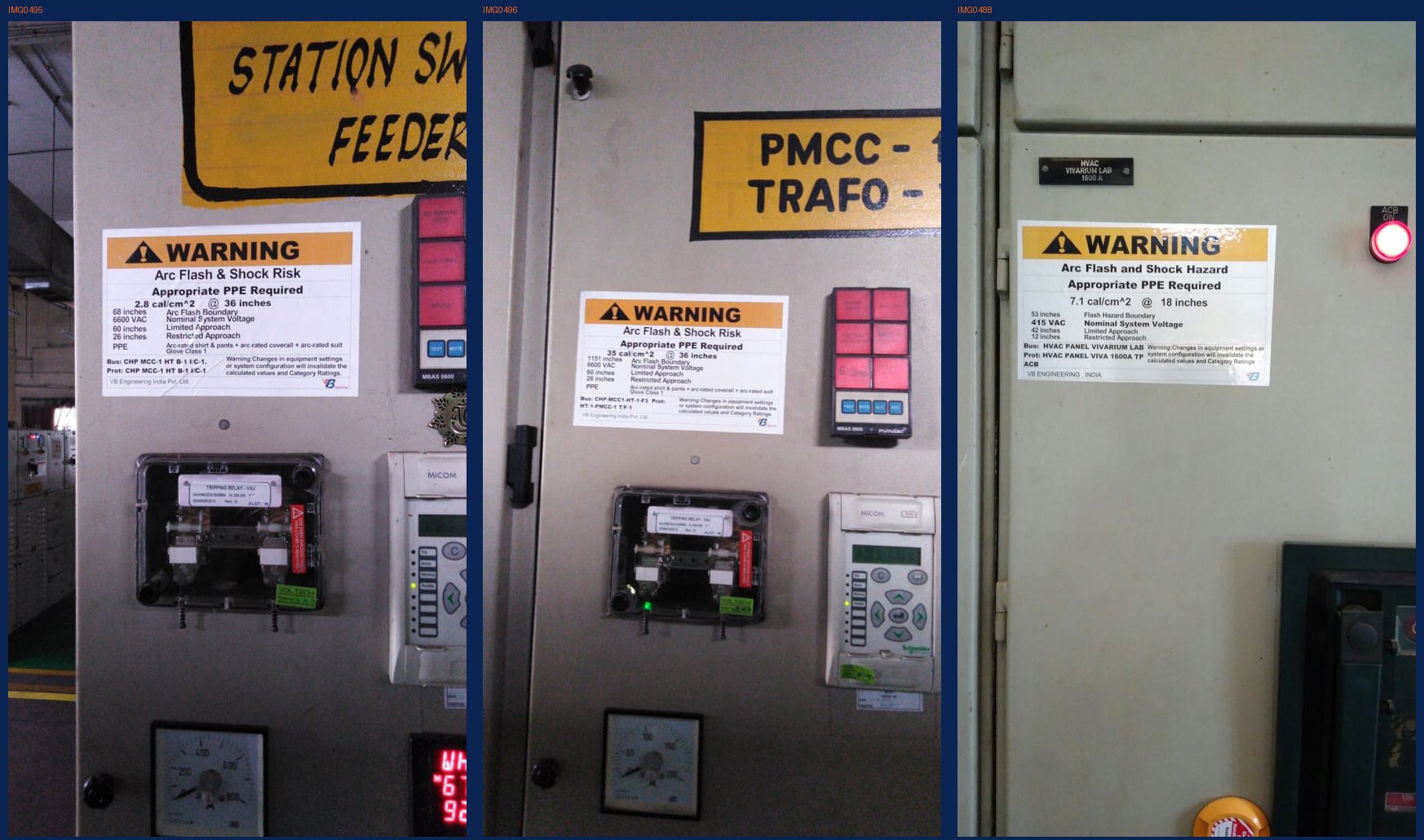
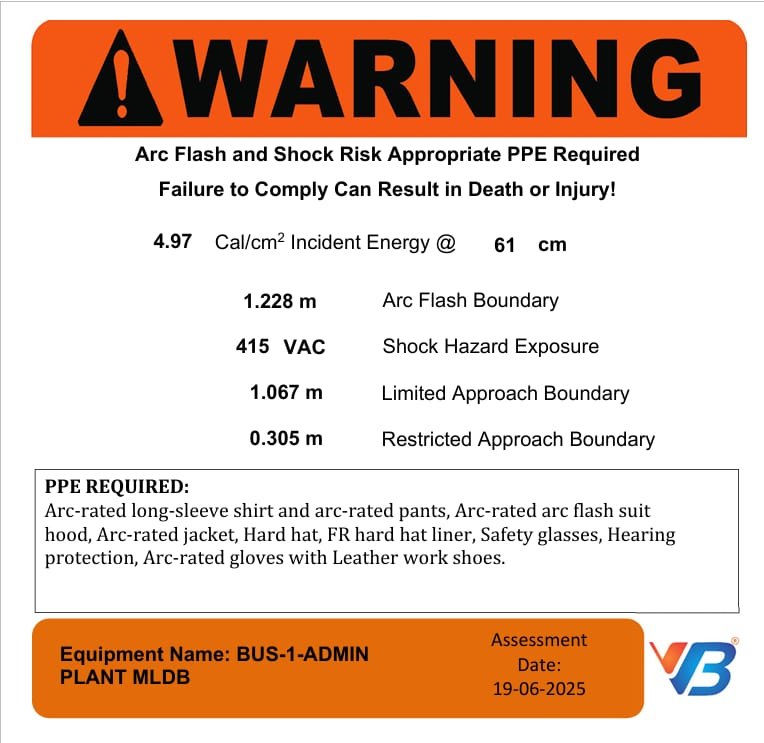
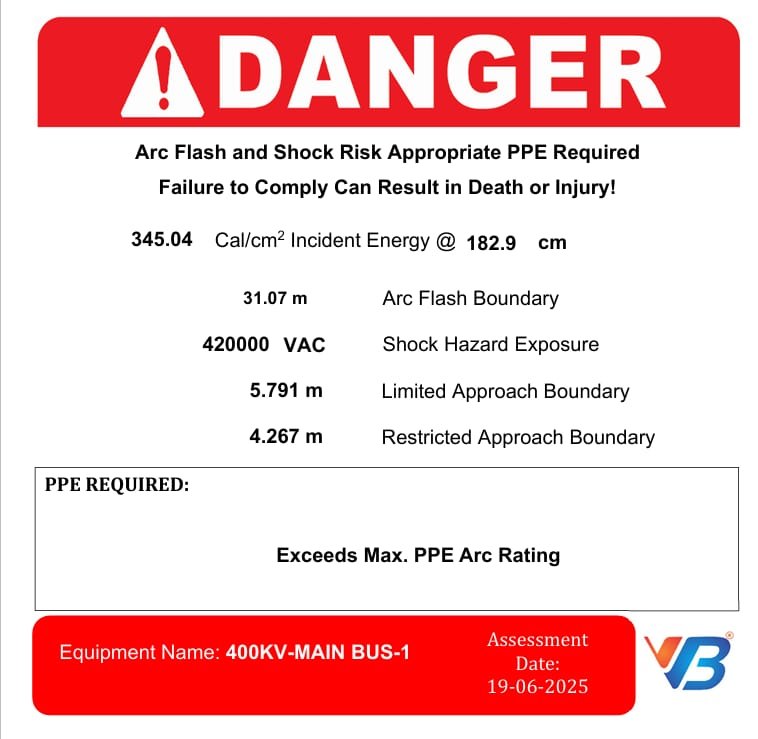
NEC 2026 Section 110.16(B) requires every arc flash warning label to show the nominal system voltage, the arc flash boundary, the available incident energy or required PPE level, and the date of the arc flash risk assessment. The date is new. NFPA 70E 2027, in force since 6 May 2026, requires that assessment to be reviewed at least every five years and after any system change. An undated label, or a date older than five years, no longer shows what an inspector, an insurer or a corporate EHS auditor expects to see.
| Label element | NEC 2023 | NEC 2026 | NFPA 70E 2027 |
|---|---|---|---|
| Nominal system voltage | Required | Required | Required |
| Arc flash boundary | Required | Required | Required |
| Incident energy or PPE level | Required | Required | Required |
| Date of the arc flash risk assessment | Not required | Required | Review at least every 5 years |
| Who is responsible for label accuracy | Not stated | Not stated | The equipment owner |
The five-year clock
Do arc flash studies expire?
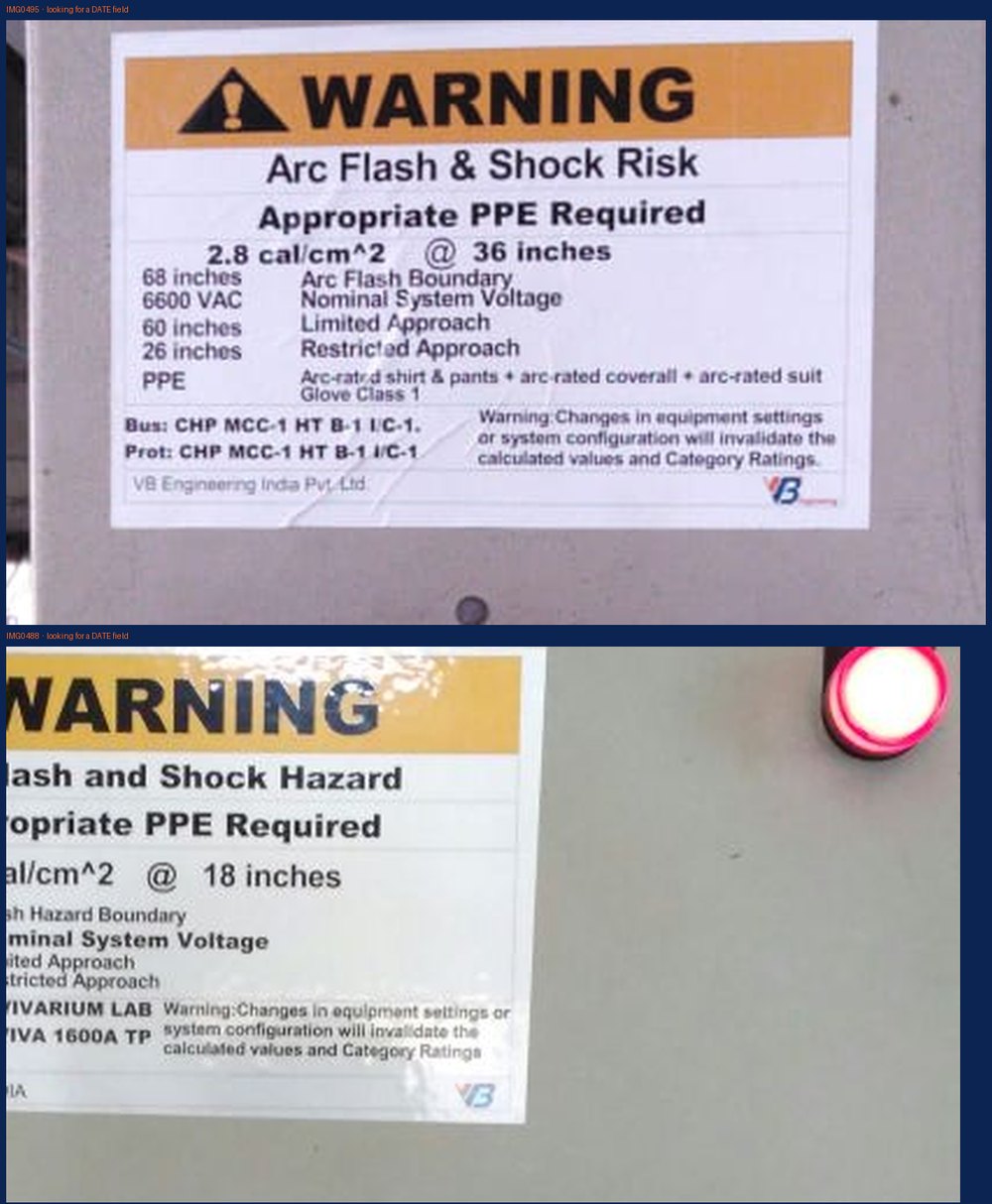
Yes, in practice. NFPA 70E 2027 requires the arc flash risk assessment to be reviewed at least every five years and whenever the electrical system changes. A study dated 2020 is already outside the window; a 2021 study runs out during 2026. NEC 2026 puts that date on the label where the inspector can read it, so an expired study is no longer a filing-cabinet problem. It is visible at the panel.
What resets the clock before five years
- A transformer replaced or re-tapped, or a change in utility fault current
- New feeders, a new switchboard, a new PDU lineup or a new battery cabinet
- Protective device settings changed, relays replaced, breakers retrofitted
- A generator, UPS or alternate source connected or re-configured
- An expansion phase at a data center campus, which usually does all of these at once
- Any label you cannot read from the working distance
The three people who will ask
Who asks for the label date, and when
Your insurer or FM Global
Underwriters ask for the arc flash study date and the label set at renewal. An undated label becomes a recommendation on the next loss-control report, and recommendations become premium.
The inspector at commissioning or expansion
New feeders, a transformer swap or a generator tie change the incident energy. The AHJ reads the label at the panel, not the study in the binder. The date is the first thing they look for.
Your corporate or parent EHS standard
Group electrical safety standards now mirror NFPA 70E's five-year review. The site has to show the date, show it is inside the window, and show who signed the study behind it.
What you receive
What does the written verdict contain?
- One line per label. Compliant, due for review, or overdue, with the clause that decides it.
- What is missing. Date, boundary, incident energy, PPE level, legibility, or the tell-tale signs that no incident energy analysis was ever done.
- Reuse or redo. A dated study inside five years with no system change can be re-labelled. Anything else needs a reassessment, and the verdict says which.
- The pricing basis if a reassessment is needed. Per bus, AC and DC scope stated, so you can budget it before anyone calls you.
Signed by the practice engineer who reviewed the photos. If a study follows, a US-licensed Professional Engineer is available to stamp it, and the UPS and battery DC scope that IEEE 1584-2018 leaves out is included in the quote, not sold as an extra.
Verdict · example layout
| Label | Finding | Verdict |
|---|---|---|
| Main switchgear | All four elements present, dated inside 5 years | Compliant |
| Panelboard LP-2 | No assessment date on label | Due |
| PDU 3A | Boundary shown, incident energy missing | Overdue |
| UPS battery cabinet | Generic hazard sticker, no study evidence | Overdue |
| ATS-1 | Dated 2019, generator added 2024 | Overdue |
Illustrative layout. Your verdict is written against your photos, with the clause cited for each line and the reassessment scope and pricing basis on the same page.
Why the verdict carries weight
Written by the team that has labelled 12,547 assets
Across data centers, pharma, power, oil and gas and process plants in 21 countries. The reviewer has seen your label type before.
NFPA 70E, NEC 110.16, IEEE 1584-2018, with ETAP and SKM PowerTools modelling. The verdict cites the clause, not an opinion.
The practice engineer who reviewed the photos puts their name on the page. A US-licensed Professional Engineer is available to stamp any study that follows.
UPS strings, battery cabinets and 800 VDC halls sit outside IEEE 1584's AC range. VB prices them in, not as an extra.
Printed, installed, photographed and logged against the one-line, so the next inspector finds every label where the study says it is.
No call unless you ask for one. The verdict is yours to forward, whoever does the work.
Who this is built for
If any of these is you, the verdict is worth two minutes
An inspection, an expansion or an insurance renewal inside twelve months.
You inherited a label set and a study binder and want to know, in writing, where you stand.
You want an independent engineering verdict to hand your client before the next maintenance window.
The UPS, battery and DC side was never studied, because the standard most firms use stops at AC.
Before you upload
Questions before you upload
What are the new arc flash label requirements in the 2026 NEC?
NEC 2026 Section 110.16(B) requires every arc flash warning label to show four things: nominal system voltage, arc flash boundary, available incident energy or the required PPE level, and the date the arc flash risk assessment was performed. The date is new in 2026. A label without it fails on sight.
How often do arc flash labels need to be updated?
At least every five years, and sooner whenever the electrical system changes. NFPA 70E 2027, in force since 6 May 2026, puts that review on the equipment owner. A new transformer, new feeders, changed relay settings or a generator connection resets the clock, because the incident energy on the label is no longer the incident energy on the bus.
Do arc flash studies expire?
Yes, in practice. A study older than five years no longer supports the labels under NFPA 70E 2027 Section 130.5, and under NEC 2026 the date on the label shows the inspector exactly how old it is. A 2020 study is already outside the window. A 2021 study runs out in 2026.
Does OSHA require an arc flash study?
OSHA requires the employer to assess electrical hazards and protect workers from them, under 29 CFR 1910.132(d) and 1910.333, and it cites NFPA 70E as the way to do it. An incident energy analysis with labels is how employers show that assessment was done. An inspector or an insurer asks for it by name.
My labels have no date on them. What does that mean?
It means they were installed under an earlier NEC edition and will not satisfy NEC 2026 110.16(B) as they stand. Whether the study behind them can be reused depends on its age and on what has changed in the system since. That is exactly what the VB verdict tells you, label by label.
Can I just stick a date on my old labels?
Only if the date is true and the study is still valid. Printing a fresh date on a label that reflects a 2018 calculation is a misstatement on safety equipment, and the first incident investigation will find it. If the study is inside five years with no system change, re-labelling is legitimate and VB can do it. If not, the study is redone first.
Which five labels should I photograph?
Pick five different equipment types: the main service switchgear, a distribution panelboard, a motor control center or PDU, a UPS or battery cabinet, and an automatic transfer switch. Shoot the whole label straight on in good light, with the equipment nameplate in frame if you can. Phone photos are fine.
What does the written verdict contain?
One line per label: compliant, due, or overdue, with the clause that decides it. What is missing from each label. Whether the existing study can be reused or must be redone. And if a reassessment is needed, the scope and the pricing basis per bus, so you can budget before anyone calls you. It is signed by the practice engineer who reviewed the photos.
How much does an arc flash reassessment cost?
It is priced per bus, with the AC and DC scope stated separately, so the number depends on how many buses your site has and whether UPS and battery systems are in scope. The verdict email gives you the pricing basis for your site. Upload the labels and you will have it in two business days.
Who at VB Engineering reviews the labels?
A practice engineer from the arc flash team that has delivered more than 1,000 arc flash assessments across 21 countries since 2014, with a US-licensed Professional Engineer available to stamp any study that follows. Every verdict is written and signed by a person, not generated by a form.
Find out before the inspector does.
Upload five labels now and the verdict is in your inbox within two business days. Free, written, signed.
Get my label verdictPrefer email? Write to connect@groupvb.com with the photos attached and the state in the subject line.