Saudi Arabia · Compliance
Aramco SAES-P-100 §7.5.3 makes arc flash analysis mandatory in Saudi Arabia.
Saudi Aramco SAES-P-100 §7.5.3 requires an arc flash hazard analysis to IEEE 1584 on all new distribution equipment, with a maximum allowable incident energy of 8 cal/cm². GI-2.721 binds contractors and gates energised work on the completed analysis. SABIC and SEC apply NFPA, IEEE and IEC. In Saudi Arabia the standard that binds you is your client's.
Since 2014 · 1000+ arc flash studies delivered
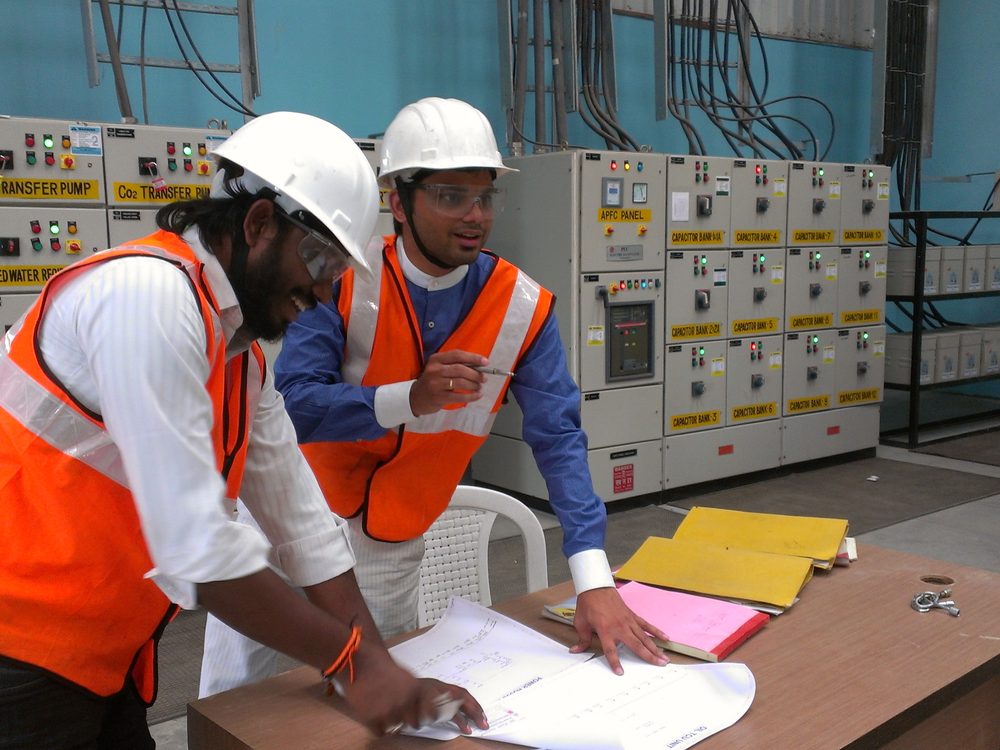
























What stops when the analysis is not there
On a Saudi project the cost of a missing arc flash analysis is not a penalty notice. It is time. Each of the four below is written into the client's own instruction, and each of them halts work that is already mobilised.
The energised work permit is not issued
Energised work requires that the arc flash analysis has been completed, the incident energy levels determined, and the engineering, administrative and PPE controls put in place first. No analysis, no permit. No permit, no work at the panel.
The design does not clear review
Maximum allowable incident energy is 8 cal/cm². A bus above it is a design item to be engineered out at detailed design. Found later, the same problem is a construction change on an energised plant, at construction prices.
The change gets blocked at MOC
No modification, renovation or change in relay protection settings takes place until the management-of-change procedure, including a review and update of the incident energy analysis, is complete. A coordination change and an arc flash result cannot be kept apart.
It surfaces in the annual audit
Proponents perform site inspections and audits at least annually to verify certification, procedures, controls and PPE. A gap found in an audit is a gap found in front of your client, on their timetable rather than yours.
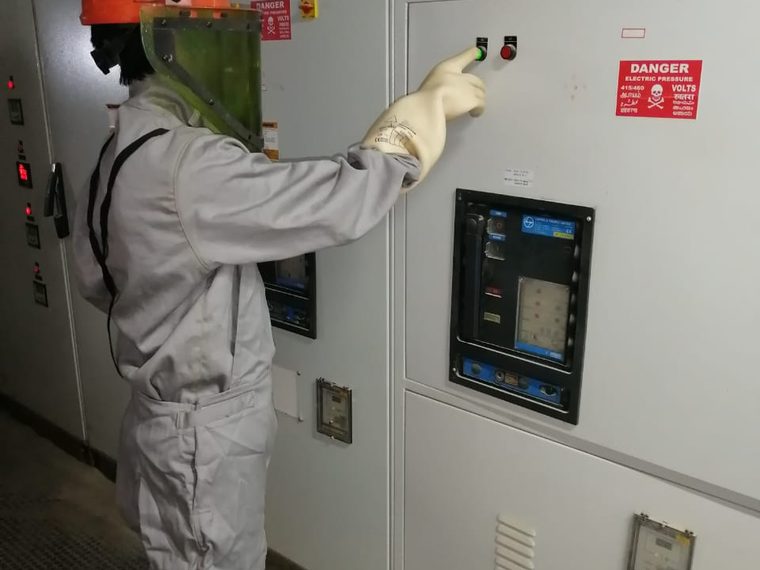
What Saudi Aramco requires
This is the clause, quoted. It is the most prescriptive arc flash instrument in the Kingdom and it puts a number on the outcome.
“The design of all new electrical distribution equipment rated up to 38 kV shall include an arc flash hazard analysis in accordance with IEEE 1584, to determine the Arc Flash Protection Boundary and the incident energy a worker may be subject to. For DC equipment the Arc Flash Hazard Analysis shall be based on NFPA 70E… The maximum allowable incident energy shall not exceed 8 Cal./cm².”
Saudi Aramco SAES-P-100, Basic Power System Design Criteria, §7.5.3
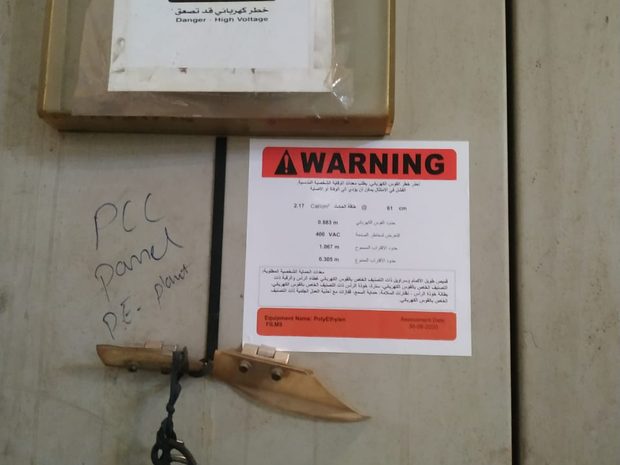
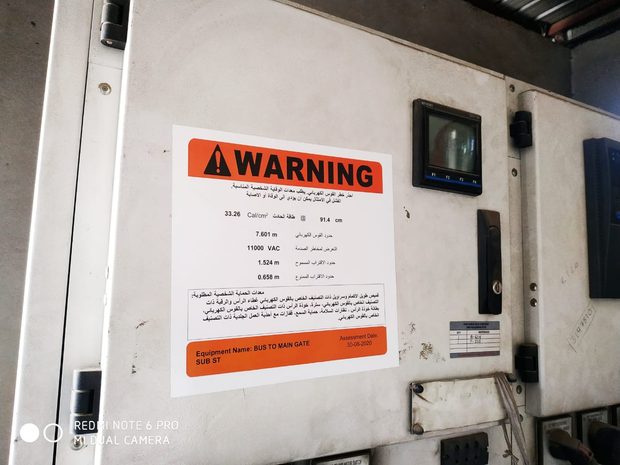
8 cal/cm² is a design ceiling
Not a PPE selection band. Where a bus exceeds it, the answer is engineered mitigation, not heavier clothing. A study that only demonstrates below 40 does not satisfy the design stage.
ETAP, or a model ETAP can read
SAES-P-100 §7 mandates ETAP, or a model whose network database ETAP reads directly with no middleware, and requires the contractor to state in writing that the files are interfaceable. Input and output files are handed to the proponent.
If your plant is designed to IEC
You still calculate to IEEE 1584. IEC has no incident-energy calculation standard · 61482 is clothing, 61641 is switchgear containment, 60909 is short circuit, TR 63491 is PPE selection. IEC 60909 supplies the input; IEEE 1584 does the calculation.
Arc flash sits at the end of the study sequence, after load flow, short circuit, motor starting and protection coordination · the full study sequence.
What SABIC and SEC require
Three buying families, three routes. Aramco puts a number on it. The other two defer to the international standards and leave the toolset open.
SABIC
NFPA, IEEE and IEC. ETAP or CYME accepted, neither mandated. The specification travels with the affiliate, so the governing document is the one attached to your purchase order, not a corporate standard you can download.
SEC
NFPA, IEEE and IEC, across distribution and transmission. Two study shapes, not one. ETAP or CYME accepted. Connection-point fault levels move as the network is reinforced, which is what invalidates an older result.
When the result stops being true
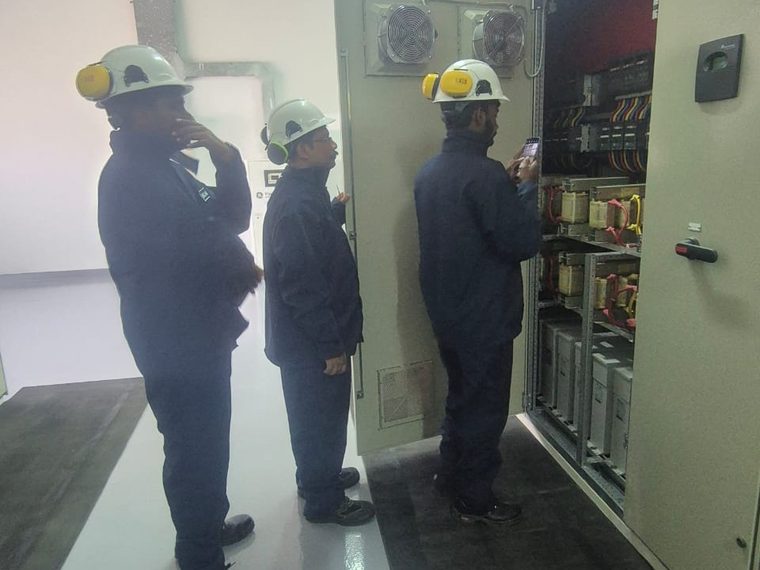
NFPA 70E 130.5 sets a five-year review. The five years are the outer limit, not the trigger. Any change in available fault current voids the prior incident-energy result, whatever the calendar says.
- A brownfield tie-in that changes the source impedance at an existing bus
- An expansion, a new transformer, or a generator added to the system
- A change to protective device settings, which is why a coordination change and an incident-energy result cannot be kept apart
- A utility reinforcement that raises the fault level at your connection point
One figure to be careful with. Several vendors in this market state a re-study interval of “every two to three years, or a 30% change in load”. That figure traces to no regulation, in Saudi Arabia or anywhere else. We do not repeat it.
Keeping the result current across a plant is a programme rather than a project · keeping it current after the first study.
Why the client standard is the instrument that matters
The Saudi national layer creates no arc flash duty. That is not a gap in your obligations. It is the reason the specification attached to your purchase order decides your scope.
SBC 401 · Saudi Electrical Code
Built on IEC 60364, not the NEC. Scope stops at 1000 V AC and excludes generation, transmission and distribution. It names an electric arc among the hazards a design must guard against, with no calculation, no boundary, no cal/cm² and no label duty attached. Nothing in it tells you what number to put on a label.
SASO
No technical regulation on arc flash or on incident-energy calculation was found. The PPE and clothing regulation governs the equipment a worker wears, not the number that selects it.
MHRSD occupational safety
Requires hazard identification, evaluation and the provision of protective equipment. The word arc does not appear. Arc flash is captured implicitly, through the duty to evaluate a hazard and equip against it.
HCIS · what we will not claim
The High Commission for Industrial Security is binding on Saudi industry and gates facility operation. SAF-12 is the electrical safety directive, its only listed deliverable is electrically classified area maps, and the directive text is restricted. We have not read it, so we do not state what it requires. Where a competitor badges HCIS compliance for arc flash, ask which directive and which clause.
What we have executed in Saudi Arabia
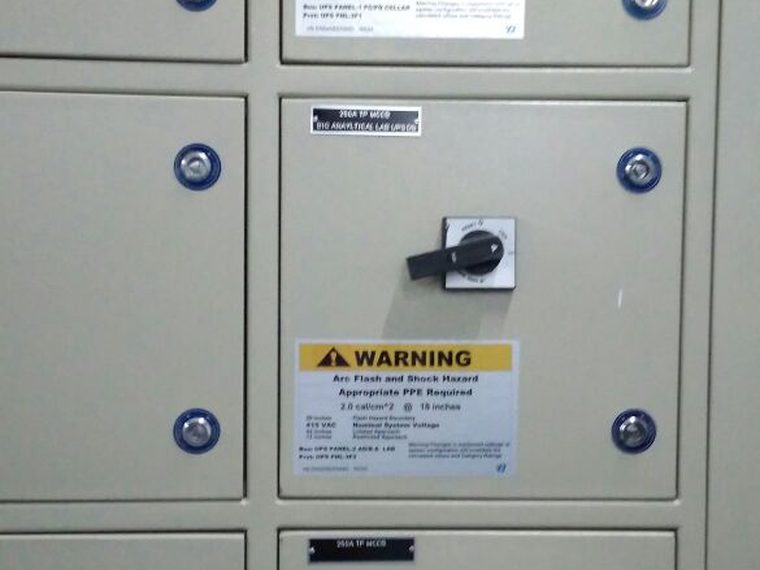
Delivered on Saudi Arabian projects to SAES-P-100 §7.5.3, for Aramco vendors, SABIC affiliates and SEC.
We state what was executed and delivered. We do not claim another party's approval.
Questions the specification raises
Is an arc flash study mandatory in Saudi Arabia?
Yes, by contract rather than by statute. Saudi Aramco SAES-P-100 §7.5.3 requires an arc flash hazard analysis to IEEE 1584 on new distribution equipment, and GI-2.721 binds contractors working on Aramco sites. VB Engineering delivers to that clause. SABIC and SEC impose NFPA, IEEE and IEC through their own specifications.
Does Saudi law require an arc flash study?
No Saudi statute names arc flash. SBC 401 is built on IEC 60364, stops at 1000 V and excludes generation, transmission and distribution. The obligation reaches you through your client's standard, which is why VB Engineering writes every Saudi deliverable to the client specification rather than to a national code.
What happens if an arc flash study is not done on a Saudi project?
Work stops rather than a fine arrives. GI-2.721 §7.4 gates the energised work permit on a completed analysis, §7.7 blocks any protection setting change at MOC without an updated result, and §7.8 puts it in front of an annual audit. VB Engineering scopes around whichever of those is biting.
What does Saudi Aramco require for an arc flash study?
IEEE 1584 for AC, NFPA 70E for DC, and a maximum allowable incident energy of 8 cal/cm². SAES-P-100 §7 mandates ETAP, or a model ETAP can read directly, with input and output files handed to the proponent. VB Engineering models in ETAP and hands over the files with the report.
What is the maximum incident energy allowed by Saudi Aramco?
8 cal/cm². SAES-P-100 §7.5.3 sets it as a design ceiling on the equipment, not a PPE selection band. Where a bus exceeds it, mitigation is engineered rather than absorbed by heavier clothing. VB Engineering reports the exceedance and the mitigation options in the same document.
Does SBC 401 require arc flash labelling?
No. SBC 401 is IEC 60364-based and carries no labelling clause at all. It names an electric arc among the hazards a design must guard against, with no calculation, boundary or label duty attached. VB Engineering labels to the client specification instead, because that is the document that binds.
Does IEC have an arc flash standard?
Not for incident energy. IEC 61482 covers arc-rated clothing, IEC 61641 switchgear internal-arc containment, IEC 60909 short circuit, and IEC TR 63491 PPE selection. None calculates incident energy. VB Engineering calculates to IEEE 1584 with IEC 60909 supplying the short-circuit input.
Which software is required for a Saudi Aramco arc flash study?
ETAP. SAES-P-100 §7 mandates ETAP, or a model whose network database ETAP reads directly with no middleware, and requires a written statement that the files are interfaceable. VB Engineering models in ETAP and hands the input and output files over with the deliverable.
Do you have engineers near me?
We operate globally. Our teams deliver arc flash studies in more than 20 countries, and our systems are digitised end to end, from data capture through modelling and independent review to label production. We can assess a plant and deliver the arc flash report anywhere in the world.
Proximity decides the travel plan. It does not decide whether the work can be done. What matters is that the team that walked your plant is the team that builds the model, and the engineer who saw the panel is the one who answers for the number.
Are you compliant with SAES-P-100 §7.5.3? Talk to VB Engineering.
Send us the client specification your project is written to. We will tell you what the study has to contain, what the deliverable looks like, and what it is priced against.