Arc flash studies for data center campuses, AC and DC.
Your last study covered the switchgear. The battery rooms, the UPS DC buses and the battery cabinets sat outside the range it was calculated against.
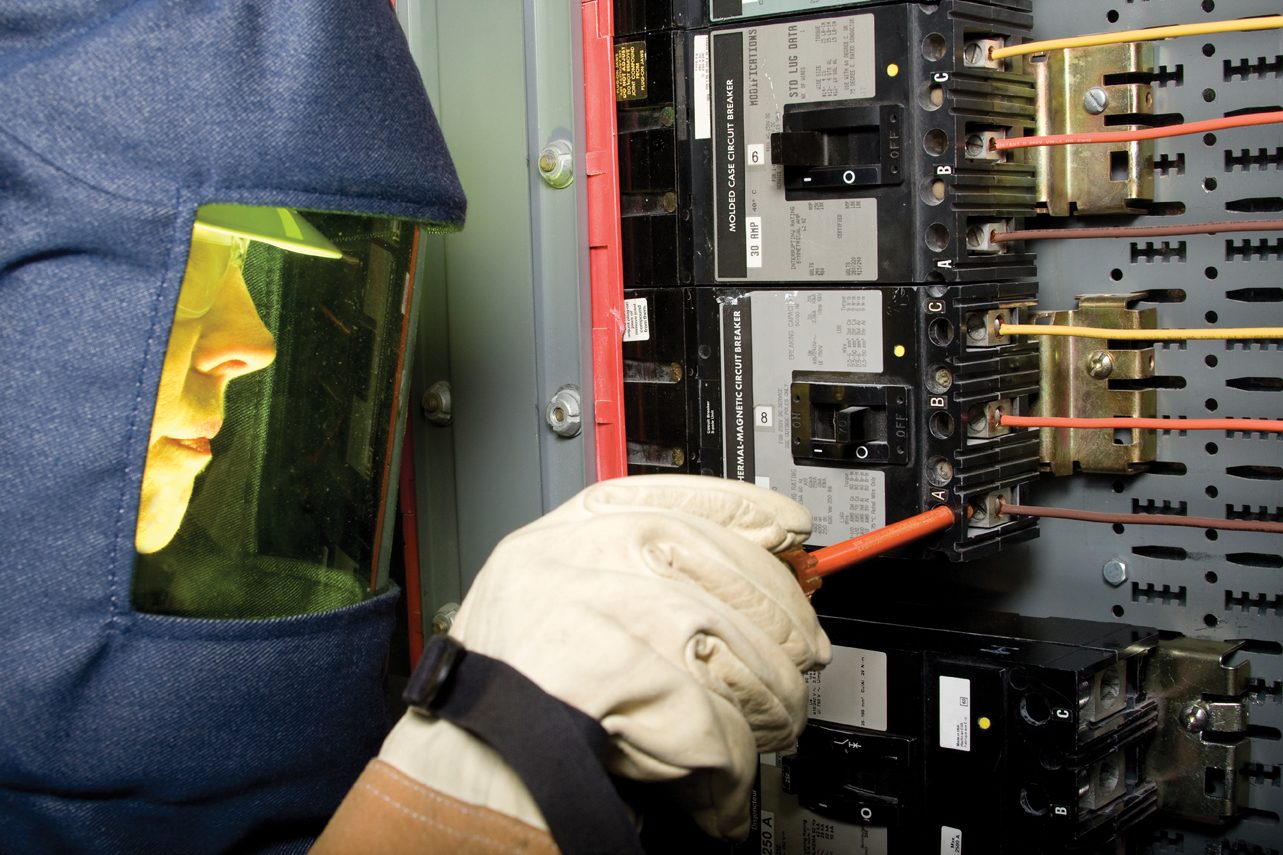 Energised work, arc-rated PPE
Trusted on plants that cannot stop
VB Engineering calculates and signs arc flash studies for data center campuses across the United States, covering the AC distribution under IEEE 1584-2018 and the DC systems that standard does not reach. Every deliverable is drafted by a practice lead, signed by a licensed Professional Engineer and independently reviewed before issue.
Which specification your US site is being held to
Three instruments decide what your study has to produce, and they do different jobs. One sets the duty on the employer, one sets the calculation method, and one decides what an inspector reads off the label at the panel.
NFPA 70E 2027 sets the work practice and took effect on 6 May 2026. IEEE 1584-2018 sets the calculation method for AC systems from 208 V to 15 kV. OSHA 29 CFR 1910.132(d) requires a written certification naming the workplace evaluated, the person certifying and the date. Whether a study is required at your site at all is set out clause by clause on NFPA 70E 2027 and what changed.
What changes on our side is the deliverable, not the argument: the DC systems are modelled and reported separately with the method named, and the whole package carries a Professional Engineer seal rather than an unsigned calculation pack.
Not sure which specification your client is holding you to?
Where we work in the United States, and how quickly we get there
Campus work runs on outage windows and permit gates, not on calendars. What follows is how the field team reaches your site and what it needs in place before it arrives.
Give us the site location and the outage dates.
Four bases, four ways the work reaches your campus
Campus electrical topology is broadly similar wherever the site sits. What changes is how fast a crew gets to it and what the local inspection regime expects to see on the label.
Atlanta and Georgia
The largest data center construction market in North America. Atlanta held 2,882 MW under construction at the end of H1 2026, ahead of Northern Virginia at 2,420.2 MW, after a 52.3 percent rise year on year (CBRE, North America Data Center Trends H1 2026, 27 August 2026). Campuses here energize in phases, and the incident energy at a board changes between one commissioning stage and the next, so a study signed at stage one is already describing a different plant by stage three.
Indianapolis and the Midwest
Greenfield campuses arriving at speed across Indiana and Ohio, with no incumbent engineering relationship and no legacy model to inherit. The first study is the one that sets the baseline every later phase is measured against.
Houston and the Texas Gulf Coast
The VB US base, and the deepest concentration of heavy electrical engineering talent in the country. Campus work across the South is served from here, alongside the refining and petrochemical estate the practice has worked in for a decade.
New Jersey and the Northeast metro
The densest operating capacity in the Northeast and the strictest inspection culture in the country. Qualified staff work 480 V bus duct, large-format UPS, transfer switches and medium voltage distribution around the clock, so the energized-work justification is a weekly question rather than an annual one.
Anonymised by rule. Clusters are described by region. No site, operator, estate or address is named on this page.
Is your site in one of these clusters, or somewhere else in the United States?
What to put in the scope before you go to tender
Two quotes for the same campus can differ by a multiple, and the reason is almost never margin. It is what each one counted, and whether the DC systems were counted at all.
- What the study must coverEvery bus, switchboard, PDU, remote power panel and UPS output in scope, counted. State whether battery strings and battery cabinets are inside the count or outside it.
- What we will need from your plantSingle-line diagrams, nameplate data, cable schedules, protective device settings and utility fault levels. Whatever is missing, the walkdown captures.
- How to tell a good answer from a cheap oneNormal, alternate feed, generator and tie-closed. Each operating scenario is a separate model run and a separate set of results, and dual-fed boards are the ones that multiply.
What to put in writing
Name the standard and the edition, not the family. State the method for the AC distribution and the method for the DC systems separately. Require the labels to be printed, installed and photographed, not merely supplied. Require a conformance matrix mapping every clause in your specification to the page of the report that satisfies it.
How to read what comes back
Ask each bidder what bus count their price was built on, whether the battery systems are in or out, how many operating scenarios are modelled, and who signs. A quote that cannot answer those four has priced a different job.
Take the checklist and the data sheet. Use them whether or not you invite us to bid.
How site data is collected and verified at your plant
Pre-visit pack
Drawings, nameplate schedules and protective device settings requested before mobilisation, against a data sheet that lists exactly what is needed.Access and permits
Site induction, escorted access and, where a board cannot be de-energized, an energized work permit raised and approved before the crew arrives.Walkdown
Nameplate and cable data captured at the panel, board by board, and reconciled against the drawing rather than assumed from it.Digitised capture
Network model built from the reconciled single-line, with each operating scenario configured as a separate run.Verification
Short circuit, protective device coordination and incident energy calculated per bus per scenario. DC systems calculated separately, with the method stated.Handover on site
Labels printed, installed on the board each one describes, and photographed as a record. Report, model file and conformance matrix issued together.Want the pre-visit data sheet before you commit to anything?
Delivered in the United States, in the form your site can use
What arrives at the gate is not a PDF. It is a set of things a person who was not in the room can check, on site, against the plant.
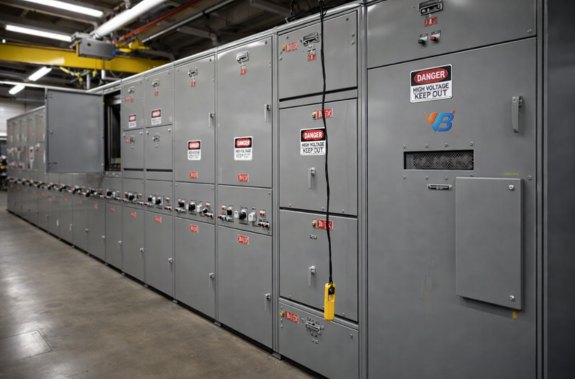 On site
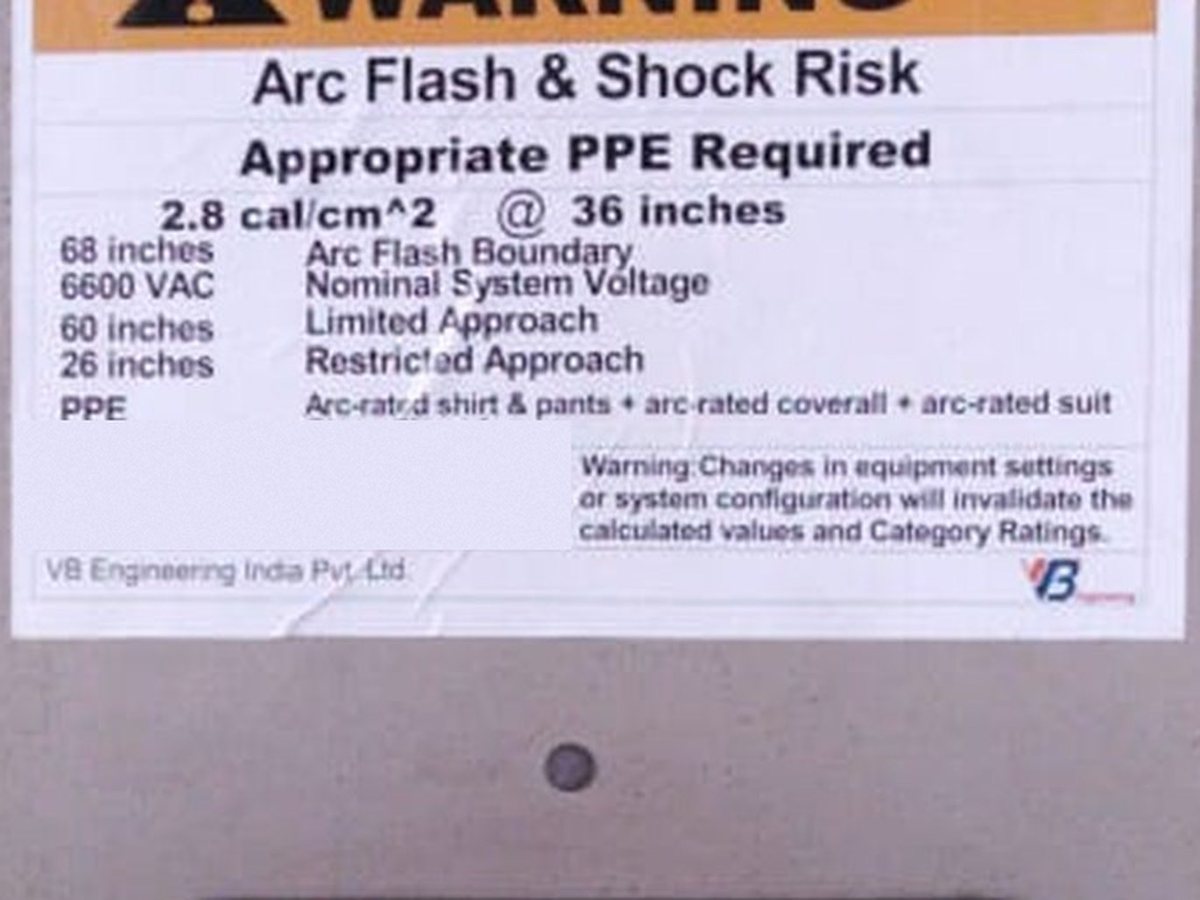 Handover
Need the labels in a language your contractors actually read?
English
Labels, report and matrix are issued in English for United States sites.On your site
Qualified-person briefing for the staff who will work the boards the labels describe, delivered in the same visit as the labelling pass.PE stamped
Drafted by a practice lead, independently reviewed, then stamped and signed by a licensed Professional Engineer for the United States.Where the AC study stops and the DC scope begins
This is the part most campus studies leave open, and it is the part a data center has most of. It is also where a colocation scope has to be explicit, because the label on a shared board is read by the operator's staff and the tenant's.

The standard stops before your battery rooms do.
IEEE 1584-2018 is validated for AC systems from 208 V to 15 kV. Your UPS DC bus, battery strings and battery cabinets sit outside that range, and no consensus DC standard covers them. A report that prints one incident energy figure across the whole site has not told you how the DC number was produced. Ask that question before you sign.
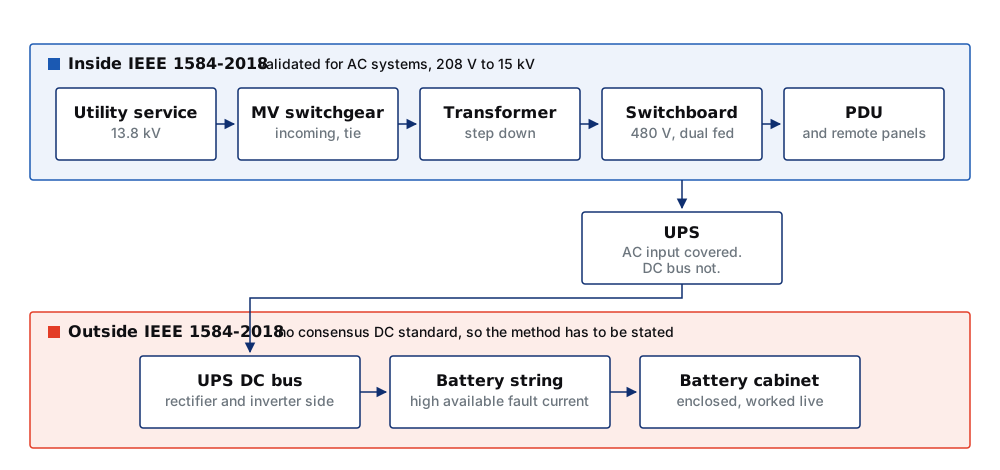
UPS, battery strings and battery cabinets
IEEE 1584-2018 is validated for AC systems from 208 V to 15 kV. A UPS DC bus, a battery string and a battery cabinet are none of those. There is no consensus DC standard, which means the method has to be stated rather than assumed. VB states it, prices that scope separately, and signs it.
800 VDC distribution for AI racks
AI halls drawing 400 kW and more per rack are moving to 800 VDC distribution, and that is a different question again from a 540 V UPS bus. A manufacturer study published in August 2026 modelled rack-level and centralised 800 VDC architectures and reported incident energy below 1.2 cal/cm² at rack level even without dedicated protection, with the centralised case falling to AC-comparable levels once standard protective devices were applied. The same study states plainly that no industry-wide framework yet addresses converter-fed 800 VDC systems, and that conventional calculation methods can overstate DC incident energy because they do not fully account for transient fault behaviour (ARC Advisory Group, 800 VDC arc flash analysis, 4 August 2026). Two things follow for your specification. A DC number is only meaningful if the method that produced it is named, and a conservative number is not automatically the safe one, because over-stated incident energy buys PPE you do not need and can push work into shutdowns that were avoidable. VB names the method, states the assumptions beside the figure, and signs it.
Dual-fed boards and transfer switches
Concurrent maintainability means equipment is worked on while the load stays up, by design. Dual-fed and multi-source topology raises the bus count, and bus count is what the study is built on. Each source configuration is a separate scenario, not a footnote to one.
Is your site in one of these, or something else entirely?
Eighty-seven buses, five blocks, one campus
A large multi-building industrial campus. Five process blocks on one site, shared medium voltage distribution, and no single-line diagram anyone still trusted. Eighty-seven buses were modelled in ETAP from a walkdown rather than from the drawing, because the drawing and the plant had stopped agreeing years earlier.
Thirty-one buses came back above 25 cal/cm² in the as-found state, concentrated at the drive transformers. The reflex answer is heavier PPE. Relay settings alone resolved twenty-two of those thirty-one, a 71% reduction, before a single piece of equipment was bought. Nine buses needed engineering work and those were scheduled into the next planned outage rather than forcing an unplanned one. Two hundred and forty staff were trained against the new labels. The group EHS audit closed clean.
Read it as a campus and the shape is familiar. Five process blocks behave like five data halls. Shared medium voltage distribution behaves like a shared utility service. And the settings-first result is the reason a study pays for itself before the PPE order is raised.
Anonymised by rule. Described by scale band, plant type and structure. No client, site, city or capacity figure appears. The bus counts, the energy threshold and the outcome are exact, because they are the proof and they identify nobody.
Ask for the redacted version of this report.
Questions we get from US sites
Does IEEE 1584 cover DC systems?
No. IEEE 1584-2018 is validated for AC systems from 208 V to 15 kV. UPS DC buses, battery strings and battery cabinets fall outside that range, and there is no consensus DC standard covering them. A study that reports a single figure across both without naming the DC method has not told you how the DC number was produced.
Are PDUs and remote power panels inside the scope?
They should be, and the scope should say so in writing. A PDU feeds the equipment a technician actually opens, so leaving it out of the count leaves the boards closest to the work unlabelled. Ask every bidder whether PDUs and remote power panels are inside the bus count their price was built on.
Does a dual-fed board need two studies?
One study, more than one scenario. Each source configuration produces different fault levels and different clearing times, so normal, alternate feed and tie-closed are modelled as separate runs and reported separately. Dual-fed topology is one of the main reasons campus bus counts run higher than a comparable industrial site.
Can the study be done without a shutdown?
Most of it, yes. Nameplate and cable data are captured at the panel under escorted access and, where a board cannot be de-energized, an energized work permit. Where a board must come down, that window is agreed before mobilisation and the labelling pass is scheduled inside it. The issued report is stamped and signed by a licensed Professional Engineer.
Question not answered here? It is the one worth asking us directly.
What else your US site needs around the study
Short circuit study
Fault levels at every bus. The incident energy calculation cannot start without them.
Before the studyProtective device coordination
Clearing times decide the incident energy. Settings are where the number is won or lost.
With the studyDC arc flash study
The method for the battery rooms, the UPS DC buses and the battery cabinets.
With the studyUPS and battery sizing
The system the DC scope is calculated against, sized and documented.
After the studyArc flash and safety AMC
The reassessment clock, the annual audit and the retraining on one calendar.
After the studyNFPA 70E 2027, what changed
The edition in force since 6 May 2026, and which clauses moved.
Send us your bus and PDU count
Tell us how many buses, PDUs and UPS units are in scope and what the DC bus voltage is. We will tell you what a comparable scope should contain and whether your DC systems fall inside or outside IEEE 1584, whether or not you invite us to bid.
- A licensed Professional Engineer replies inside 24 hours
- Your scope marked against the instrument that applies here
- The checklist and the data sheet, whether or not you invite us to bid
Scope your US site
- Site location and access constraints
- Bus and panel count, or the drawings you hold
- Your outage or shutdown window