Chemical plant P&IDs that match the pipe. A HAZOP that holds at audit.
1,000+ studies delivered since 2014, with field engineers who walk chemical, agrochemical and paint plants before they sign a drawing.
Trusted by the World’s Most Demanding Plants.

























































What makes a chemical plant update its P&IDs and repeat the HAZOP?
Chemical plants call us for six reasons, and the most common is a change to the plant: a new block, a new product or a new solvent.
Which Indian rules apply to P&IDs and HAZOP at a chemical plant?
Indian law sets no calendar for redrawing P&IDs, yet four instruments make a stale drawing set a finding at audit, in a safety report or in an environmental clearance.
| Instrument and clause | What it means for your drawings and HAZOP |
|---|---|
| MSIHC Rules 1989 · Rule 10(4), 10(6) | The occupier of a major hazard site appoints an expert who is independent of the plant for a safety audit, renews it every year and sends the report to the authority within 30 days. |
| MSIHC Rules 1989 · Rule 11(1) | Before a change that could materially alter the last safety report, a further report goes to the authority at least 90 days ahead. |
| IS 15656:2006 · Cl 5.1.2.3, 8(g) | The code of practice names detailed P&I drawings as a HAZOP input and asks for the analysis to be repeated after a major change in configuration. |
| EIA Notification 2006 · standard ToR 5(f) | An expansion of a synthetic organic chemicals unit needs hazard identification and a risk assessment for storage and handling of hazardous chemicals and solvents in its EIA report. |
From 21 November 2025 the OSH Code 2020 took over from the Factories Act 1948. The MSIHC Rules come under the Environment Protection Act, so they stand unchanged. Related services: HAZOP study · P&ID as-built drawings.
What does a FieldSure engagement cover in a chemical plant?
You choose the blocks. Every process, storage, utility and effluent P&ID inside them is traced on site, corrected in CAD and then studied in the HAZOP.

- Process P&IDs: reactors, distillation, crystallisers, dryers, solvent recovery
- Tank farms and storage: bulk solvents, acids, loading and unloading
- Utilities: steam, thermic fluid, brine, nitrogen, cooling water
- Effluent, ETP and ZLD plant P&IDs
- Walkdown of each line, marked up in red on the drawing
- LiDAR scan where racks and tank farms are too dense to trace by eye
- Register of every field-versus-drawing difference
- Corrections made in your own CAD files and standard
- HAZOP chaired by an engineer independent of your plant
- Hazardous area classification alongside the HAZOP, on request
- Action register with owners and close-out dates
Share the drawing register for your blocks, tank farm and utilities, and we price what is actually there.
How much does a HAZOP and P&ID updation cost for a chemical plant?
Chemical plant FieldSure work is priced drawing by drawing: each verified P&ID carries a rate, and the HAZOP is priced on the nodes and study days those drawings create. Enter your P&ID count in the form below and an engineer emails a checked price range with a written proposal.
| Part of the work | How it is priced | What moves the price |
|---|---|---|
| Field-verified P&ID | Per drawing verified: walkdown, redline, CAD correction and checking | Condition of your existing drawings, pipe-rack congestion, CAD format |
| HAZOP on verified drawings | Per P&ID reviewed, from node count and study days | Process complexity, batch steps, number of nodes, chairman days |
| LiDAR scan (where needed) | Per area scanned | Tank farm and rack size, height, number of scan positions |
Get a price estimate
Enter three figures. An engineer compares them with chemical plants we have priced before and emails a range with the proposal.
An engineer validates your inputs and emails the range with a written proposal. No obligation, and five P&IDs can be verified on site first if you want proof.
How does VB run FieldSure on a chemical site, step by step?
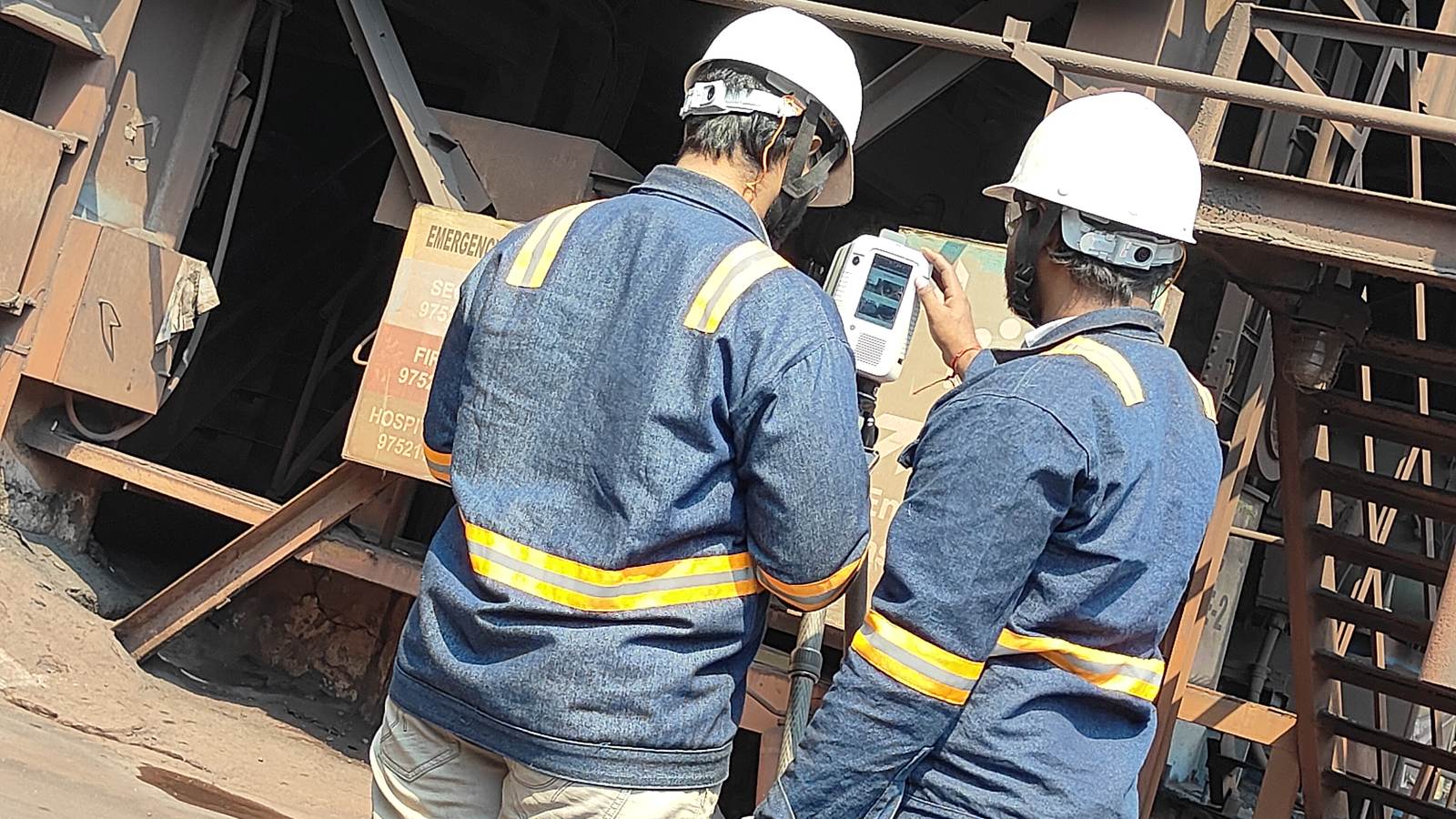
The work runs in four steps, from the first walkdown of your blocks and tank farm to a signed HAZOP report with actions your team can close.
Capture
Each line in the agreed boundary walked or laser scanned, tank farm included.Reconcile
P&IDs corrected in your CAD format, with every change logged.Revalidate
HAZOP led by an independent chairman on the corrected set.Sustain
New products, solvents and tie-ins kept on the drawings.A HAZOP on unwalked drawings reviews a plant that no longer exists. The study team can only question lines that are on the drawing. A temporary hose that became permanent or an undrawn solvent transfer line is invisible to the HAZOP, and its hazard stays off the register.
Which scanners and software does VB use for P&ID and as-built work?
VB captures plants with the Leica RTC360 laser scanner, registers the scans in Leica Cyclone REGISTER 360 PLUS and Autodesk ReCap Pro, and draws P&IDs and 3D models in AutoCAD Plant 3D and Autodesk Revit. Your drawings come back in the format your engineers already open every day.
| Stage | Tools we work in | What you receive |
|---|---|---|
| Capture | Leica RTC360 laser scanner · FARO Focus and Trimble X7 where your site specifies them · field walkdown with redline markup | Coloured 3D scans of every area in scope, with photos |
| Register | Leica Cyclone REGISTER 360 PLUS · Autodesk ReCap Pro | One registered point cloud (E57, RCP or RCS) |
| Draw P&IDs | AutoCAD Plant 3D P&ID · AutoCAD P&ID · AVEVA and Hexagon Smart P&ID formats on request | Verified P&IDs in DWG and PDF, with the tag database |
| Model | AutoCAD Plant 3D · Autodesk Revit | 3D plant model, isometrics and general arrangement drawings |
| Review | Autodesk Navisworks | One federated model your team can walk through and mark up (NWD) |
Running a different platform? Tell us which one in the form. We deliver in the software and drawing standard your plant already uses.
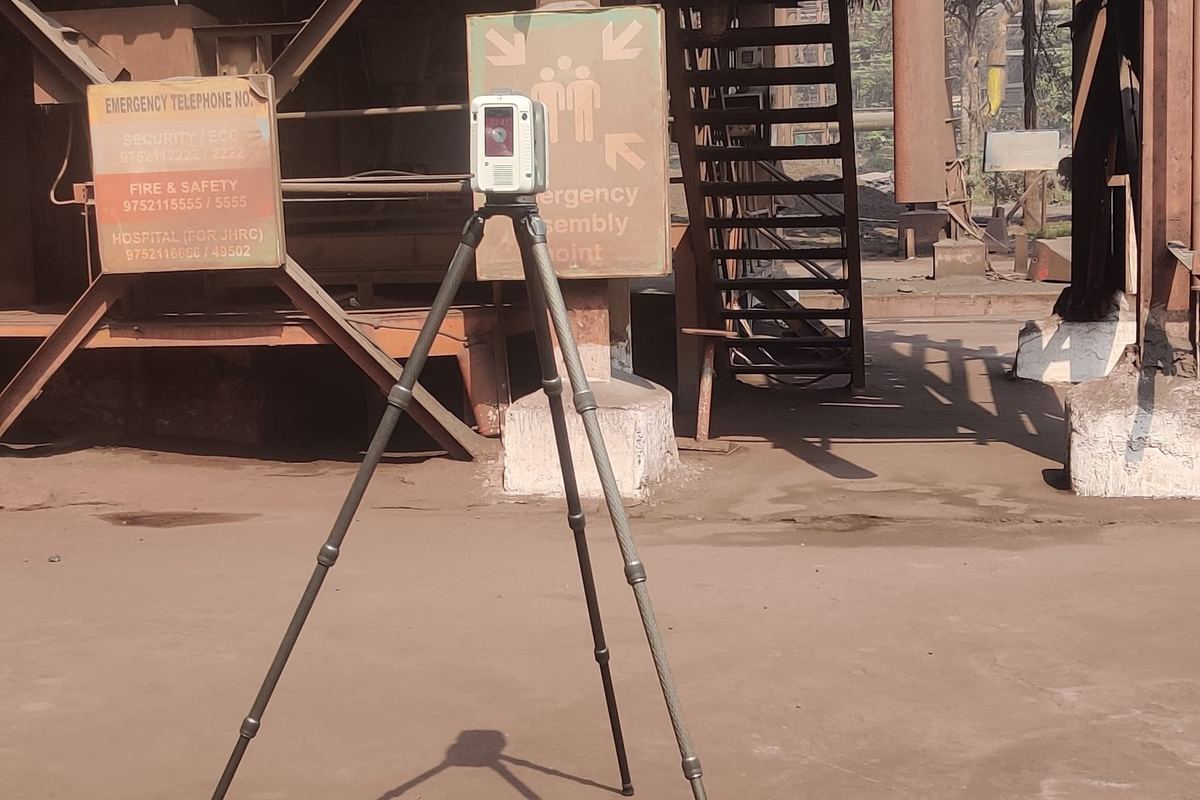
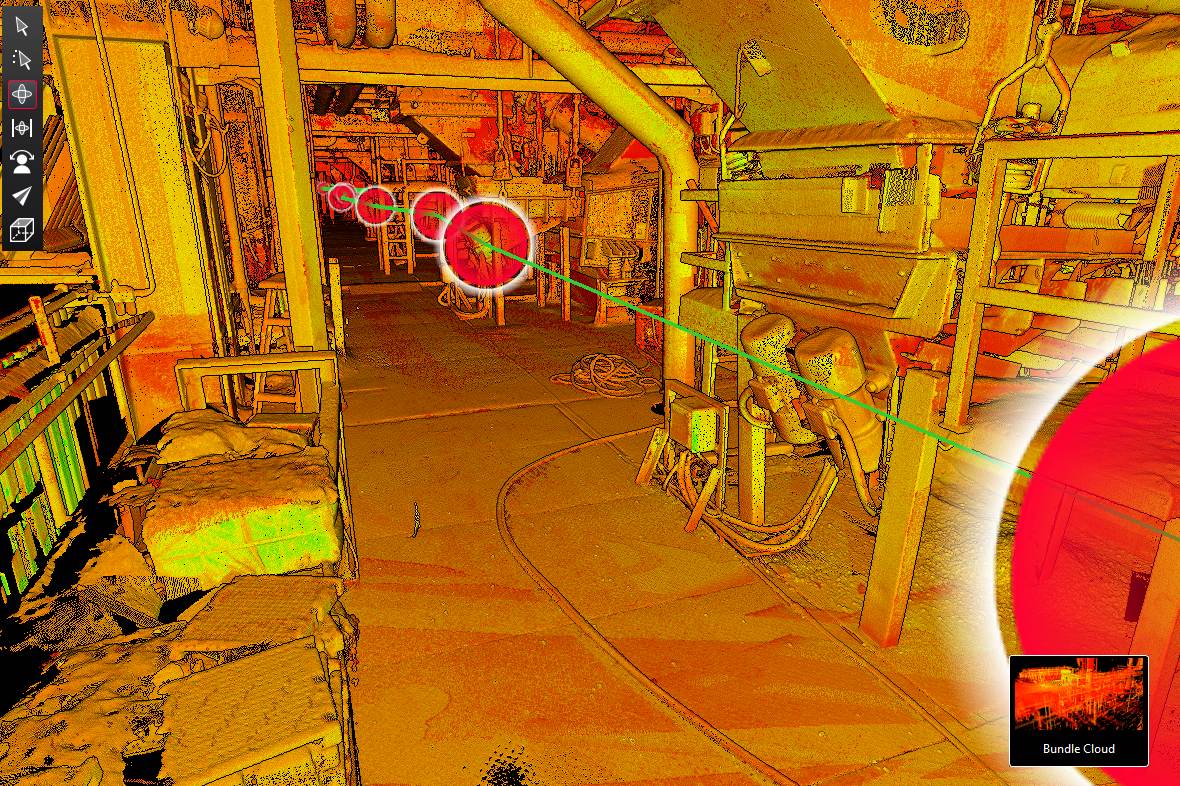
Product names are trademarks of their respective owners.
What does a FieldSure engagement on a chemical plant look like?
On a chemical site the engagement opens with a walk of the agreed blocks, records each place where the pipe and the paper disagree, and closes with a HAZOP on the corrected set and actions the plant can sign off.
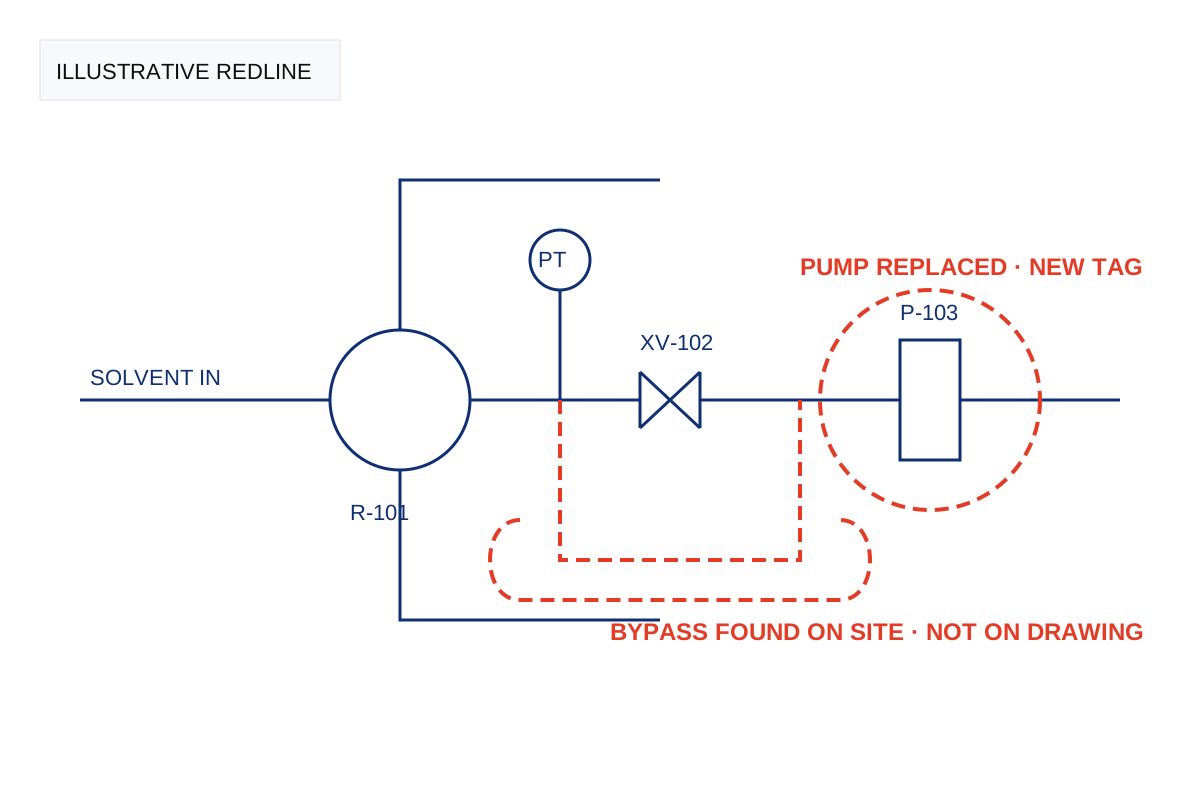
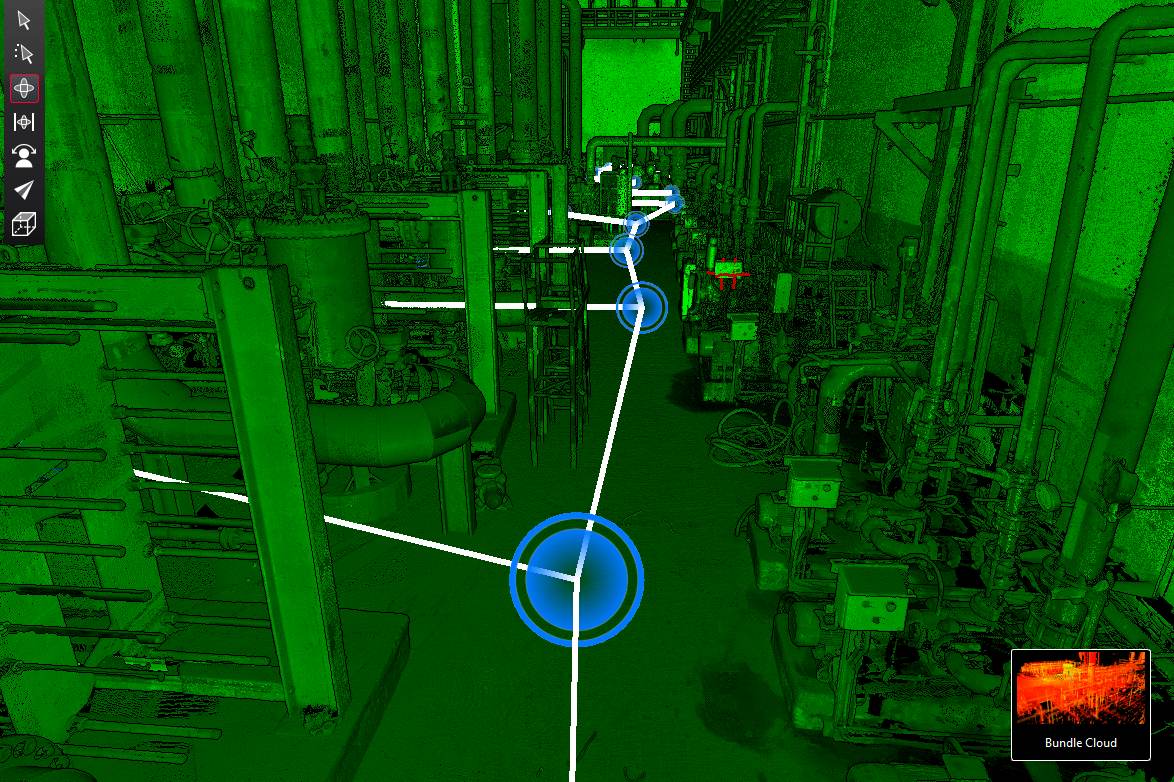
Chemical sites tend to show the same pattern on the first walk: a solvent transfer line run between tanks during a campaign, a bypass fitted around a control valve and left in, a pump changed out under a new tag, and an effluent drain that appears on no drawing. Our engineers mark each finding in red, enter it in the discrepancy register and correct it in CAD, so the HAZOP chairman starts from the plant as it stands and every action points to a drawing an auditor can open.
Planning an expansion or facing an audit? Start with a price range for your plant.
Who walks your plant, who chairs your HAZOP and who signs the report?
Each FieldSure proposal names the three engineers behind your study and attaches their CVs, so the audit trail starts on day one.
P&ID and piping lead
Named with CV in the proposalIndependent HAZOP chairman
Named with CV in the proposalVB Engineering signatory
Named with CV in the proposalQuestions chemical plants ask before they award
How much does a HAZOP study cost?
For a chemical plant, a HAZOP is priced on the P&IDs and nodes reviewed, the number of batch steps and the study days a chairman leads. Enter your P&ID count in the price form and an engineer emails a validated range with the proposal.
What is the cost of P&ID updation per drawing for a chemical plant?
Each P&ID is priced as one verified drawing: the field walk, the red-line, the CAD correction and the check. Dense pipe racks, poor existing drawings and restricted access raise the rate, which is why the figure comes as a written proposal.
Should one firm verify the P&IDs and run the HAZOP?
Yes, because a HAZOP can only examine the lines that appear on its drawings. When the same team walks the plant and chairs the study, every difference found in the field is on the P&ID before the first node is opened.
Does a chemical plant expansion need a new safety report under MSIHC?
For a site under MSIHC Rules 10 to 12, Rule 11(1) requires a further safety report at least 90 days before any change that could materially alter the previous one. Drawings that match the new configuration, and a HAZOP run on them, are what that report is normally built on.
Does environmental clearance for a chemical plant expansion need a risk assessment?
For synthetic organic chemicals projects appraised under the EIA Notification 2006, the standard terms of reference ask for hazard identification and a risk assessment for storage and handling of hazardous chemicals and solvents. HAZOP is not named, but a HAZOP on verified drawings is a defensible basis for that assessment.
How often must a major accident hazard chemical plant do a safety audit?
Once a year under MSIHC Rule 10(6), by an expert independent of the plant, with the report filed within 30 days. Gujarat also requires an external occupational safety audit every two years for major accident hazard factories under its 2025 rules.
Can a HAZOP be done on outdated P&IDs?
A HAZOP on outdated drawings examines the plant as it was drawn, not as it runs. IS 15656:2006 treats detailed P&I drawings as an input, so the study is only as current as the drawings it starts from.
Should hazardous area classification be done together with the HAZOP?
It helps. Both work from the same verified P&IDs and release sources, so doing them together avoids walking the plant twice. VB adds area classification to the FieldSure scope on request.
Does a tank farm need its own HAZOP nodes?
Yes. Tank farms carry overfill, transfer and loading hazards that a process HAZOP often treats as a boundary, so FieldSure walks the storage P&IDs and takes them through HAZOP alongside the process units.
Which chemical plants does FieldSure cover?
Specialty and fine chemicals, agrochemicals, dyes and pigments, and paints and coatings, including their tank farms, utilities and effluent plants. VB has delivered P&ID and HAZOP work in all four.
Where to go next
Price your chemical plant drawings and HAZOP
Tell us the site and roughly how many P&IDs cover your process, storage and utility areas. An engineer checks the details and emails a price range with a written proposal.
- Five P&IDs walked and verified first
- A discrepancy log you can hand to your auditor
- A price range for every block, tank farm and utility area
Prefer to write? connect@groupvb.com · or WhatsApp us from the chat button
VB Group® · Sustainability A Certainty.
Six fields. One written proposal.
Name, work email, company and site, role, what you need, and WhatsApp if you prefer it.