Arc flash study · Georgia · NEC 2023 (2026 GA amendments) · NFPA 70E 2027
Arc flash studies for Georgia data center campuses, delivered block by block, before the commissioning agent arrives.
VB Engineering models each block from the IFC set, walks it down, labels it and hands the signed results to your commissioning agent before energization. Georgia's code changed on 1 January 2026 and Atlanta has 2,882 MW under construction; send your bus count and a VB engineer scopes your campus in two business days, free.
1,000+ assessments21 countriesSince 2014PE stamp on request
Free campus scoping
Three numbers, one scope. Bus count, voltage classes, energization date of the next block. A VB engineer writes back in two business days with the scope per block and what you receive. Short form, no phone number.
No charge, no obligation. Use the scope to compare bidders or to brief the commissioning agent.
Trusted on plants that cannot stop











- 0under construction in Atlanta, the largest in North America
- 0data center facilities in the Atlanta market
- 0NEC edition in force in Georgia from 1 Jan 2026
- 0arc flash assessments delivered
- 0countries, one signed report
Construction and facility figures: CBRE North America Data Center Trends H1 2026 and DataCenterMap Atlanta, read 1 October 2026. Code edition: Georgia Department of Community Affairs. Assessment counts: VB Engineering project register.
How the free scoping works
- 1
Three minutes on the form
Buses by voltage class, the energization date of each block, and whether the one-lines and protective device settings are issued for construction yet.
- 2
An engineer scopes it
Per block, in commissioning order: what is modeled from the IFC set, what is verified on the walkdown, when the labels go on, and what the commissioning agent receives and when.
- 3
Scope back in two days
What you receive per block, how long each stage takes, how the price is built per bus, and the PE stamp option. Written, so it can go straight to the GC or the owner.
How VB supports Georgia campuses
How does VB carry a Georgia data center through the 2026 code change?
VB Engineering runs one arc flash study that answers every instrument a Georgia data center is held to: the written hazard assessment OSHA 29 CFR 1910.132(d) asks for under federal jurisdiction, the arc flash risk assessment NFPA 70E 2027 130.5 requires before energized work, and the NEC 110.16 label the inspector reads under the Georgia State Minimum Standard Electrical Code, NEC 2023 with 2026 Georgia amendments from 1 January 2026. The conformance matrix on page one of the report maps each clause to the page that satisfies it.
| Instrument | Clause | What VB delivers against it | Who will ask for it |
|---|---|---|---|
| Federal OSHA | 29 CFR 1910.132(d) | The employer certifies in writing that the hazard assessment was done, naming the workplace, the person and the date | An OSHA compliance officer, usually after an incident |
| Federal OSHA | 29 CFR 1910.333 | Work on or near energized parts follows safe practices; the boundaries those practices rely on come from the study | OSHA; the insurer's loss-control engineer on a site visit |
| NFPA 70E 2027 | 130.5 · 130.5(G) | An arc flash risk assessment before any energized work, repeated within five years and after every change to the system | The EHS lead, the insurer, FM Global where it carries the risk |
| NFPA 70E 2027 | 130.5(H) | What the label must carry: nominal voltage, arc flash boundary, and either incident energy at the working distance or the PPE category | The electrician about to open the door |
| NEC 2023 + 2026 Georgia amendments | 110.16 | Arc flash hazard warning label on switchboards, panelboards, MCCs and the like; mandatory statewide from 1 January 2026 | The county or city electrical inspector at the permit |
| NEC 2026 (not yet adopted in Georgia) | 110.16(B) | Adds the date of the arc flash risk assessment to the label | The inspector, once Georgia adopts; the insurer already asks |
The 1 January 2026 change matters most on a campus designed before it: the drawings were issued under the previous edition and the permit inspection runs under this one. VB checks the label schedule and the study against the 2023 edition and the 2026 Georgia amendments before the first energization, so the inspector and the commissioning agent read documents that already match the code they are inspecting to.
Expansions
How does VB support an Atlanta data center through a power expansion?
VB keeps one campus model and re-runs it for every expansion, so when a new hall, a second utility feed or a battery system changes the fault current, the incident energy, the arc flash boundary and the PPE category on every affected bus are recalculated and only the labels that changed are replaced. That is what NFPA 70E 2027 130.5(G) asks for whenever the electrical system changes. Atlanta has 2,882 MW under construction and 214 facilities in service, and almost every one of them is adding capacity that re-rates the labels already on the gear.
A new hall or a second feed
A second utility service or a new generator paralleling scheme raises the fault current on the main switchgear. VB re-runs the campus model for the new source configuration and re-labels the MV lineup before the feed is energized.
The commissioning agent's list
Short-circuit, coordination and arc flash results are on the Cx agent's pre-energization checklist. VB delivers the block results in the agent's format, signed, before the energization date.
The insurer's loss-control visit
Asks for the dated study and the label schedule before the new hall is bound. VB's expansion study carries the new date and the conformance matrix the loss-control engineer opens first.
What the label on the gear says, and what it is answerable to
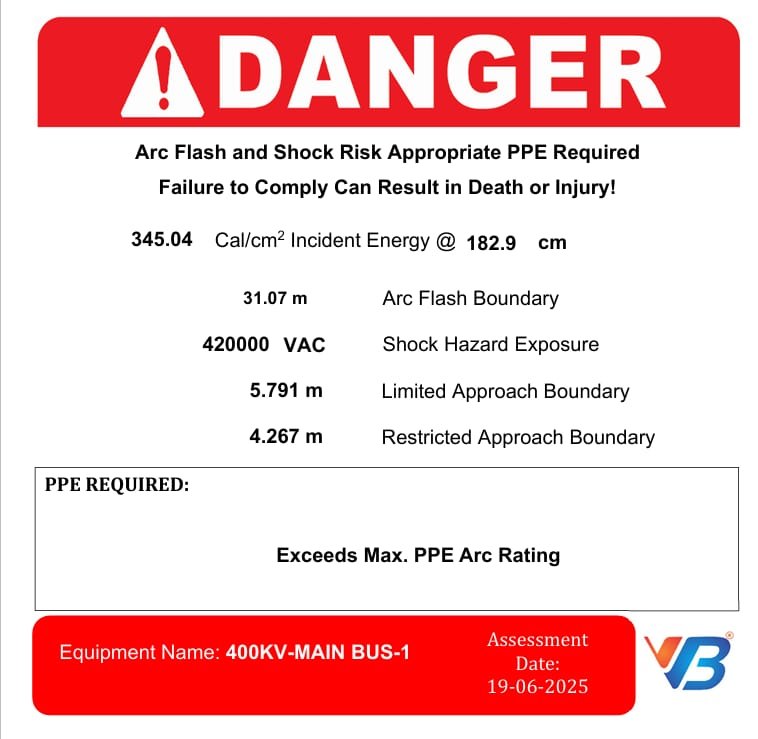
Every figure on a VB label traces to one row of the incident energy table: incident energy at the working distance, arc flash boundary, shock hazard voltage, the approach boundaries, the equipment name and the assessment date. When the campus expands, the row changes and the label is replaced. A label that cannot be traced to a row is an opinion, not a finding.
What VB delivers
What does VB deliver on a Georgia data center campus?
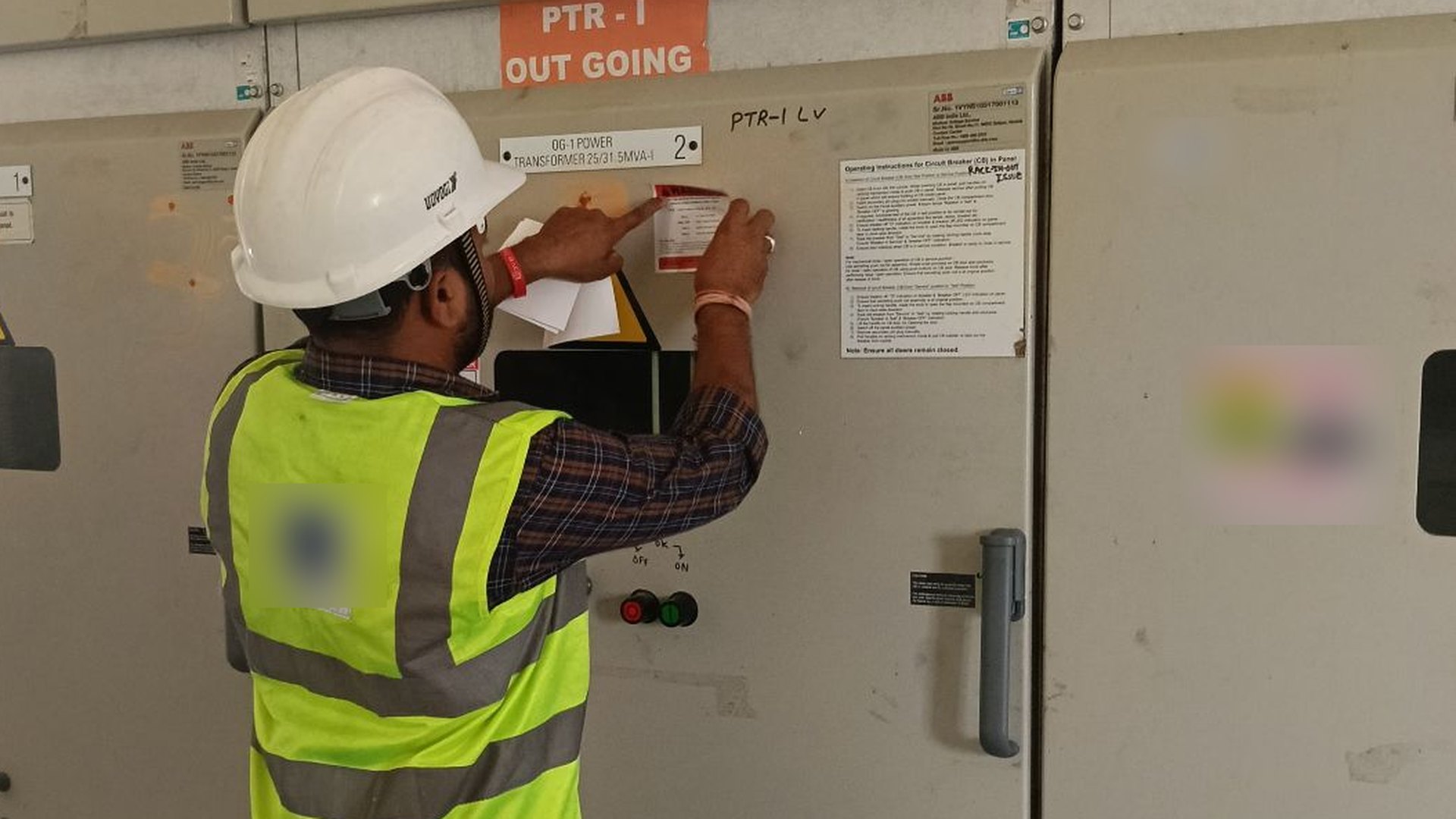
A VB campus study covers every bus from the utility service entrance to the last PDU and the battery cabinet, AC and DC in one incident energy table. For a campus under construction the model is built from the issued-for-construction set and verified cubicle by cubicle on the walkdown, every operating scenario is run including generator and UPS bypass, and dated labels go on before the first energized work. The output is a signed report an inspector, a commissioning agent and an electrician can each open at their own page.
| Delivered in every campus study | Quoted separately on request |
|---|---|
| Model from the IFC one-lines and protective device schedules, then a walkdown of every cubicle with nameplates, CT and PT ratios and trip settings photographed | Thermography and partial-discharge surveys (VB offers both as separate lines) |
| IFC one-line corrected to what was actually installed, every deviation listed, signed off by the site electrical engineer | Producing the full as-built drawing set |
| Fault current, coordination curves and incident energy to IEEE 1584-2018, with each operating mode (utility, generator, UPS bypass) run and named | Changing relay settings on the gear (the action register recommends them; your contractor or VB applies them on request) |
| Every DC bus, from UPS strings to 800 VDC distribution, with the DC method stated on its row | Battery sizing and runtime calculations |
| Label schedule, dated artwork, installation by a VB crew before energization, photographed installed | Signage beyond arc flash and shock labels |
| Ranked action register with an owner and a date per item; the 1910.132(d) certification; the engineer of record's signature; PE stamp on request | Training the qualified persons (VB's training practice and Drona VR cover this separately) |
How VB runs it, and how long each stage takes
- Model from the IFC set · built while the block is still in construction, so the calculation is ready when the gear is
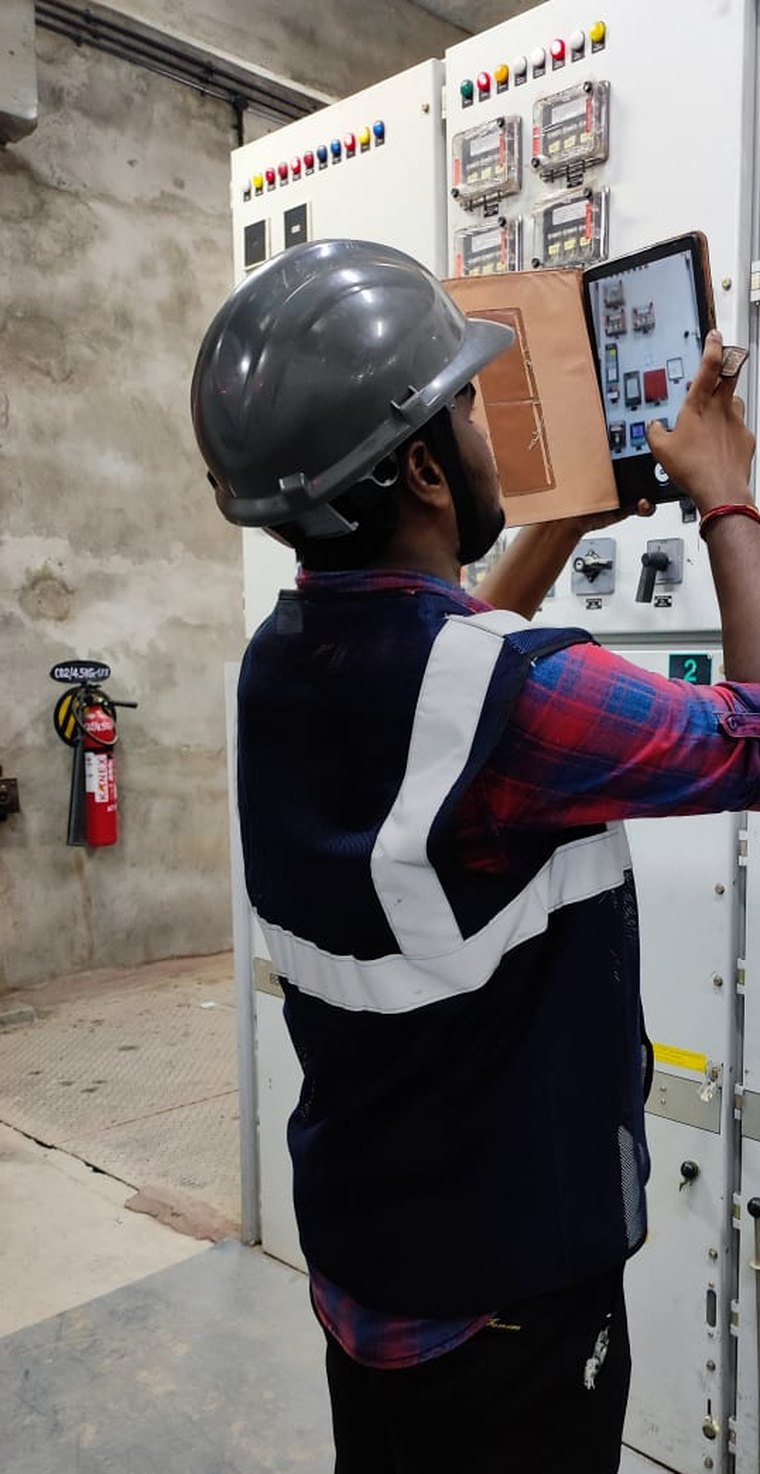
- Walkdown · about one crew day per 10 MW block, every cubicle opened, read and photographed
- Calculation · in ETAP or SKM PowerTools, each block two to three weeks, each operating mode run
- Report · the 11 IEEE 1584.1-2022 sections, one per block, signed by the engineer who ran the model; PE stamp on request
- Labels · about 150 per crew day, dated artwork, installed before the first energized work
- Phasing · block by block in commissioning order, so block one's results are on the Cx agent's desk while block two is still being built
A worked campus
How does VB phase the study on a campus energizing block by block?
On a modeled hyperscale campus in the US Southeast, five blocks and 87 buses energizing over fourteen months, the study runs as five block studies under one campus model rather than one study at the end. The modeled result: block one's results reach the commissioning agent six weeks before its energization date, 12 MV buses are re-rated when the second utility feed lands with block three, and the battery hall's 10 DC buses are in the same table as the AC buses from day one. No block waits for another, and no label is installed without a date.
| Block | Buses | Model from IFC | Walkdown | Results to Cx agent | Labels on | Re-rated later |
|---|---|---|---|---|---|---|
| Utility and MV switchgear | 12 | Month 1 | Month 3 | Month 3 | Month 3 | 12, at block 3 (second feed) |
| Hall A | 22 | Month 2 | Month 4 | Month 4 | Month 4 | 0 |
| Hall B | 22 | Month 5 | Month 7 | Month 7 | Month 7 | 0 |
| Hall C + second utility feed | 21 | Month 8 | Month 10 | Month 10 | Month 10 | MV re-rated here |
| Battery hall | 10 | Month 11 | Month 13 | Month 13 | Month 13 | 0 |
| Campus | 87 | One model, five signed block reports, one campus certification at month 14 | 12 | |||
The alternative, one study after the last block, leaves the first halls running for a year on labels that were never calculated, which is the finding the insurer writes up and the inspector asks about at the next permit.
Why the scope carries weight
Written by the team that has labeled 12,547 assets
Across data centers, pharma, power generation and process plants in 21 countries, including campuses energized block by block under a live commissioning schedule.
Method to IEEE 1584-2018, deliverable to IEEE 1584.1-2022, duty from NFPA 70E 2027 and NEC 110.16. Modeled in ETAP or SKM PowerTools, never a spreadsheet.
Every section carries the name of the engineer who produced it. A US-licensed professional engineer reviews and stamps the study on request.
DC buses are outside IEEE 1584's AC range and outside most studies. VB puts them in the same incident energy table with the DC method on the row.
Block by block, in energization order, with the Cx agent's checklist in hand. No block waits for the campus.
Written, not pitched. Forward it to the GC, the owner or another bidder; there is no call unless you ask for one.
Who brings the study
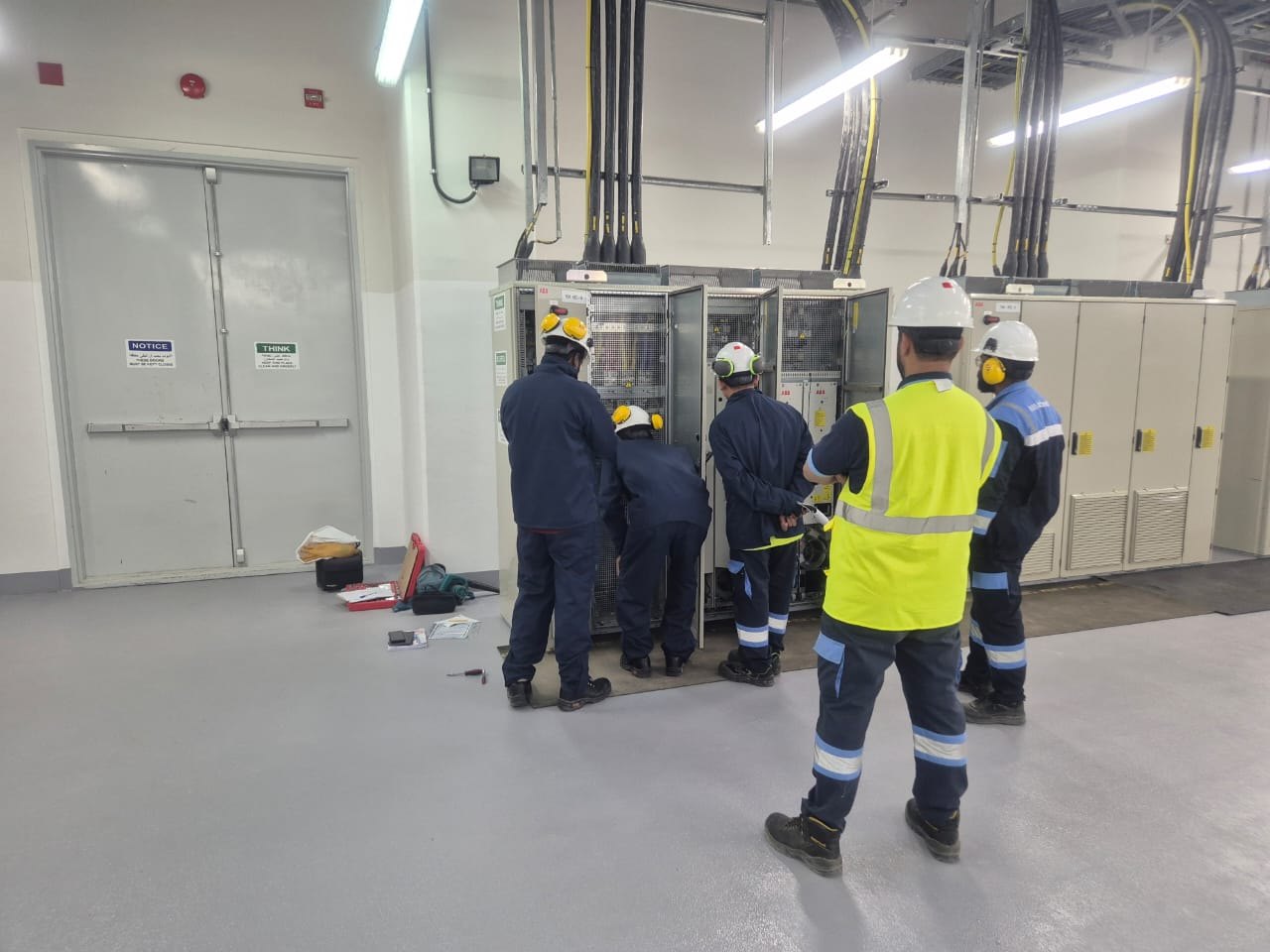
Three ways VB works with a Georgia campus
The engineer of record or commissioning agent
Needs the coordination and arc flash results per block before witnessing energization. VB delivers the block study on the Cx schedule, from the IFC set.
The operator's facilities or EHS lead
Owns the campus after handover and answers to the insurer. Scopes the expansion study when the next hall or feed is approved.
The testing contractor
Holds the acceptance-test schedule and the keys. VB slots the walkdown into the contractor's test windows and the contractor stays the owner's single point of contact.
VB also serves US data center campuses nationally and holds state pages for Northern Virginia, New Jersey, New York and Pennsylvania. Georgia work is delivered from VB's US office in Katy, Texas.
Before you ask
Questions Georgia campuses ask VB
Does Georgia require an arc flash study?
No Georgia statute names an arc flash study, but the duty arrives three ways. OSHA 29 CFR 1910.132(d) requires a written hazard assessment and Georgia is under federal OSHA jurisdiction. NFPA 70E 130.5 requires an arc flash risk assessment before energized work. NEC 110.16, adopted in the Georgia State Minimum Standard Electrical Code as the NEC 2023 with 2026 Georgia amendments, requires the arc flash label on the gear. One study satisfies all three.
Which NEC edition does Georgia enforce in 2026?
Georgia enforces the 2023 National Electrical Code with the 2026 Georgia amendments, mandatory statewide from 1 January 2026 under the Georgia Department of Community Affairs minimum standard codes. A campus designed in 2024 or 2025 was drawn under the previous edition and is inspected under this one, which is why the arc flash study and the label schedule should be checked against the 2023 edition before the first permit inspection.
Do Atlanta data centers need an arc flash study before a power expansion?
Yes. A power expansion changes the available fault current at every bus downstream of the new source or feeder, so the incident energy, the arc flash boundary and the PPE category on the existing labels change with it. NFPA 70E 130.5(G) requires the risk assessment to be reviewed whenever the electrical system changes. On an Atlanta campus adding a hall, the study is re-run for the new configuration and the labels that changed are replaced.
When is the arc flash study due on a new Georgia campus?
Before commissioning. The commissioning agent witnesses energization against the short-circuit, protective device coordination and arc flash results, and the labels must be on the gear before the first energized work. VB phases the study per block so the results for block one are on the commissioning agent's desk while block two is still being built.
Who can perform an arc flash study in Georgia?
A qualified electrical engineer working to IEEE 1584-2018 and NFPA 70E. VB Engineering's study is signed by the engineer who ran it, with an independent reviewer, and a US-licensed professional engineer reviews and stamps the study on request. VB has delivered 1,000+ arc flash assessments since 2014 across data centers, pharma, power and process plants in 21 countries.
How long does an arc flash study take for a data center campus in Atlanta?
A VB campus study runs in four stages: a walkdown at roughly one crew day per 10 MW block, modeling and calculation in ETAP or SKM PowerTools over two to three weeks, a signed 11-section report, and label installation at about 150 labels per crew day. A single-building campus is typically four to six weeks from walkdown to installed labels; a multi-block campus is phased per block to match the commissioning schedule.
What does an arc flash study cost in Georgia?
Per bus and per voltage class, with the walkdown and the label installation priced as their own lines. Floor area is a poor guide: a 20 MW hall with 2N distribution has far more buses than a 20 MW hall with a simpler topology, and the bus count is the work. Put the count and the voltage classes into the scoping form and the pricing basis comes back with the scope in two business days, at no charge.
Is an arc flash study required by code?
The label is code: NEC 110.16 requires an arc flash hazard warning on switchboards, panelboards and motor control centers. The assessment behind the label is a standard: NFPA 70E 130.5. OSHA enforces both through 29 CFR 1910.132(d) and the general duty clause. In Georgia the code edition is the NEC 2023 with 2026 amendments; the standard edition is NFPA 70E 2027.
Does the study cover UPS strings, battery cabinets and 800 VDC distribution?
Yes. The UPS strings, the battery cabinets and any 48 V or 800 VDC distribution appear in the same incident energy table as the AC switchgear, each DC row carrying the name of the DC method used, because IEEE 1584-2018 itself covers AC from 208 V to 15 kV only. Leaving the battery hall out of a campus study is the most common gap VB finds when it reviews other studies.
What happens after I submit the scoping form?
Within two business days a VB practice engineer writes back with the scope per block in your commissioning order, the duration of each stage, the list of what you receive (the 11-section report, the label schedule, the action register, the 1910.132(d) certification) and whether you want the professional engineer stamp. There is no call unless you want one, and the scope can go straight into your comparison with any other bidder.
VB puts the study on your commissioning agent's desk before the energization date, not after.
Bus count in today, scope back in two business days: per block, in commissioning order, with the PE stamp option. No charge, no call unless you want one.
Scope my campusPrefer email? Send the bus count to connect@groupvb.com with "Georgia" in the subject line.