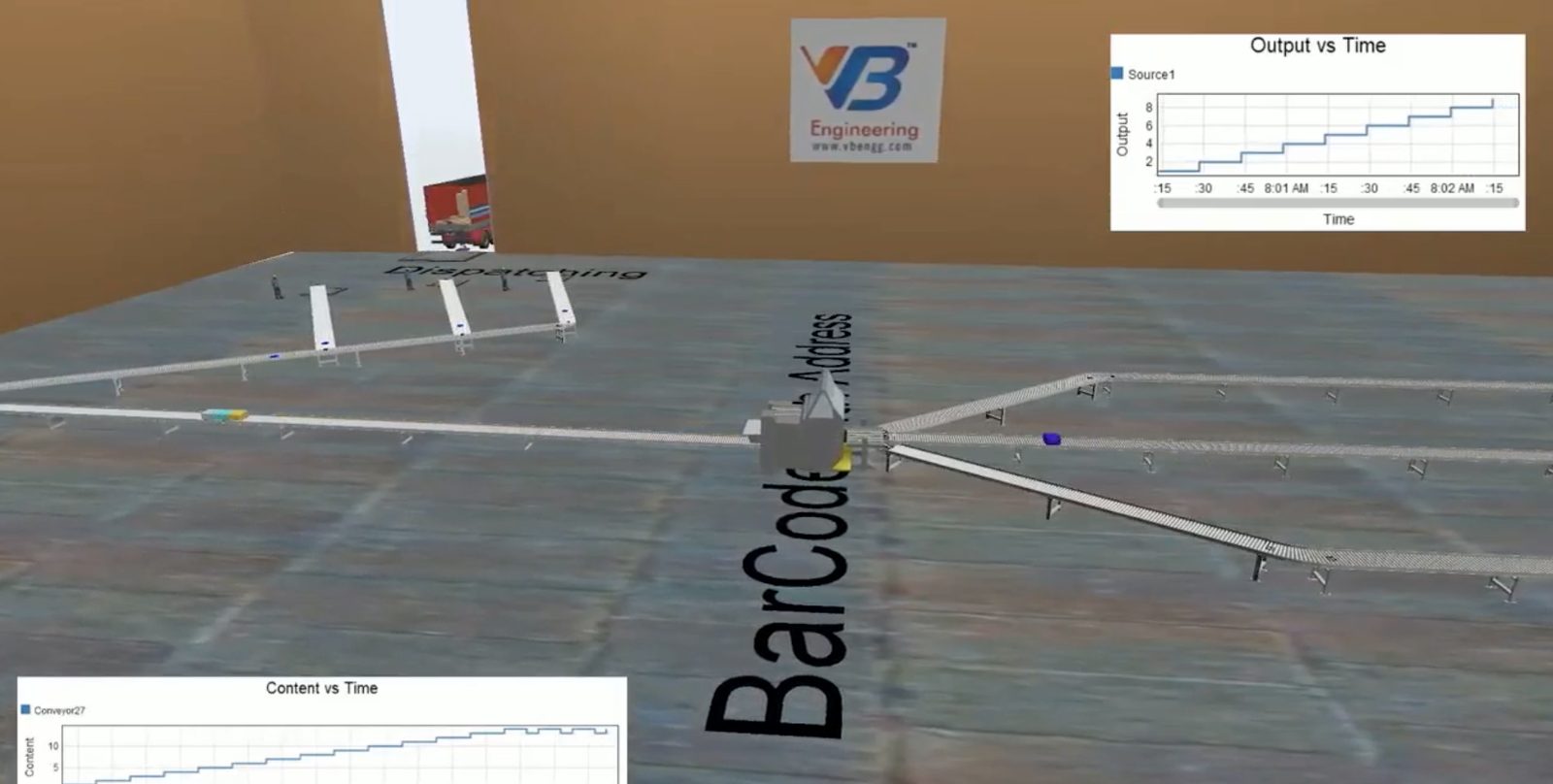
Can you give some examples of discrete event simulation?
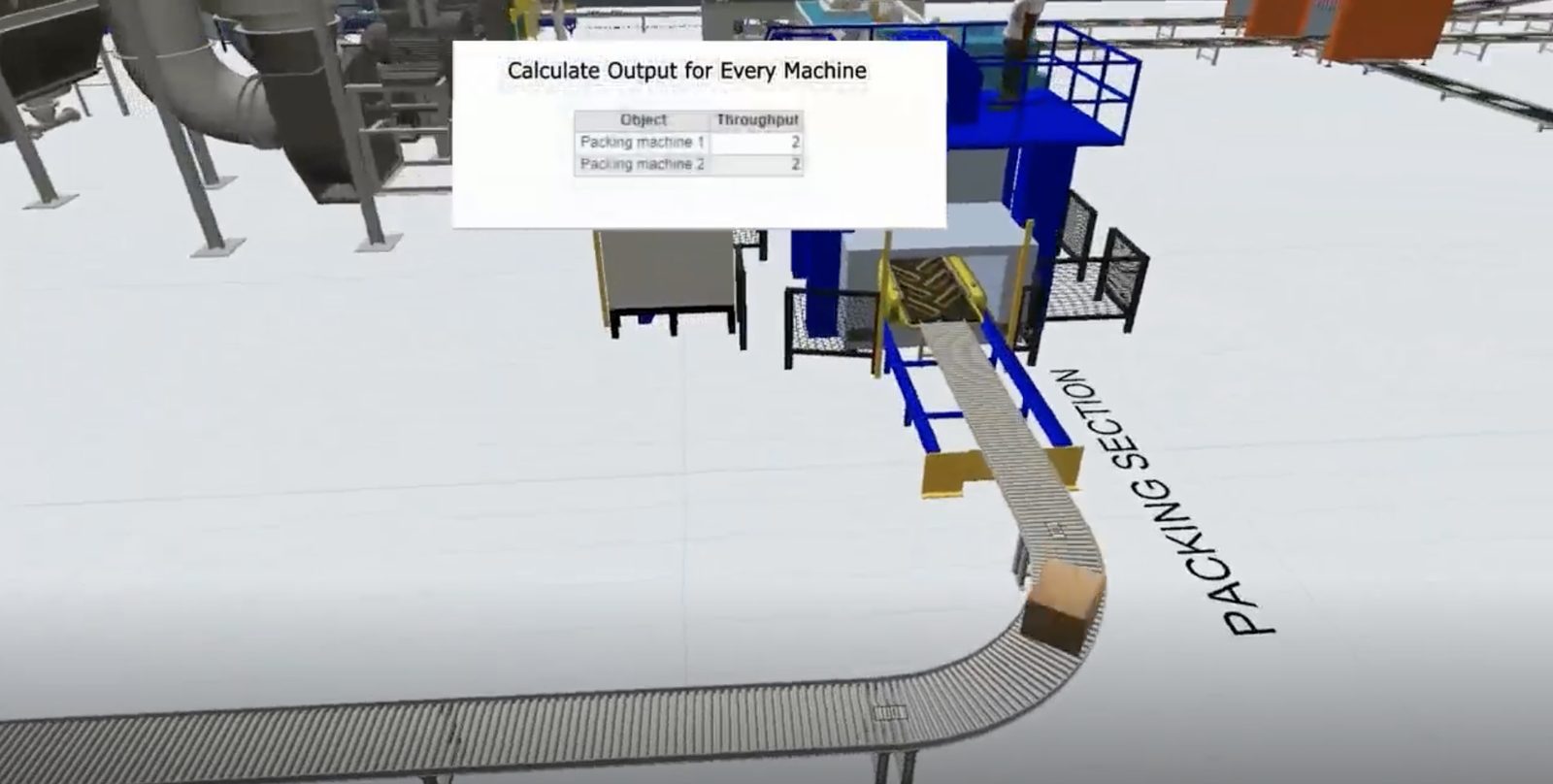
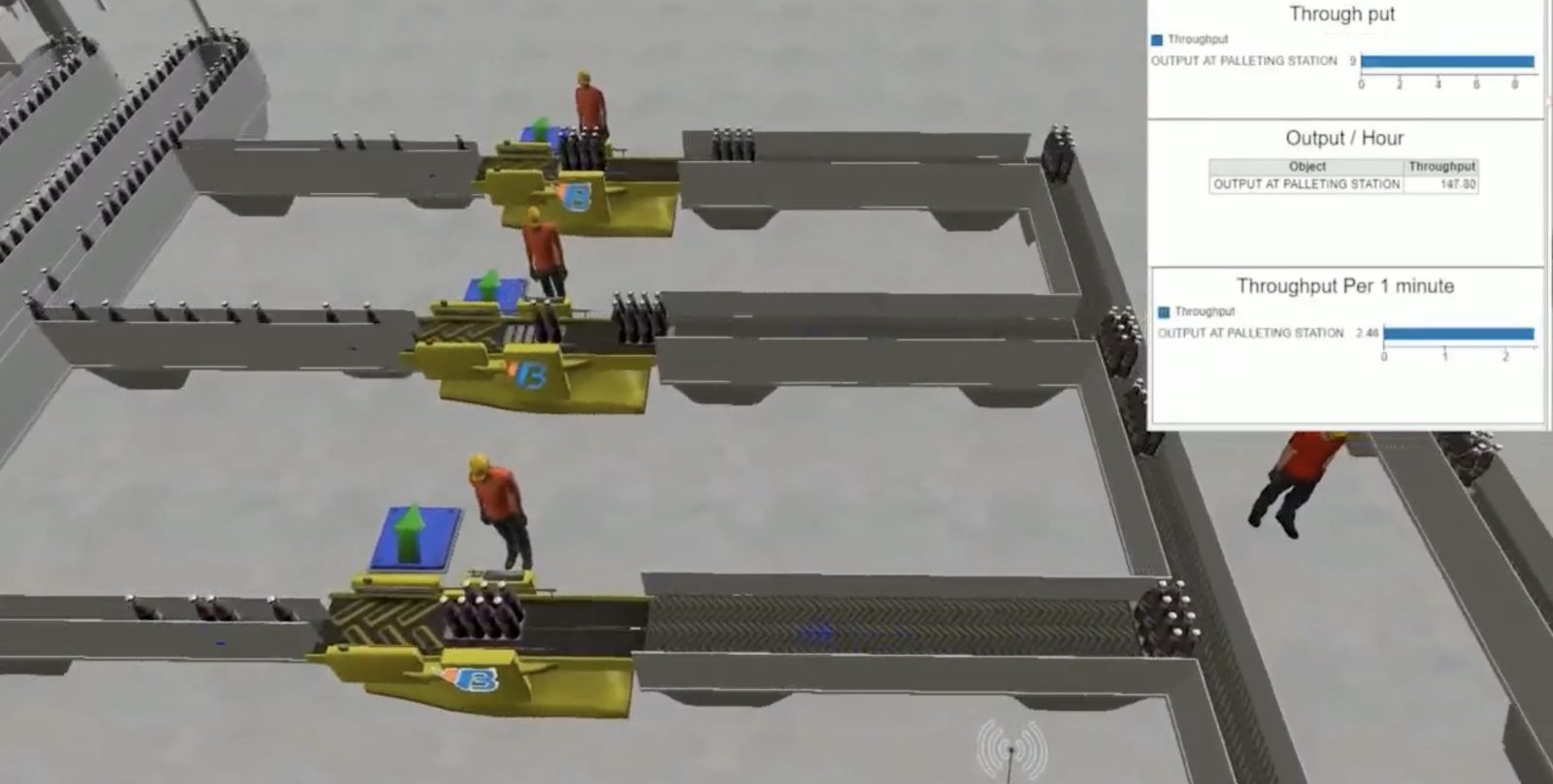
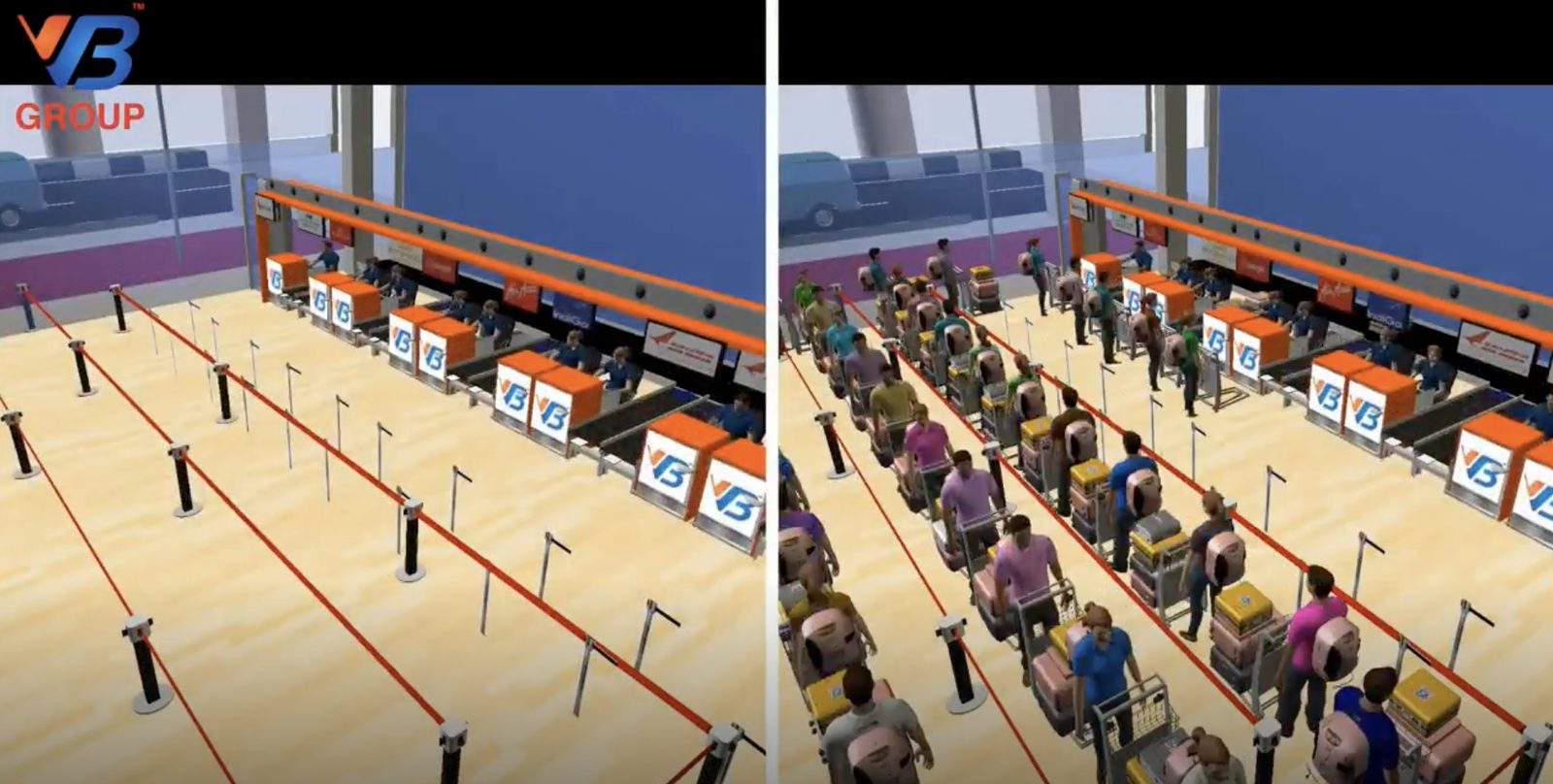
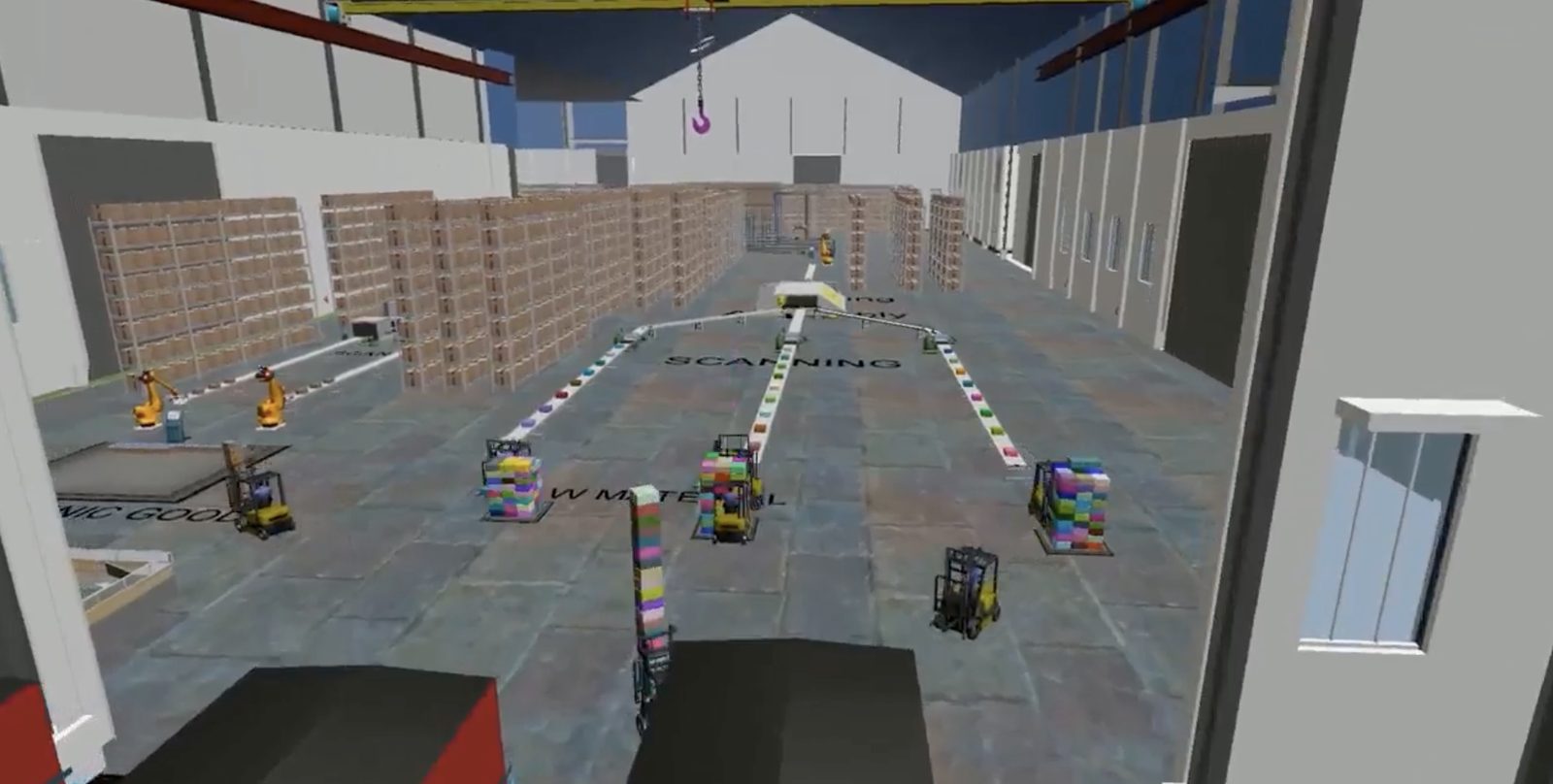
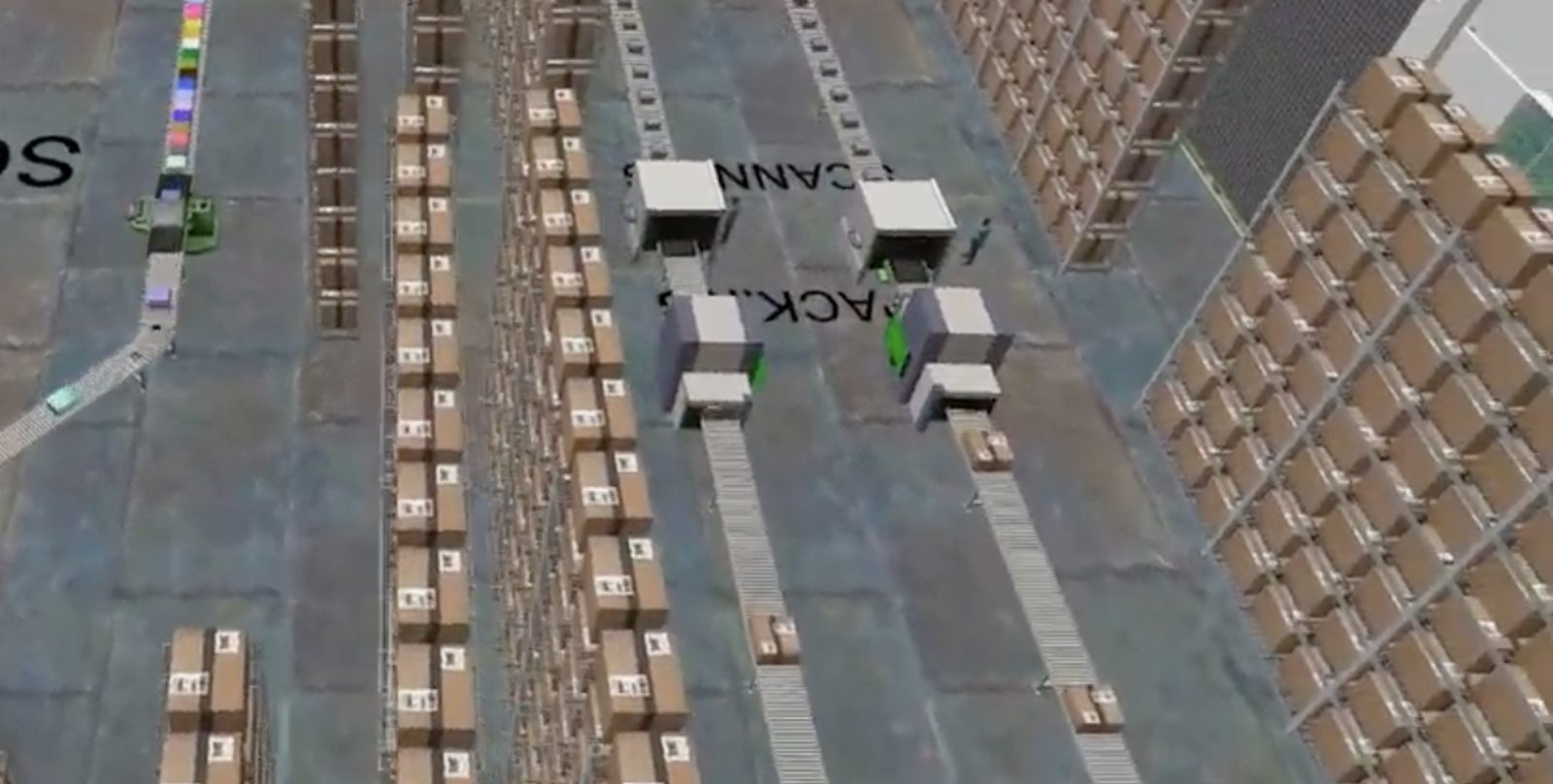
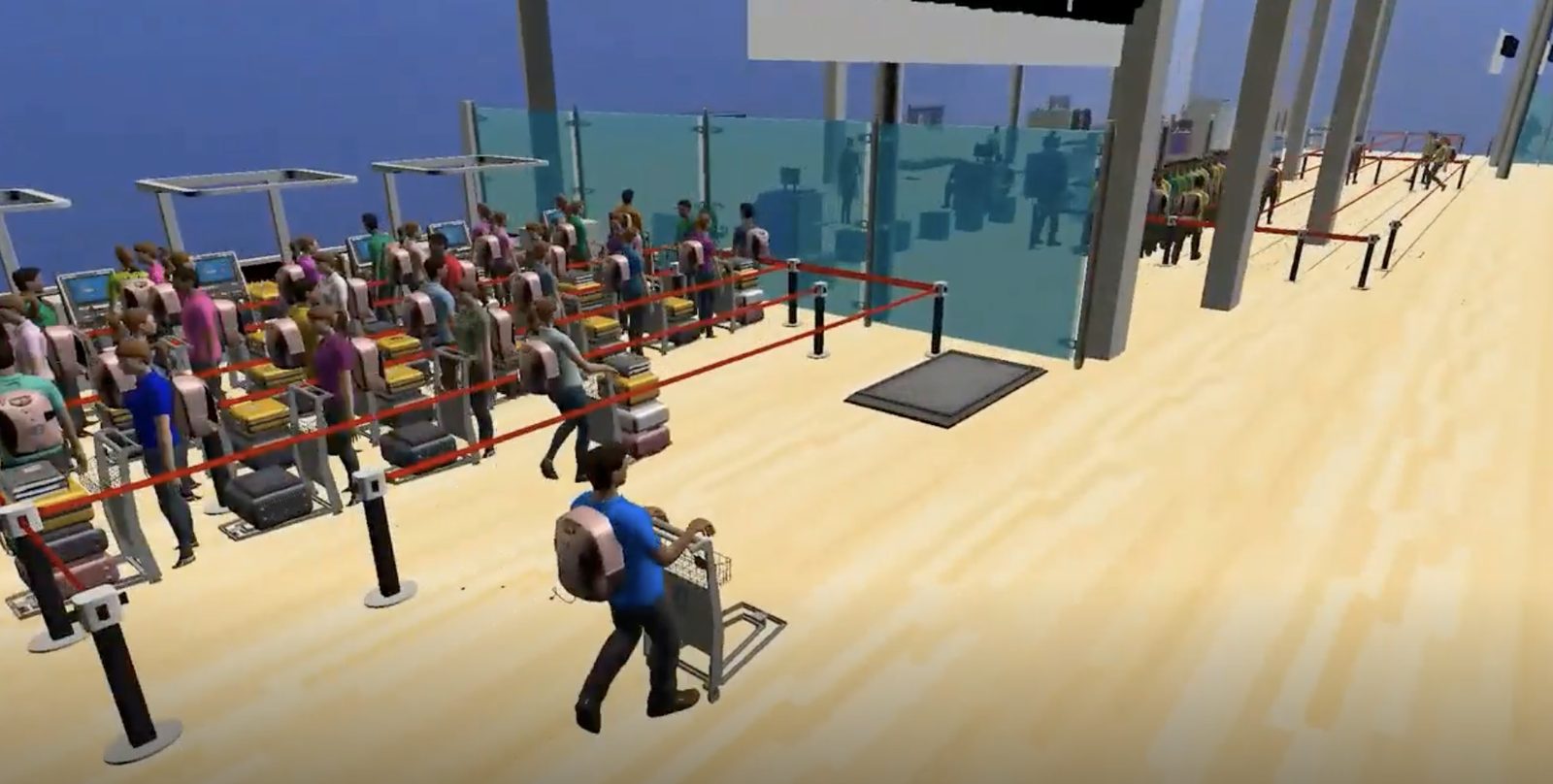
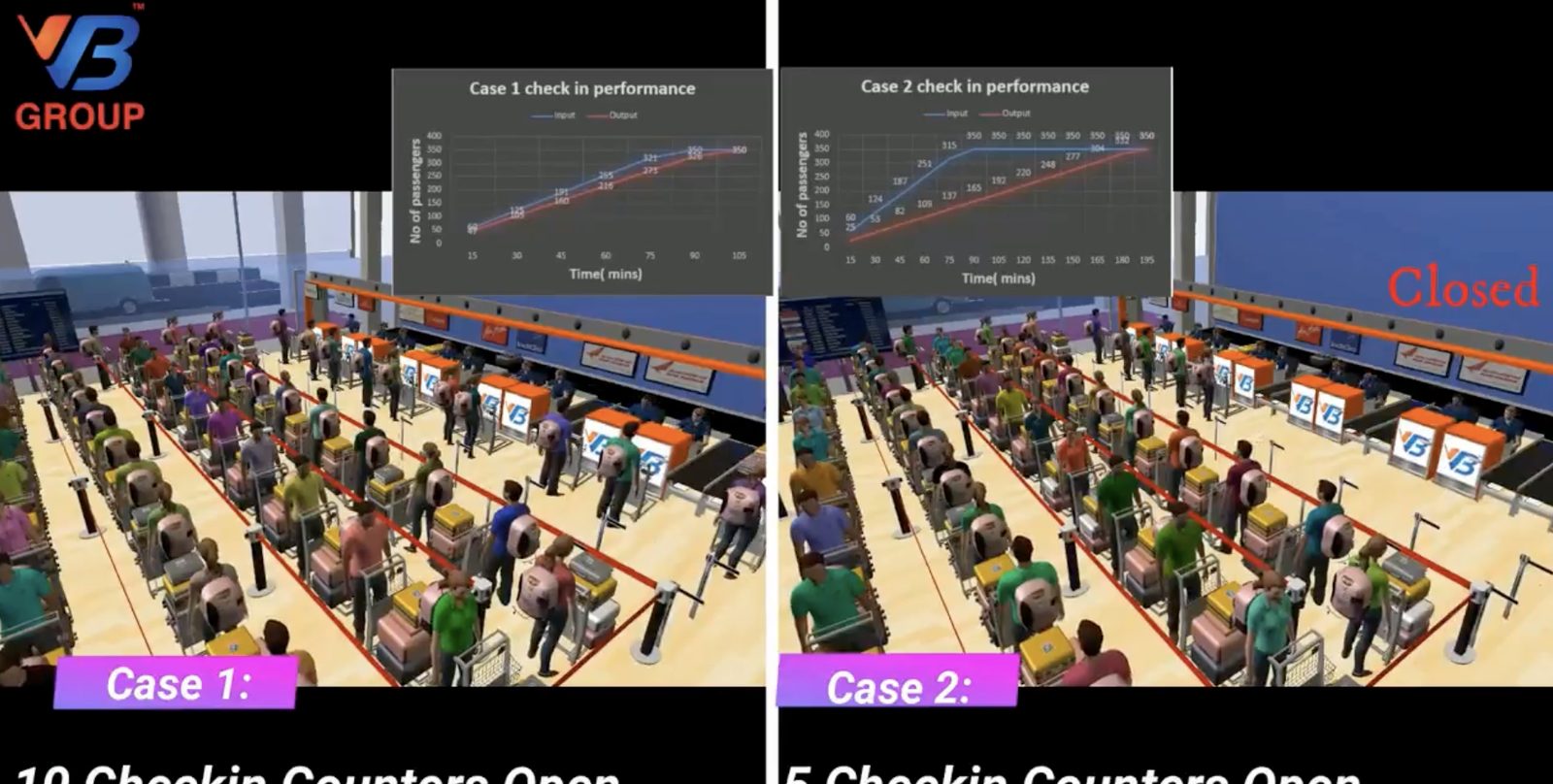
Six common ones: a packing line modelled to find the station that caps output; a pharma blister line run through a year of changeovers; an airport check-in hall tested with five counters against ten; a container terminal run through a forecast year with three berths and with four; a distribution centre loaded with its peak-day orders; and a mine haul circuit tested with one truck more and one fewer. Each model counts events (a part arriving, a passenger reaching a counter, a truck tipping) and reports what queues where.
What are the applications of simulation in industry?
Simulation is applied to decisions that depend on flow and variability: sizing a new line or terminal, finding a bottleneck, testing a relocation or re-layout, checking peak capacity, sizing a fleet or an automation system, and proving a capacity figure for a board or investor paper. Physical behaviour (stress, heat, airflow) is a different branch, handled by FEA and CFD rather than discrete event models.
Which industries use discrete event simulation the most?
The main users are manufacturing, logistics and warehousing, healthcare, transport hubs such as airports and ports, and mining. VB Engineering delivers it for manufacturing plants, pharma lines, airport terminals, container terminals, warehouses and mines, in India, the Gulf, the USA and other markets.
What are the benefits of discrete event simulation?
It tests a decision before the money is spent, on the facility’s own data, with the variation a spreadsheet averages away. Options are compared on the same demand, so the report says which one meets the target and at what cost, the bottleneck is located by measurement rather than opinion, and the model can be re-run when the next decision arrives.
What are the advantages and disadvantages of simulation?
Advantages: it captures queues, breakdowns and peaks; it compares options like for like; it shows the result as an animation managers can follow. Disadvantages: it needs data and a validation step, it takes weeks rather than hours, and it answers flow questions only, so a structural, thermal or airflow question needs a different tool. A model is only as good as its validation, which is why VB prints the fit in every report.
What is the difference between continuous and discrete event simulation?
A continuous simulation changes its state smoothly with time, like the level in a tank or the temperature in a reactor, and is solved with equations. A discrete event simulation changes only when an event happens, like a pallet arriving or a machine stopping, and jumps from event to event. Lines, terminals and warehouses are discrete; process chemistry is continuous.
What is discrete event simulation in manufacturing?
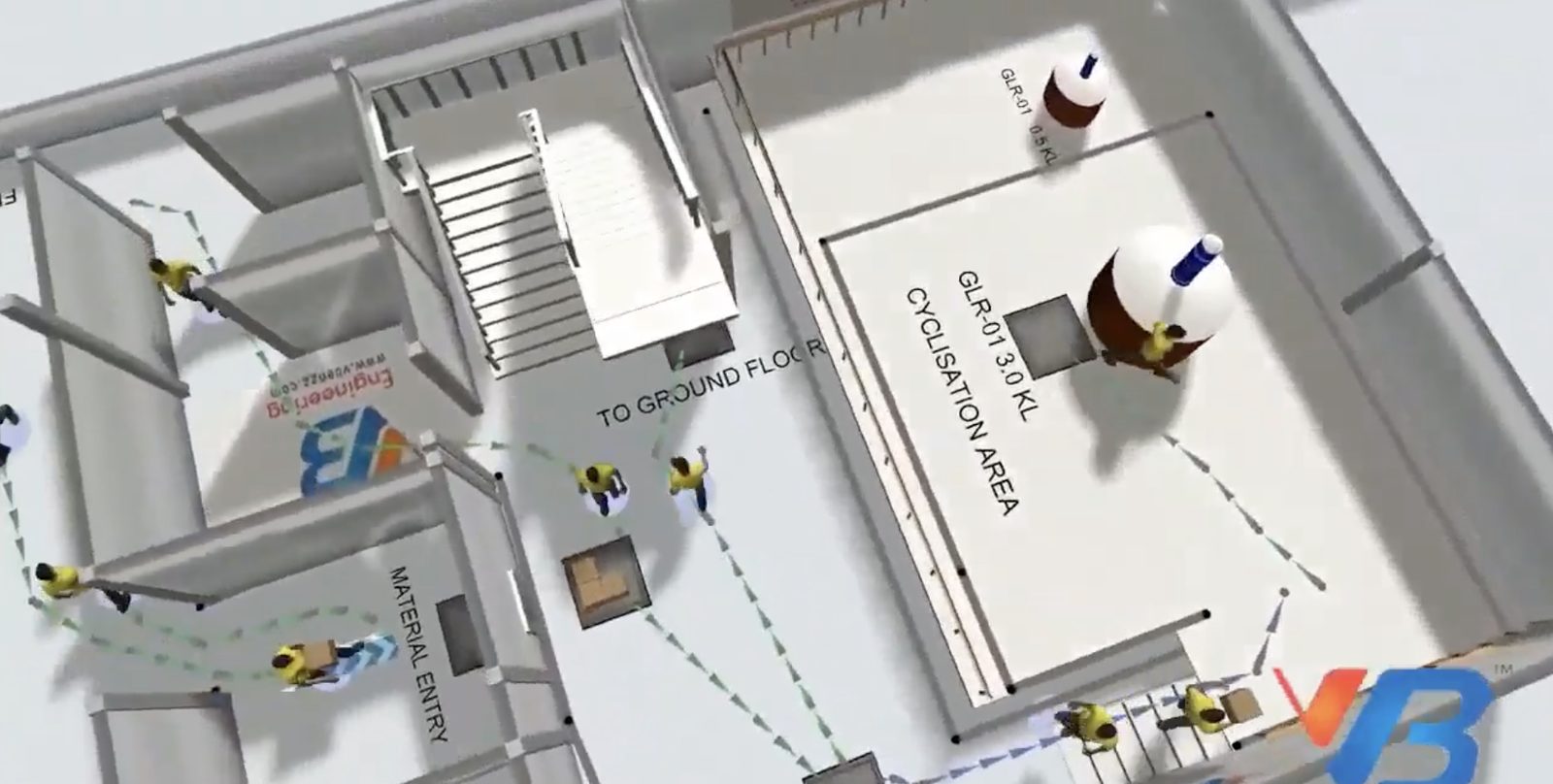
In manufacturing, discrete event simulation is a model of the line or plant in which every part, operator and machine is an object, every cycle, breakdown and changeover is an event, and the model reports output, utilisation and queues per station. It is used to size a new line, find the bottleneck in a running one and test a layout before equipment moves.
Is a discrete event simulation the same as a digital twin?
No. A discrete event simulation study uses a one-way data pack from records to test options before a decision. A digital twin keeps a two-way live link with the running facility through sensors and control systems and is used in daily operation. A validated simulation model is often the first build of a twin, which is how VB carries a study into WisTwin.
How long does a simulation study take?
A representative programme is 4 to 6 weeks for one production line, 5 weeks for a pharma line capacity case, 7 weeks for an airport terminal, a container terminal or a distribution centre, and 12 to 20 weeks for a whole plant. Data that must be measured on the floor, more options or a tender deadline change it; the programme is fixed in the proposal.
Which software is used for discrete event simulation?
FlexSim, AnyLogic, Siemens Plant Simulation, Simio and Simul8 are the most used packages. VB Engineering builds its models in FlexSim, with AutoCAD layouts and, where the geometry of a running facility is uncertain, Leica RTC360 laser scans as the base.