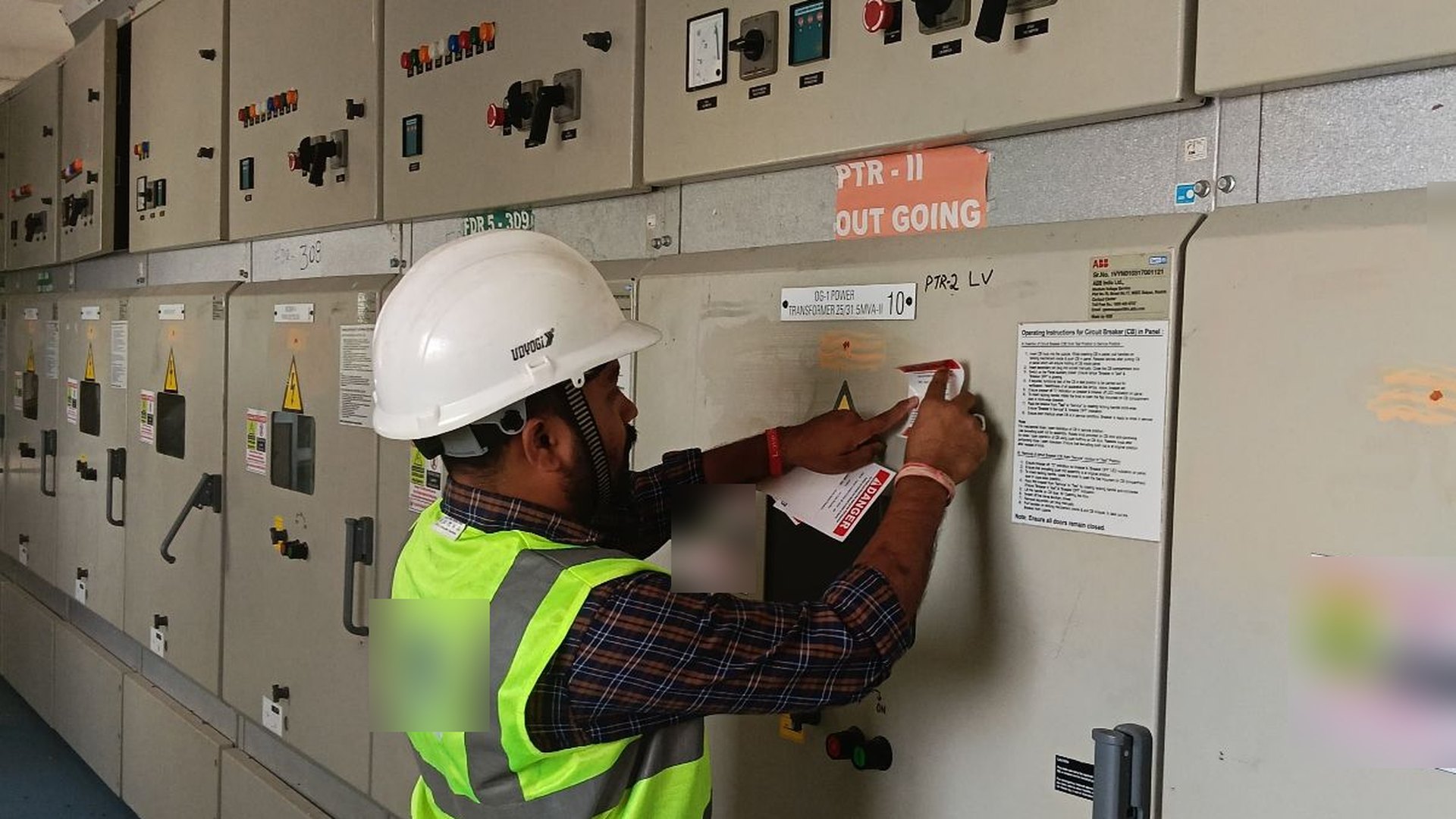
Arc flash study · Ohio · NEC 2023 · NFPA 70E 2027
Ohio's data center build-out is outrunning its electrical safety studies. VB closes the gap, campus by campus.
240 data center facilities, 57 operators, 125 of them in the Columbus market, and no local arc flash specialist. VB Engineering models each block before it is energized, labels it, and signs the results for your commissioning agent and your insurer. Bus count in, scope back in two business days, free.
1,000+ assessments21 countriesSince 2014PE stamp on request
Free campus scoping
Bus count, voltage classes, energization dates. That is all VB needs to scope an Ohio campus. A practice engineer writes back in two business days with the scope per block, the stage durations and the deliverable list. Short form, no phone number.
No charge and no obligation. Use the scope to brief the commissioning agent or to compare bidders.
Trusted on plants that cannot stop











- 0data center facilities in Ohio
- 0in the Columbus market
- 0operators building in the state
- 0arc flash assessments delivered
- 0countries, one signed report
Facility and operator counts: DataCenterMap, Ohio and Columbus, read 1 October 2026. Assessment counts: VB Engineering project register.
How VB scopes an Ohio campus
- 1
You send three things
The bus count by voltage class, the energization date of each block, and whether the one-lines and the protective device settings are issued for construction.
- 2
VB maps it to your calendar
Each block gets a model date, a walkdown date, a results date for the commissioning agent and a label date, all ahead of its energization.
- 3
The scope lands in two days
Per block, with stage durations, what you receive, how the price is built per bus, and the PE stamp option. Written, forwardable.
How VB supports Ohio campuses
How does VB keep an Ohio data center compliant from the first energization?
VB Engineering delivers one arc flash study that answers everything an Ohio data center is held to: the written hazard assessment federal OSHA requires under 29 CFR 1910.132(d), since Ohio has no state plan; the arc flash risk assessment NFPA 70E 2027 130.5 requires before energized work; and the NEC 110.16 label the inspector reads under the Ohio Building Code's adoption of NEC 2023, in force since 1 April 2023. The report opens with a conformance matrix that maps each clause to the page that satisfies it, so the inspector, the insurer and OSHA each find their answer in one place.
For the inspector
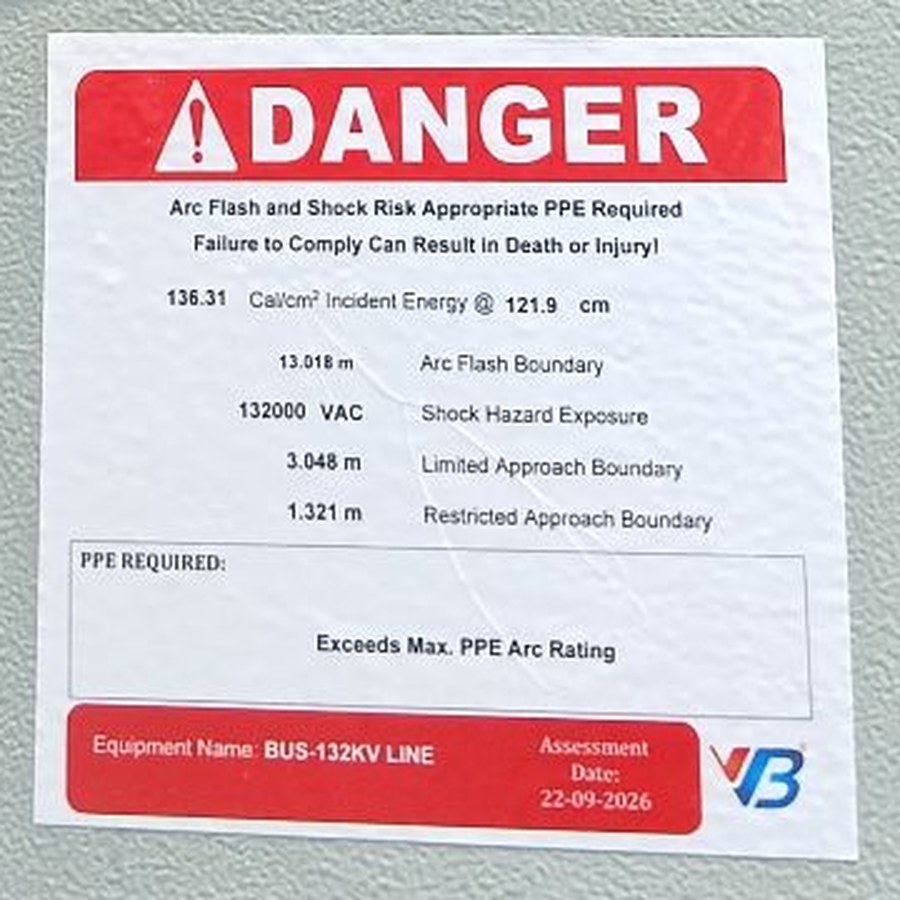
NEC 2023 110.16 labels on every switchboard, panelboard and MCC, with the assessment date already on the artwork that NEC 2026 110.16(B) will ask for.
For the insurer and FM Global
A dated, signed NFPA 70E 130.5 assessment with the conformance matrix on page one and the action register ranked, owned and dated.
For OSHA, if it ever asks
The 29 CFR 1910.132(d) certification: the workplace, the person who did the assessment and the date, signed by the engineer of record.
The commissioning calendar
How does VB fit the study into an Ohio commissioning schedule?
VB starts each block's study while the block is still in construction, from the issued-for-construction one-lines and protective device schedules, and finishes it on the walkdown once the gear is set. The commissioning agent receives the signed short-circuit, coordination and arc flash results for the block before its energization date, and the labels are on the gear before the first energized work. Hyperscale campuses east of Columbus and colocation halls in the city run on the same calendar; the block size changes, the sequence does not.
- Week 0 · ScopeBus count and energization dates in; scope per block out in two business days.
- Energization minus 10 weeks · ModelCampus model built or extended in ETAP or SKM PowerTools from the IFC set; every operating mode defined with your EOR.
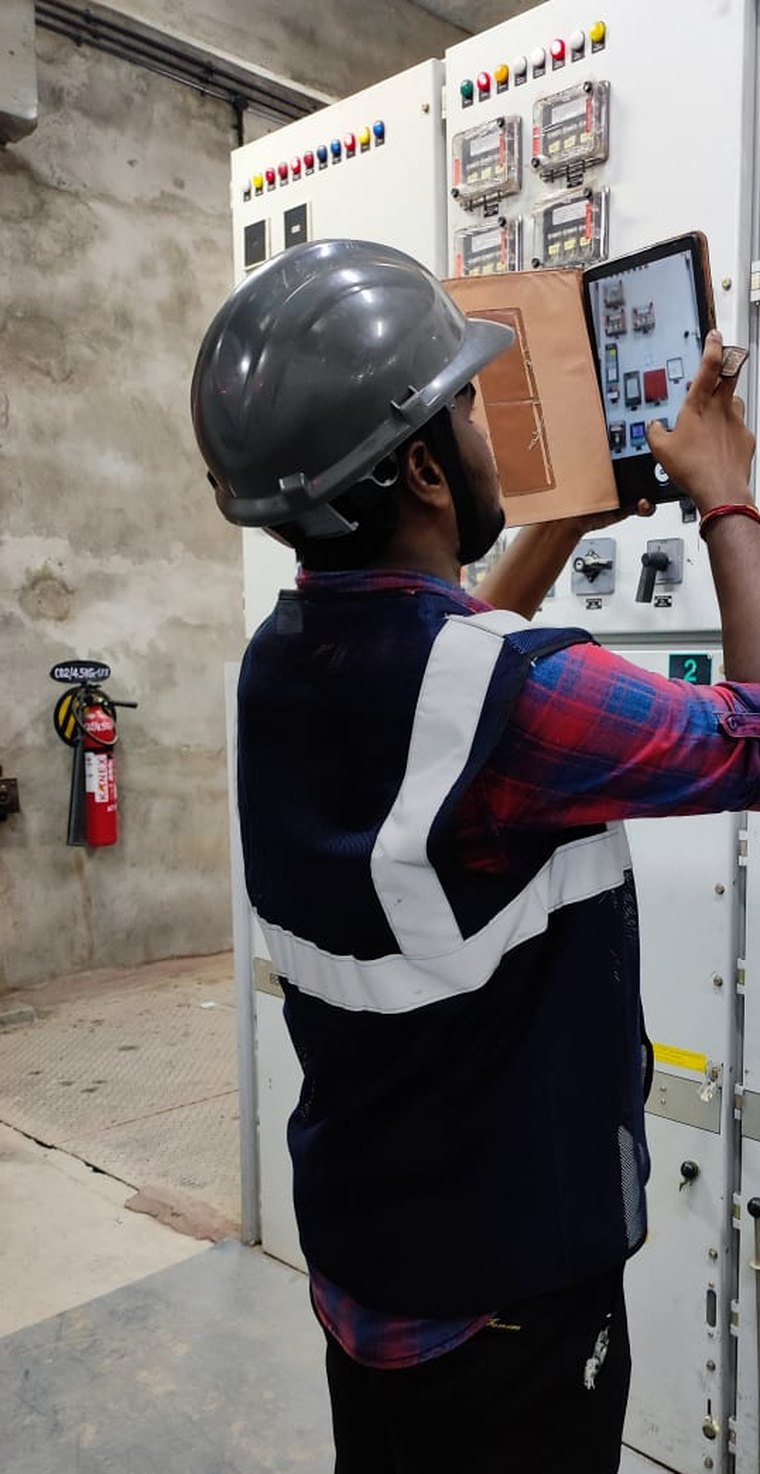
- Energization minus 4 weeks · WalkdownEvery cubicle opened: nameplates, CT and PT ratios, trip settings photographed; one-line corrected to the as-built plant and co-signed.
- Energization minus 2 weeks · ResultsShort-circuit, coordination and incident energy per IEEE 1584-2018, signed, in the commissioning agent's format.
- Energization minus 1 week · LabelsDated artwork installed by a VB crew at about 150 labels a day, photographed in place.
- Energization · HandoverBlock report, label schedule and action register to the owner's EHS lead; the campus model stays live for the next block.
What arrives at each date
- Results date · fault current at every bus, time-current curves per circuit, incident energy and arc flash boundary per bus with the operating mode named
- Label date · label schedule with the four NEC 2026 elements and the assessment date on the artwork
- Handover · the 11-section report per IEEE 1584.1-2022, the ranked action register, the 1910.132(d) certification, PE stamp on request
Three situations, one practice
What does VB deliver on a new build, an expansion and an existing Ohio campus?
The Ohio market is three markets at once: hyperscale campuses energizing block by block, colocation halls adding capacity, and facilities that were studied years ago and have changed since. VB runs all three from one campus model, so a new build becomes an expansion study when the second feed lands, and an existing campus becomes a reassessment when its study reaches NFPA 70E's five-year limit. The table shows what changes between them and what does not.
| Stage | New build, block by block | Expansion: new hall, feed or battery system | Existing campus, study older than five years |
|---|---|---|---|
| Starting point | IFC one-lines and device schedules | The live VB campus model, or the previous vendor's study if VB did not build it | Whatever exists: a report, labels, or neither |
| Model | Built per block, extended as blocks are added | Extended for the new source or load; every scenario re-run | Rebuilt if no usable model exists; updated if one does |
| Walkdown | Every cubicle, once the gear is set | The new equipment plus every bus whose fault current changed | Every cubicle, settings verified against the old report |
| Results to | The commissioning agent, before energization | The EOR and the owner's EHS lead, before the new feed closes | The owner's EHS lead and the insurer |
| Labels | All buses, dated artwork, before first energized work | Only the buses whose figures changed | Every bus re-labeled with dated artwork |
| DC buses | UPS strings, battery cabinets, 48 V and 800 VDC distribution in the same table, DC method named per row, in every situation | ||
| Signed by | The engineer who ran the study, with an independent reviewer; a US-licensed professional engineer reviews and stamps on request | ||
A worked campus
What did VB find when a second feed landed mid-build?
On a modeled hyperscale campus in the US Midwest, four blocks and 76 buses, the second utility feed arrived with block three, eight months after the main switchgear was first labeled. Because the campus model was live, VB re-ran it in four working days: 12 MV buses went up one PPE category, 9 LV buses in halls A and B came down a category because the new feed changed the clearing times, and 21 labels were replaced before the feed was closed. Block three energized on its date with the whole campus on current labels.
Modeled, illustrative campus (category 3). Assumptions: IEEE 1584-2018 at 18 in working distance; two utility feeds with the second arriving at block three; generator and UPS bypass modes run; label replacement before the feed is energized. Indicative of how VB handles a mid-build expansion, not a measurement of any one site.
Why Ohio campuses scope with VB
Written by the team that has labeled 12,547 assets
No consultancy owns the Ohio data center arc flash question today. VB's practice does nothing else: 1,000+ assessments since 2014 in 21 countries, a growing share of them data center campuses.
New build, expansion and reassessment run from the same ETAP or SKM PowerTools model, so the second feed is a four-day re-run, not a new study.
The engineer who ran the model signs each section. A US-licensed professional engineer reviews and stamps the study on request.
UPS, battery cabinets and 800 VDC distribution in the same incident energy table, with the DC method stated on the row.
Model, walkdown, results and labels each have a date tied to the block's energization. The commissioning agent never waits for VB.
No call unless you want one. The scope goes to the GC, the owner or another bidder as it is.
Who VB works with
Three ways VB works with an Ohio campus
With the engineer of record or Cx agent
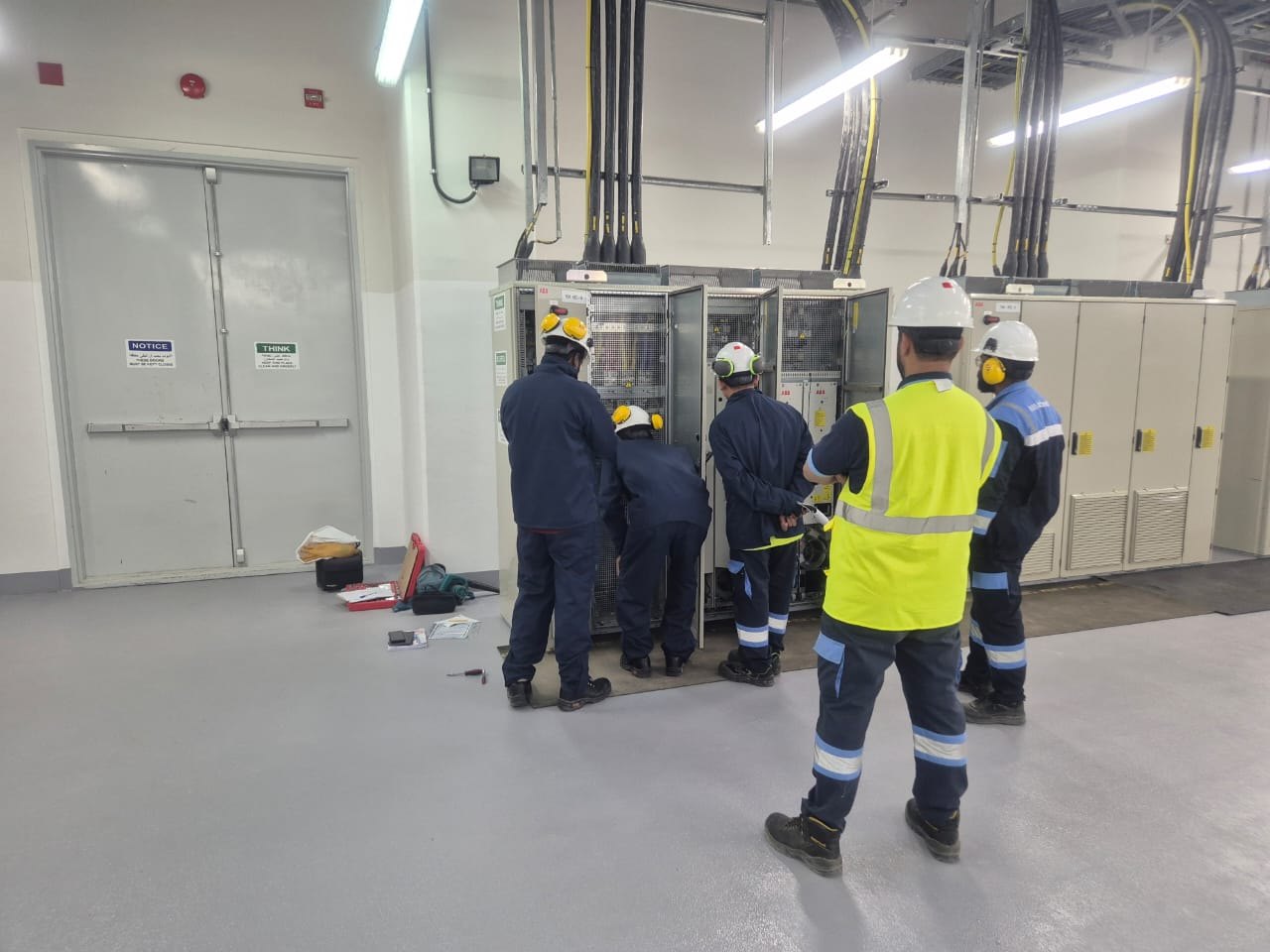
Block results on the agent's checklist dates, from the IFC set, signed. VB joins the pre-energization meeting if asked.
With the operator's facilities or EHS lead
Owns the campus after handover and answers to the insurer. VB keeps the model live for every expansion and the five-year review.
With the testing contractor
Holds the acceptance-test windows and the keys. VB fits the walkdown into those windows and the contractor stays the owner's single point of contact.
VB also serves US data center campuses nationally and holds state pages for Georgia, Northern Virginia, New Jersey, New York and Pennsylvania. Ohio work is delivered from VB's US office in Katy, Texas. Labels already on the gear can be checked first with the free label date check.
Before you ask
Questions Ohio campuses ask VB
Does Ohio require an arc flash study?
VB answers this for every Ohio client the same way: no Ohio statute names the study, but three instruments make it unavoidable. Ohio has no state OSHA plan, so federal OSHA enforces 29 CFR 1910.132(d), the written hazard assessment, directly. NFPA 70E 130.5 requires an arc flash risk assessment before energized work. NEC 110.16, adopted through the Ohio Building Code as NEC 2023, requires the warning label on the gear. VB's conformance matrix shows the inspector, the insurer and OSHA where each one is satisfied.
Which NEC edition is in force in Ohio?
Ohio enforces the 2023 National Electrical Code for commercial and industrial occupancies, in force since 1 April 2023 under the Ohio Board of Building Standards. VB's label schedule for an Ohio campus is written to NEC 2023 110.16 and NFPA 70E 2027 130.5(H), and already carries the assessment date that NEC 2026 110.16(B) will require, so the labels do not age out when Ohio adopts the next edition.
Does a new Ohio data center need an arc flash study before commissioning?
Yes, and VB builds the study to the commissioning calendar rather than after it. The commissioning agent witnesses energization against the short-circuit, coordination and arc flash results, and the labels must be on the gear before the first energized work. VB models each block from the issued-for-construction set, verifies it on the walkdown, and has the signed block results and the dated labels in place before the energization date.
Who performs arc flash studies for data centers in Columbus?
VB Engineering scopes and delivers arc flash studies for data center campuses in Columbus, New Albany and across Ohio from its US office in Katy, Texas: 1,000+ assessments since 2014 in 21 countries, modeled in ETAP or SKM PowerTools, signed by the engineer who ran the study, with a US-licensed professional engineer reviewing and stamping it on request. Scoping is free and comes back in two business days.
Does an expansion reset the Ohio study?
Yes. A second utility feed, a new generator paralleling scheme, a new hall or a battery system changes the available fault current, and NFPA 70E 2027 130.5(G) requires the assessment to be reviewed whenever the electrical system changes. VB keeps the campus model live, re-runs it for the expansion and replaces only the labels whose figures changed.
How long does a VB study take on an Ohio campus?
Four to six weeks per block from walkdown to installed labels on a single-building campus; multi-block campuses are phased in commissioning order so that no hall waits for another. The walkdown runs at about one crew day per 10 MW block, the calculation takes two to three weeks per block, and label installation runs at about 150 labels per crew day.
What does an arc flash study cost in Ohio?
VB prices per bus and per voltage class, with the walkdown and the label installation as their own lines, because the bus count, not the floor area, is the work. A 2N hall has far more buses than a simpler one of the same size. The scoping form asks for the count and the voltage classes, and the pricing basis comes back with the scope in two business days, free.
Is an arc flash study required by code?
The label is code and the assessment behind it is a standard. NEC 110.16 (NEC 2023 in Ohio) requires the arc flash warning label on switchboards, panelboards and motor control centers; NFPA 70E 130.5 requires the risk assessment that produces the figures on the label; OSHA enforces both through 1910.132(d) and the general duty clause. VB's study answers all three in one document.
Does VB study the UPS strings, battery cabinets and 800 VDC distribution?
Yes, in the same incident energy table as the AC switchgear, each DC row naming the DC method used, because IEEE 1584-2018 itself covers AC from 208 V to 15 kV only. The battery hall is the part of a campus most often missing from a study VB is asked to review.
What happens after I submit the scoping form?
A VB practice engineer reads the bus count, the voltage classes and the energization dates you entered and writes back within two business days: the scope per block in commissioning order, how long each stage takes, what you receive (the 11-section report, the label schedule, the action register, the 1910.132(d) certification), and the professional engineer stamp option. No call unless you ask for one.
VB puts the block results on the commissioning agent's desk before the energization date.
Three numbers in today, scope back in two business days: per block, in commissioning order, with the PE stamp option. No charge, no call unless you want one.
Scope my campusPrefer email? Send the bus count to connect@groupvb.com with "Ohio" in the subject line.