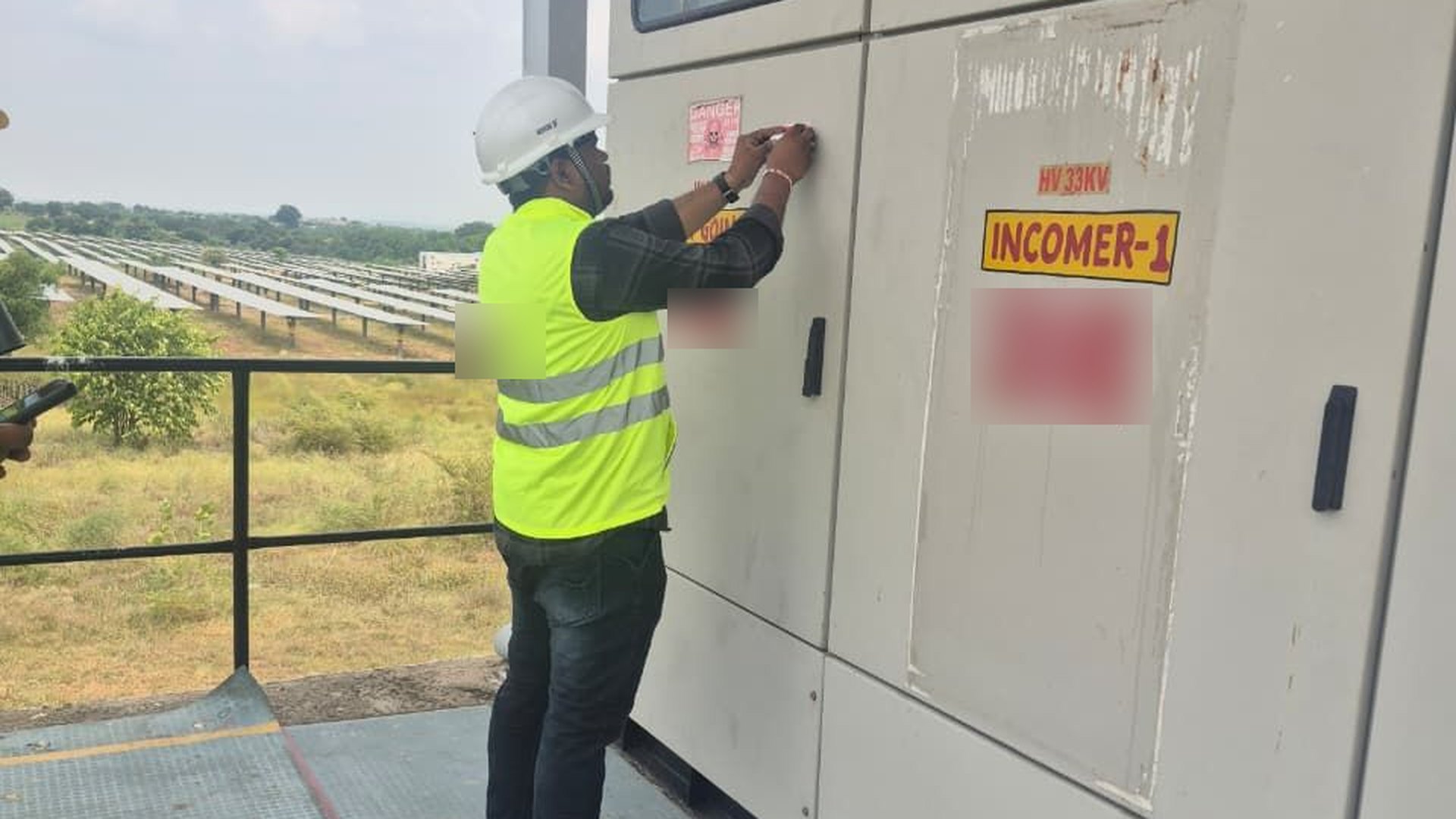
Arc flash study · who signs it · PE stamp · 21 countries
Who can perform an arc flash study? VB models it, reviews it, and a professional engineer licensed in your state signs and stamps it.
Three names on page one of every VB study: the engineer who built the model in ETAP or SKM, the independent reviewer, and the PE licensed where your facility stands. Outside the US, a chartered engineer to the local requirement. Pick your state on the right and see who signs; send the bus count and the scope comes back in two business days, free.
1,000+ assessments21 countriesSince 2014PE-stamped in your state
Who signs your study
| Models and walks down | VB Engineering practice engineer, ETAP or SKM PowerTools |
| Reviews | Independent VB reviewer, not the modeling engineer |
| Signs and stamps | Select the facility location to see who signs |
| Certifies for OSHA 1910.132(d) | The engineer of record, on a dedicated certification page |
Scoping is free: scope, timeline, deliverable list and the name and license state of the signing engineer in two business days. Short form, no phone number.
Trusted on plants that cannot stop











- 0signatures on page one of every VB study
- 0US states: a PE licensed in the facility's state signs and stamps
- 0countries, signed to the local requirement
- 0arc flash assessments delivered
- 0assets twinned and labeled
Signing arrangement: VB Engineering practice policy, October 2026. Assessment and asset counts: VB Engineering project register.
How the free scoping works
- 1
Tell VB where and how big
The state or country, the bus count by voltage class, and whether one-lines exist. Three minutes.
- 2
VB names the signing engineer
The scope comes back with the PE's name and license state, or the chartered engineer for your country, before anything is awarded.
- 3
Scope in two business days
Deliverable list, timeline, basis of pricing per bus, and the three-signature chain in writing. Yours to forward.
The question
Does any law say who must perform an arc flash study?
No single rule names the person, which is why so many studies carry no name at all. Three instruments decide it together: OSHA 29 CFR 1910.132(d) requires the employer to certify the hazard assessment in writing; NFPA 70E 130.5 requires the arc flash risk assessment to be documented and reviewed; and every US state's engineering practice act governs who may sign engineering work offered to the public. VB answers all three with one study: modeled by its engineers, reviewed independently, and stamped by a professional engineer licensed in the facility's state.
| Instrument | What it asks | What a weak study offers | What VB puts on page one |
|---|---|---|---|
| OSHA 29 CFR 1910.132(d)(2) | A written certification naming the workplace, the person certifying and the date | A cover letter from a vendor, or nothing | A certification page signed by the engineer of record and stamped by the state-licensed PE |
| State engineering practice act | Engineering work offered to the public is signed by a professional engineer licensed in that state | A stamp from another state, or no stamp | A PE licensed in the facility's state, named with the license state |
| NFPA 70E 2027 · 130.5 | A documented risk assessment, reviewed at least every five years and after any change | Software output with no review | The modeling engineer and an independent reviewer, both named and dated |
| IEEE 1584.1-2022 | A deliverable that states method, software, assumptions and the responsible engineer | A results table with no provenance | Software and version, model file reference, method, and the three signatures |
| Insurer or corporate EHS standard | Independence from the equipment vendor, licensure, a date | A study bundled with the switchgear | Independent of any OEM; stamped; dated on every label |
| Outside the US | Signature by a chartered or certified engineer where the jurisdiction or the owner requires it | A regional office stamp of unknown standing | A chartered engineer to the local requirement, plus VB's engineer of record and reviewer |
How VB signs
How does VB's three-signature chain work?
Every VB arc flash study carries three names on its first page. The practice engineer who walked the plant down and built the model in ETAP or SKM PowerTools signs the method and the results. An independent VB reviewer who did not build the model signs the review. A professional engineer licensed in the state where the facility stands signs and stamps the study; outside the United States, a chartered engineer signs to the requirement of that country or the owner's standard. No study leaves VB with fewer than three names.
Walked down every cubicle, reconciled the one-line, built the model, ran every operating scenario. Signs the method, the assumptions and the incident energy table.
A VB engineer who did not touch the model. Re-checks the utility contribution, the settings, the scenarios and ten buses at random. Signs the review page with findings.
In the US, a professional engineer licensed in the facility's state, named with the license state, who signs and stamps the study and the 1910.132(d) certification. Elsewhere, a chartered engineer to the local requirement.
Why the state matters
A PE license is issued by a state board and is valid for practice in that state. A study for a Georgia data center stamped by an engineer licensed only elsewhere is not a Georgia-stamped study, and an insurer's loss-control engineer will ask. VB provides a PE licensed in the state where the facility stands, for every state it works in, and prints the engineer's name and license state on the certification page. The scope you receive before award names that engineer.
The study you already have
Is your current arc flash study defensible?
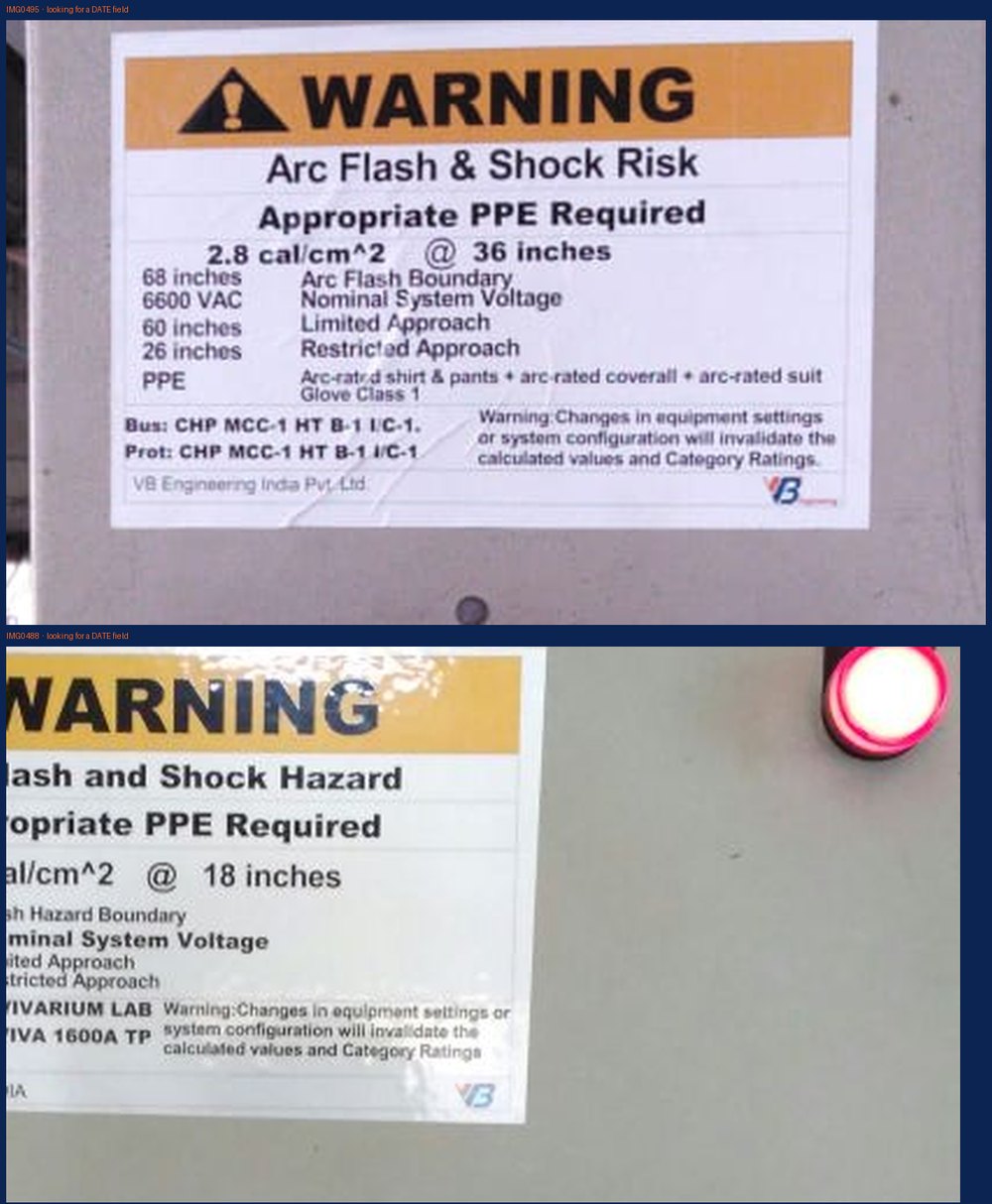
Open it to the first page and look for four things: a named engineer who built it, a named reviewer, a professional engineer's stamp from the state the facility is in, and a date within the last five years. A study missing any one of them is a calculation, not an engineering document, and that is what an insurer, an AHJ or a plaintiff's expert will say about it. VB reviews the study you hold free and writes back whose name is on it and whether it stands.
- Named modeling engineer · a person, not a company, on the method and the table
- Named reviewer · a second engineer who signs the review
- PE stamp from the facility's state · license number and state printed
- OSHA 1910.132(d) certification page · workplace, certifier, date
- Software and version named · ETAP or SKM, with the model file reference
- Assessment date within five years · and on the labels, per NEC 2026 110.16(B)
Three studies VB is asked to review most
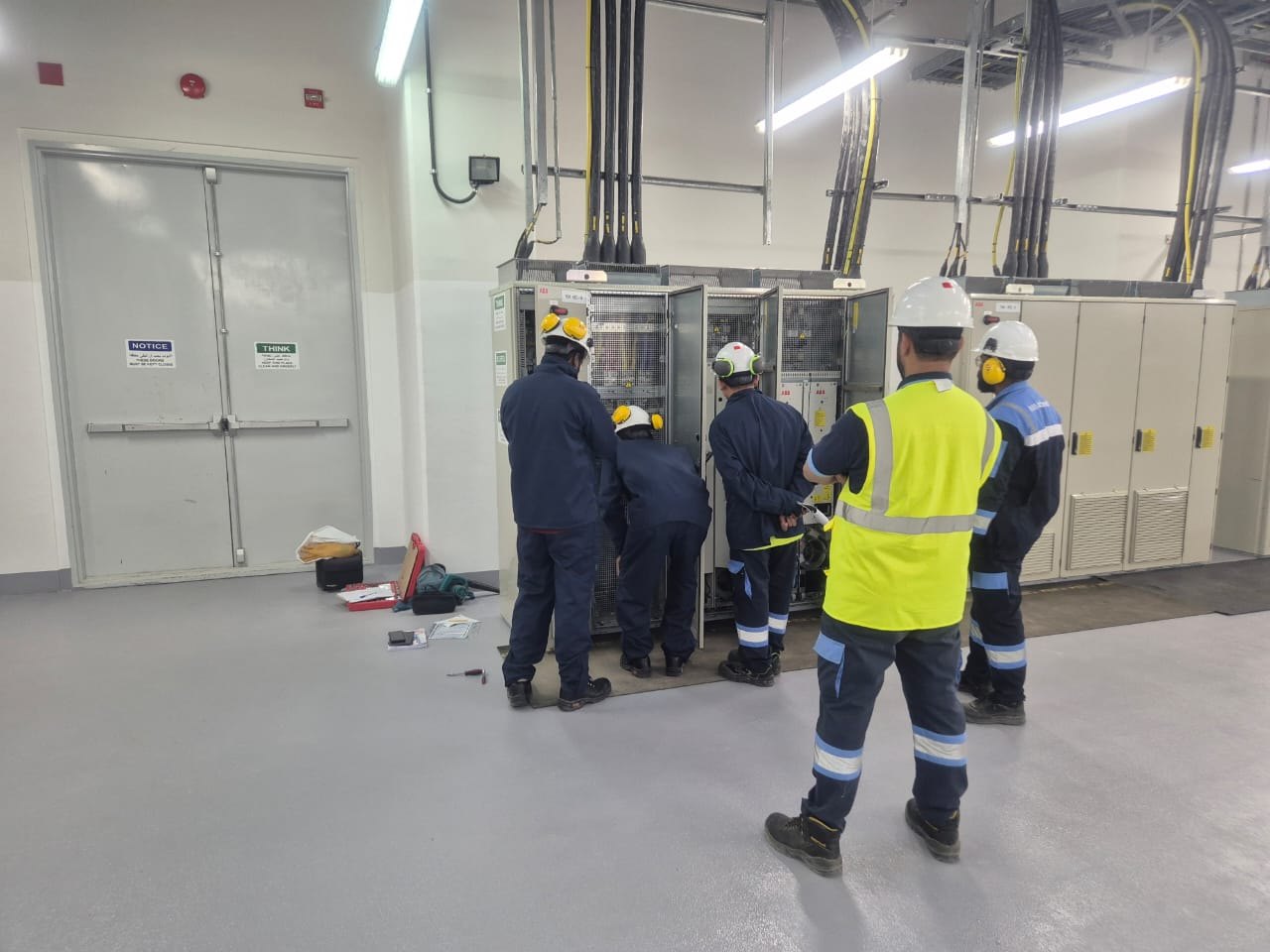
| Study type | What is usually missing | What VB does |
|---|---|---|
| Bundled with new switchgear | The rest of the plant, as-installed settings, any stamp | Extends it to the whole plant, verifies on site, stamps in the state |
| From a labeling vendor | Walkdown, reviewer, engineer's name | Re-models from the plant, keeps the label positions, signs |
| In-house by plant engineers | Independence, licensure | Uses the plant's data, adds the review and the PE stamp |
A worked review
What changed when the reviewer signed?
On a modeled mid-size manufacturing plant in the US Southeast, 64 buses, the independent review of a draft study changed eleven rows before the PE would stamp it. The utility contribution had been taken from a letter three years old; the new figure raised the main switchgear a full PPE category. Four breakers had been modeled at factory settings that the walkdown photographs showed had been changed. Two buses had been run in one operating scenario only. The reviewer's page lists all eleven, with the before and after figures, and the PE stamped the corrected study. That page is why the second signature exists.
| Finding | Rows affected | Before | After review | Who caught it |
|---|---|---|---|---|
| Utility fault contribution from a 3-year-old letter | 5 (main switchgear and feeders) | PPE category 2 | PPE category 3 | Reviewer, from the walkdown date on the utility letter |
| Breaker settings modeled at factory values | 4 | Clearing 0.08 s | Clearing 0.35 s, labels replaced | Reviewer, from the walkdown photographs |
| Single operating scenario | 2 (generator tie) | Not studied on generator | Generator scenario governs, labels replaced | Reviewer, scenario list against the one-line |
| Total rows changed | 11 of 64 | Stamped only after correction | PE, on the reviewer's page | |
Why the signatures carry weight
Written by the team that has labeled 12,547 assets
Not an option on the quote. Every US study is stamped by a professional engineer licensed where the facility stands, named before award.
In 21 countries since 2014, VB signs to the local requirement: a chartered engineer where the jurisdiction or the owner's standard calls for one.
VB sells no switchgear, no labels on their own and no software. The study answers to the plant, not to a product.
ETAP or SKM PowerTools, version and model file reference printed in the report, so any reviewer can reproduce any row.
The independent reviewer's findings are printed with before and after figures. A study that changed nothing in review says so.
The scope you receive before award carries the signing engineer's name and license state. No call unless you ask.
Where the signed study goes next
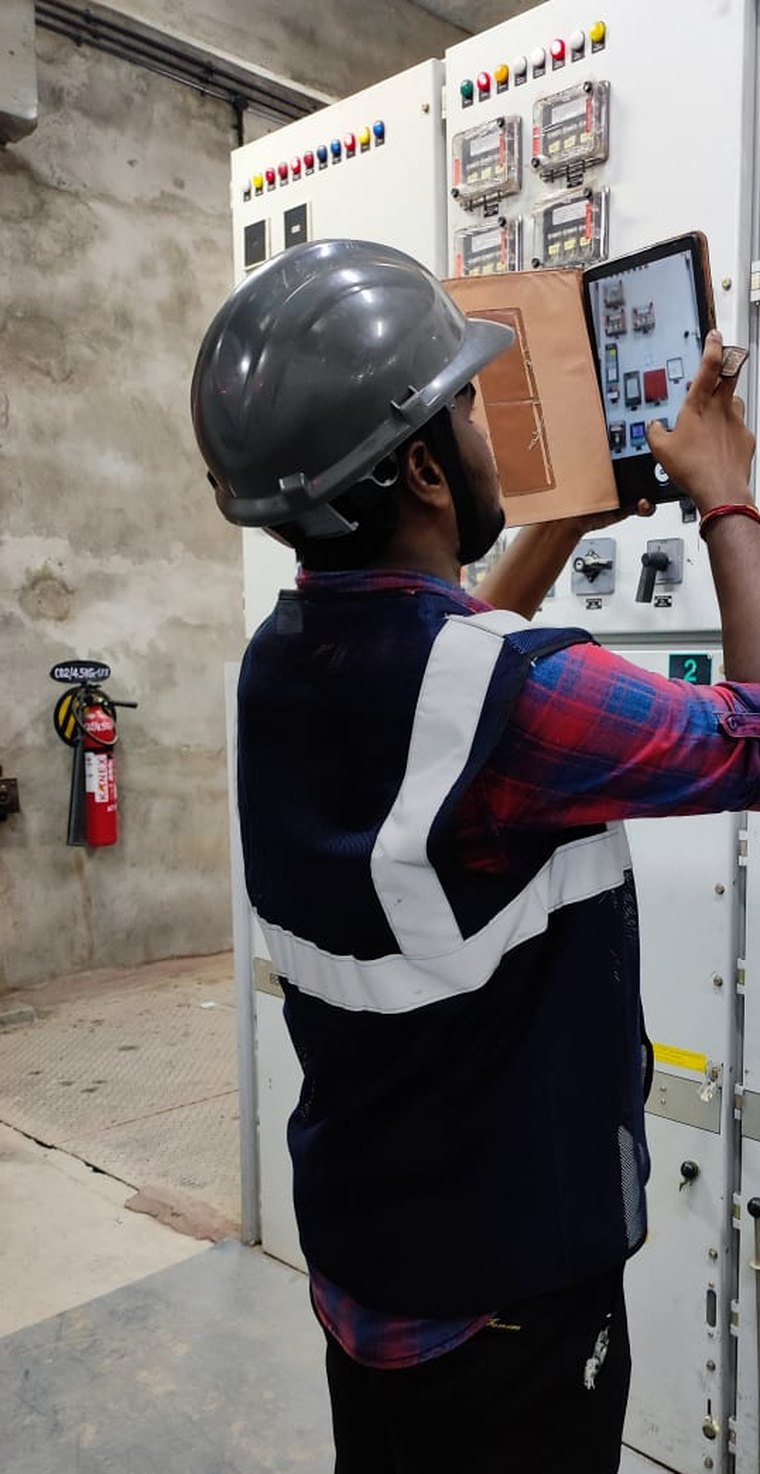
What else sits on the same signed study?
The 11-section report
What a signed study must contain under IEEE 1584.1-2022, section by section, and a free review of the report you hold. Arc flash study report.
The date on the label
NEC 2026 110.16(B) puts the assessment date, the date the PE stamped, on the label. Check five of yours free. Label date check.
Your state's campus page
Stamped studies for data center campuses in Georgia, Ohio and Northern Virginia, and US data centers nationally.
Before you award
Questions buyers ask VB before awarding an arc flash study
Who can perform an arc flash study in the US?
Any qualified electrical engineer can perform the calculation, but the document only carries weight when a licensed professional engineer signs and stamps it. OSHA 29 CFR 1910.132(d) requires the employer to certify the hazard assessment in writing, NFPA 70E 130.5 requires the assessment to be documented and reviewed, and state engineering practice acts govern who may sign engineering work for the public. VB Engineering's studies are modeled by its own engineers in ETAP or SKM PowerTools, reviewed independently, and signed and stamped by a professional engineer licensed in the state where the facility stands.
Does an arc flash study need a PE stamp?
No federal rule says the words PE stamp, which is why many studies in circulation carry none. The stamp matters because the study is engineering work offered to the public under a state practice act, because insurers and corporate EHS standards increasingly ask for it, and because a study with no accountable name is the first thing a plaintiff's expert looks for after an incident. VB stamps every US study with a PE licensed in the facility's state as standard, not as an option.
Does the PE have to be licensed in our state?
Yes. A professional engineer license is issued by a state board and is valid for work in that state; a Texas stamp on a Georgia facility is a stamp from an engineer not licensed to practice there. VB provides a PE licensed in the state where the facility stands, for every state it works in, and names the engineer and the license state on the certification page of the report.
Who signs an arc flash study outside the US?
A chartered or certified engineer under the rules of that country, where the country or the client's standard requires one. VB Engineering has delivered arc flash studies in 21 countries since 2014 and signs each one to the local requirement: a chartered engineer where the jurisdiction or the owner's specification calls for it, and VB's engineer of record with an independent reviewer in every case.
Can any company perform an arc flash assessment?
Any company can run the software; the questions a buyer should ask are who built the model, who verified it on site, who reviewed it and who signs it. A study produced by a labeling vendor or bundled with new switchgear often has no walkdown, no reconciled one-line and no engineer's name. VB's three-signature chain, the modeling engineer, the independent reviewer and the licensed PE, is printed on page one of every report.
Can our own electrical staff do the arc flash study?
They can collect the data and many do, but an in-house study rarely survives an insurer's or an AHJ's question about independence and licensure, and it ties the plant's own engineers to a liability they did not sign up for. The usual division is that the plant's engineers hold the one-lines and the settings, VB runs the model and the walkdown, and a state-licensed PE signs. VB's free scoping shows how much of the field data your team can supply to shorten the walkdown.
Is a study bundled with new switchgear enough?
Rarely. A manufacturer's study covers the gear it supplied, at the settings it shipped with, against the fault current the specification assumed. It does not cover the rest of the plant, the as-installed settings, or the utility contribution on the day the gear was energized, and it is seldom signed by an engineer licensed in the facility's state. VB reviews bundled studies free and tells you what they cover and what they do not.
What does the OSHA written certification have to say?
29 CFR 1910.132(d)(2) requires a written certification identifying the workplace evaluated, the person certifying that the hazard assessment was performed, the date, and that the document is a certification of hazard assessment. VB's report carries this certification as its own page, signed by the engineer of record and stamped by the state-licensed PE, so the employer's certification is backed by an engineer's.
Is software output alone an arc flash study?
No. A software report with no walkdown is a calculation on assumed data. ETAP and SKM PowerTools produce correct numbers for the model they are given; the study is the model verified against the plant, the operating scenarios chosen by an engineer, the review, and the signature. VB's reports name the software and its version, the model file, the walkdown dates and the three signatures.
What happens after I submit the scoping form?
A VB practice engineer reads the state, the bus count and the voltage classes you entered and replies within two business days with the scope, the timeline, the deliverable list, and the name and license state of the professional engineer who will stamp the study. No call unless you ask for one. If you already hold a study, send it and VB tells you free whose name is on it and whether it stands.
Three names on page one, a PE licensed in your state on the stamp.
Send the state and the bus count. Scope, timeline and the signing engineer's name back in two business days, free. Already hold a study? Send it and VB tells you whose name is on it.
Get a stamped studyPrefer email? Write to connect@groupvb.com with the state in the subject line.